
Real-Time Imaging of Solar Flares with Machine Learning
Estimation of solar-flare positions from STIX data, and integration with deep-learning imaging reconstruction in the STIX Data Center for near-real-time quick-look images.
Initial situation
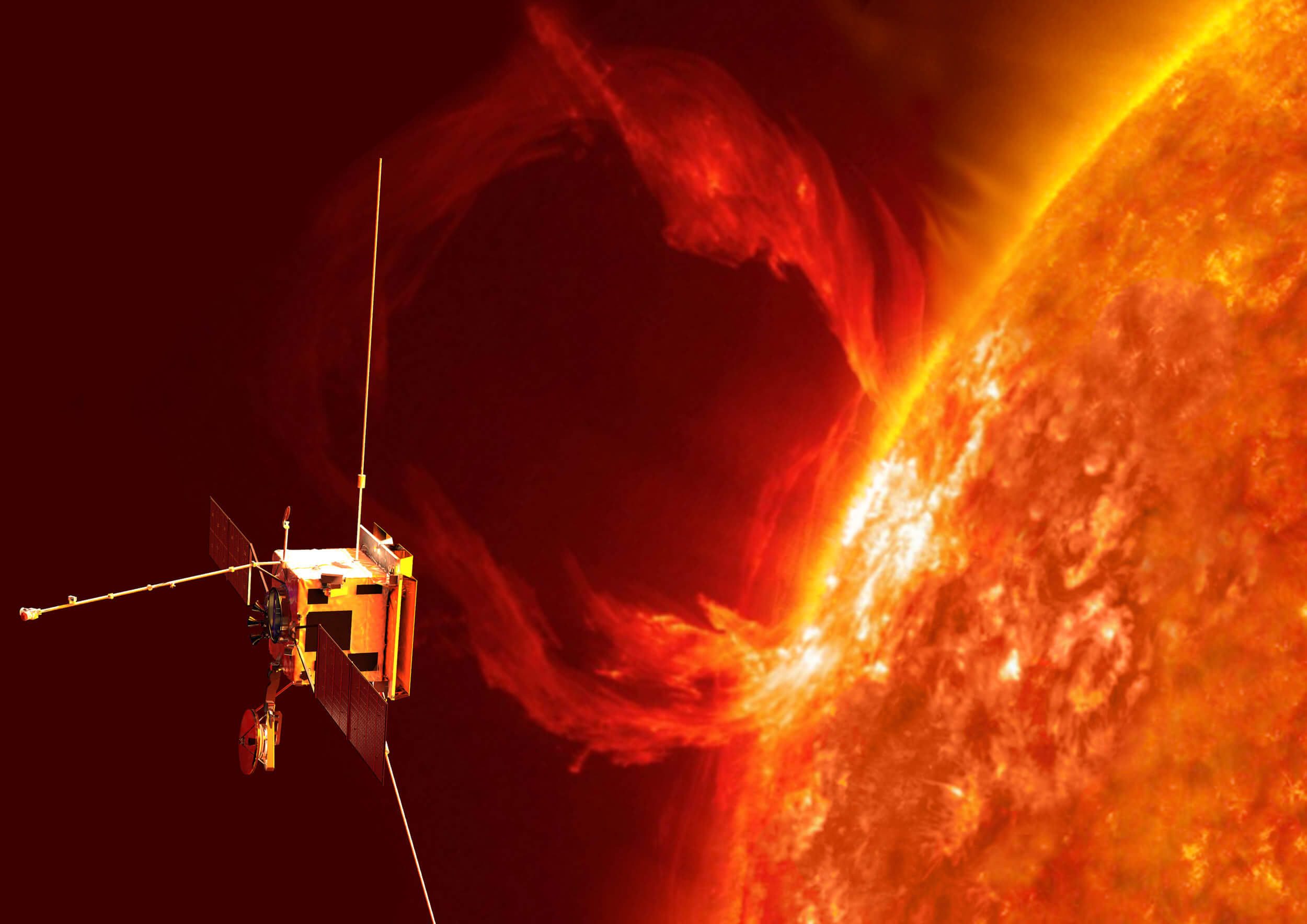
STIX on ESA’s Solar Orbiter observes X-ray emission from solar flares but does not form images directly. Images are reconstructed on the ground from detector measurements. A deep-learning model, the Fourier Convolutional Decoder (FCD) can accelerate that reconstruction, but its inputs must first be calibrated using a reliable flare location. In our previous project, we showed that a multilayer perceptron (MLP) can estimate flare positions directly from STIX detector counts. That localization model was limited to flares near solar center and was not yet connected to the imaging pipeline or STIX Data Center.
Project goal
Estimate the (x, y) coordinates of the flare location directly from STIX detector counts with a mean Euclidean error below ~30 arcseconds over a wider region of the Sun, and integrate the localization model with the FCD in the STIX Data Center so users get calibrated quick-look images in near real time.
Time-energy selection
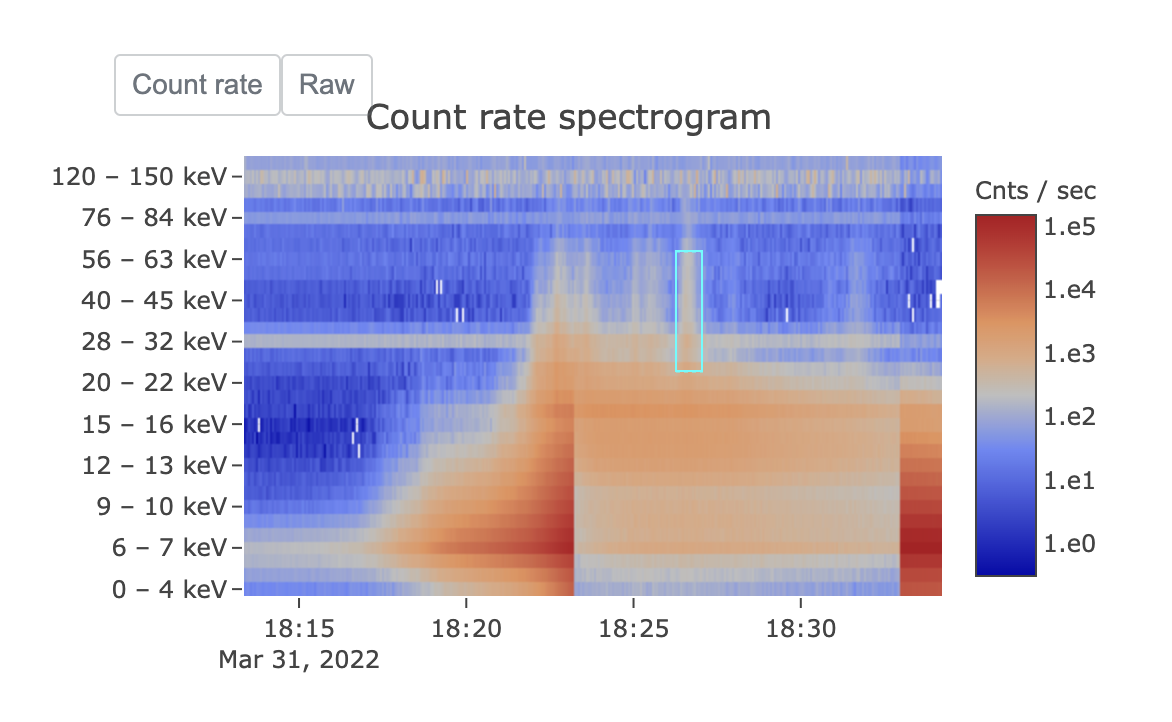
Users select the time and energy range of a flare on the count-rate spectogram. Those counts are the input to the localization model.
Optional fine-tuning
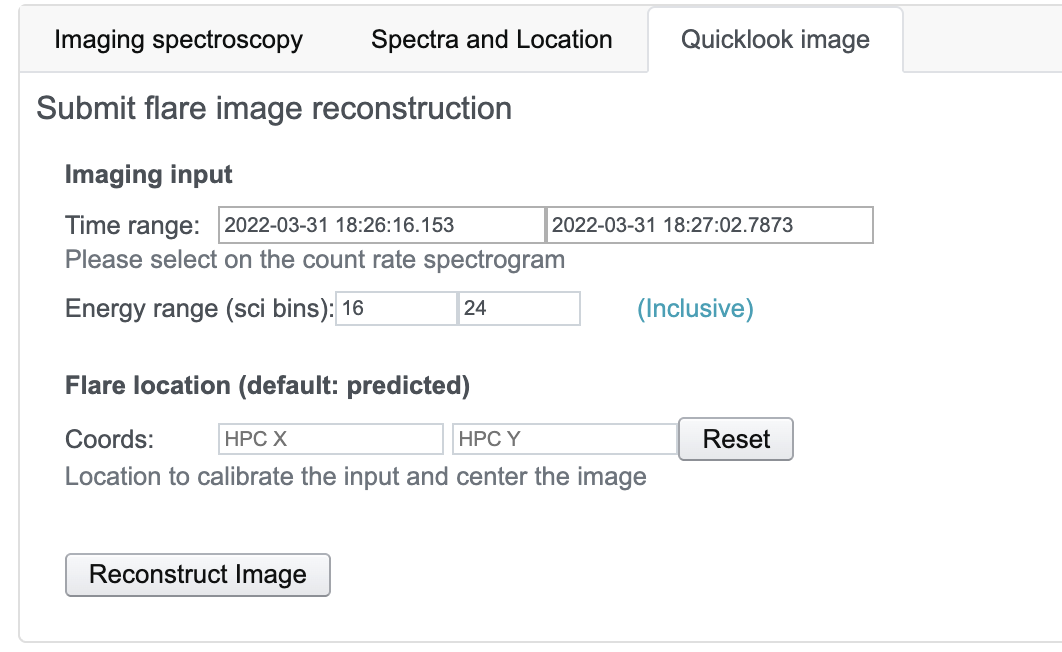
Adjust time/energy bounds before submit, or optionally provide a known location for calibration.
Location + quick-look image
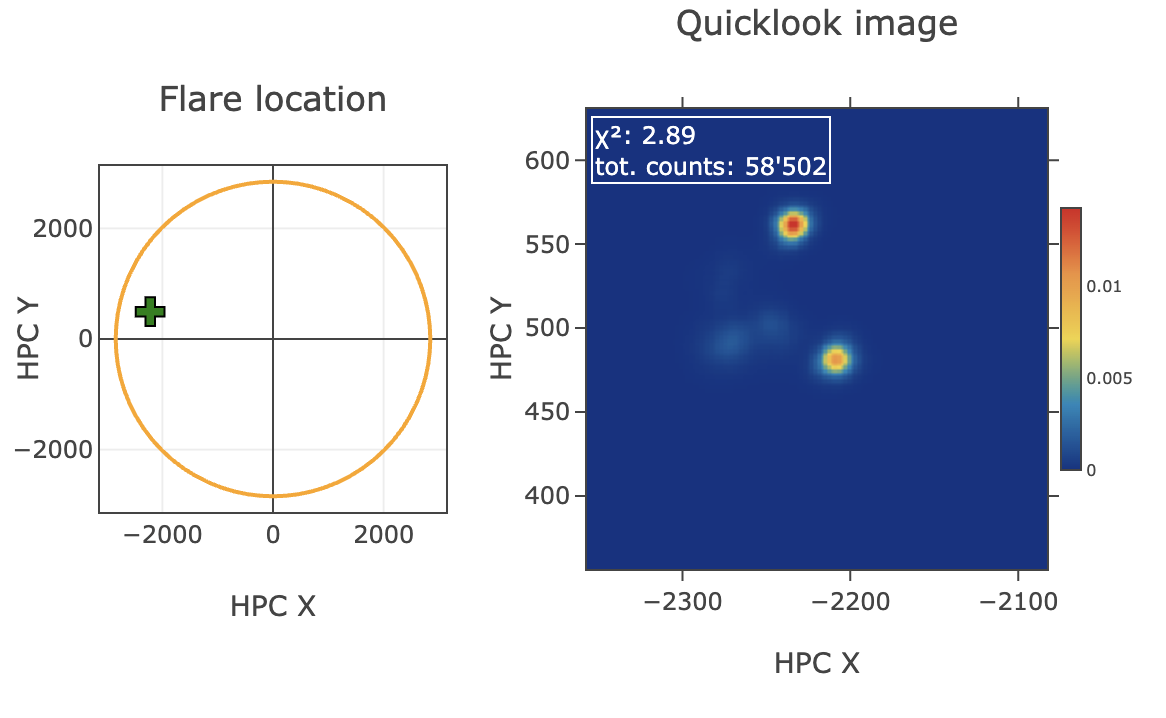
The localization model predicts the flare position (left); FCD reconstructs an image (right) centered on that prediction.
Solution developed and its benefits
Building on our previous project, we improved both the localization model and how it is used in practice. We extended the region the model covers, so flares farther from solar center can still be localized, and a larger MLP was trained on a mix of STIX observations and synthetic data. On 1,163 held-out events, the model reaches a mean Euclidean error of ~22 arcseconds (median ~5.5″), meeting the project target.
We integrated the model with the FCD in the STIX Data Center. Users select a time–energy interval and obtain a predicted flare location plus a reconstructed quick-look image end to end, without a separate manual localization or reconstruction step.
- Direct localization from detector counts
- Mean Euclidean error ~22″ on independent observations (target < 30″)
- ~60× faster than traditional methods for obtaining the flare location
- Larger supported field of view than the previous project
- End-to-end STIX Data Center workflow: selection → location → FCD image
Key terms
- STIXX-ray telescope on ESA’s Solar Orbiter
- FCDDeep-learning model that reconstructs flare images
- Multilayer Perceptron (MLP)The localization model predicting flare (x,y) from detector counts
- Field of view (FOV)The region of the Sun where the localization model can predict flare positions
- Arcsecond (″)Angular unit to measure positions on the solar disk (~700 km on the Sun as seen from Earth).
- STIX Data CenterWeb portal for browsing and analyzing STIX observations
- Count-rate spectogramPlot of detector counts versus time and energy
- Euclidean error/distanceDistance between predicted and true flare position, used as the localization accuracy metric
Team
Maik Degen
Erhan Bilgili
Advisor
Paolo Massa
Säm Krucker