
Wi-Fi HaLow Connectivity for Tasmota IoT Devices
This bachelor thesis investigated how a Wi-Fi HaLow module can be connected to an ESP32-C3 microcontroller and how such a solution could be integrated into Tasmota.
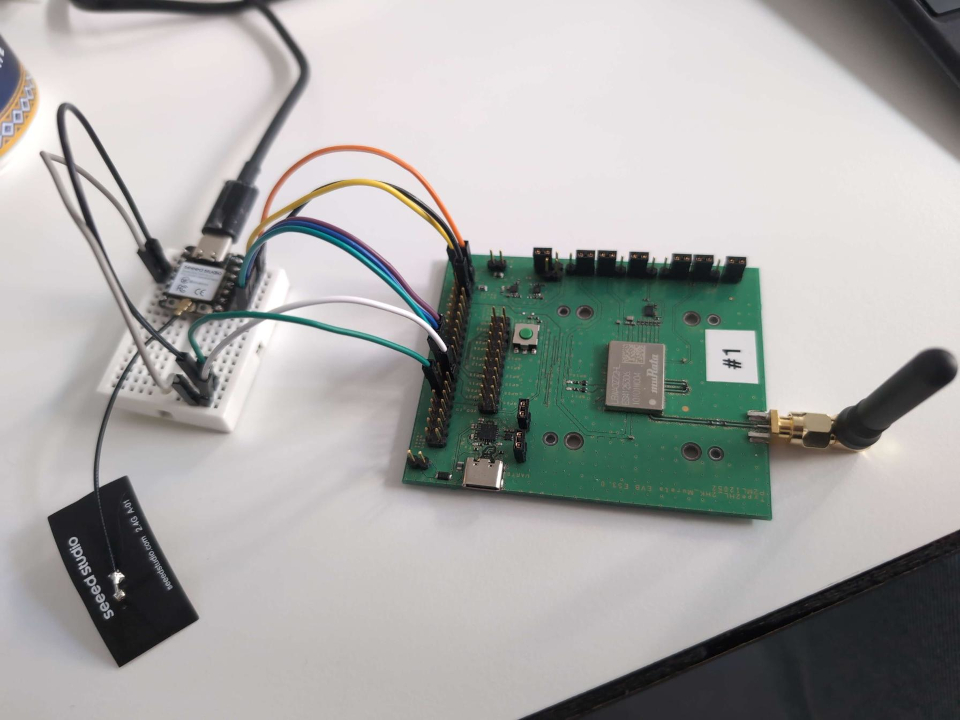
Prototype setup with ESP32-C3 and Murata Type 2HL module
Initial situation
Wi-Fi HaLow, also known as IEEE 802.11ah, is a sub-GHz Wi-Fi technology designed for long-range and low-power communication. It is interesting for IoT devices that need IP-based connectivity but are installed in locations where conventional Wi-Fi coverage is weak, for example in basements, meter cabinets or technical rooms.
The project partner was Gantrisch Energie AG which offer the gPlug product family. The selected Wi-Fi HaLow hardware was the Murata Type 2HL module, which is based on the Newracom NRC7394 chipset. The target platform was an ESP32-C3 microcontroller running a Tasmota IoT firmware.
Problem statement / Project goal
The main challenge was that Tasmota does not natively support the selected Wi-Fi HaLow module. The preferred approach was to use the Murata module in host mode and integrate it as a normal network interface. During the project, this approach turned out to be too complex for the ESP32-C3 target because the available host-mode software depends strongly on a Linux host environment.
As a fallback, the project investigated the standalone firmware of the NRC7394. In this mode, the Wi-Fi HaLow module handles networking internally, while the ESP32-C3 controls it with AT commands over SPI. The goal was therefore to build a working proof of concept and to document a feasible path toward a Tasmota and gPlug integration.
Application context
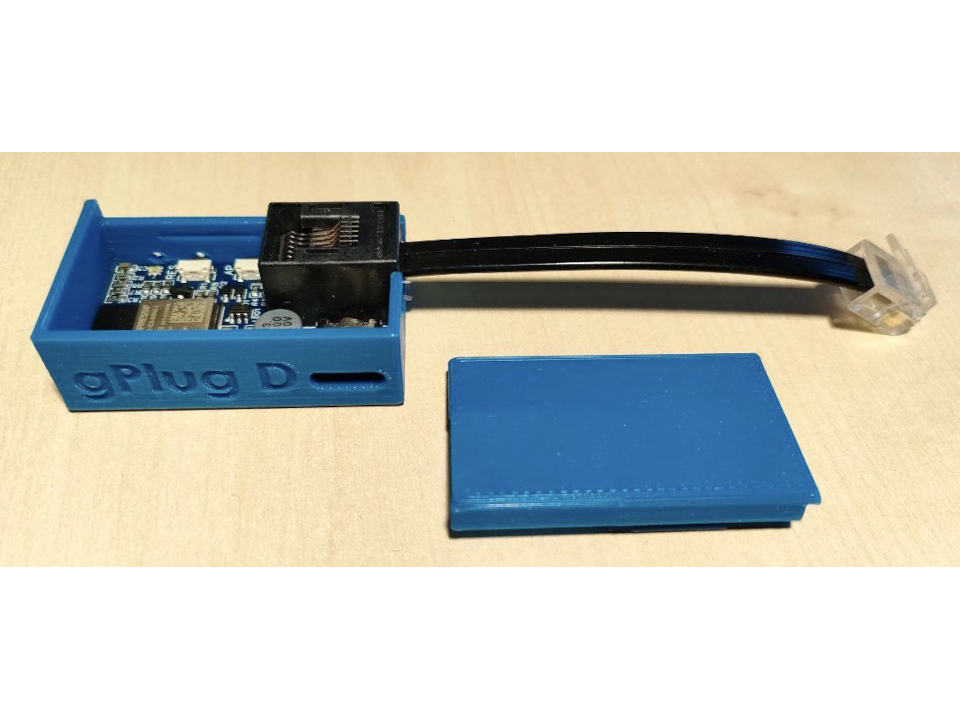
The gPlug context motivated the project: a smart-meter IoT adapter may need reliable local network access even when the device is installed outside the range of conventional Wi-Fi.
Prototype architecture
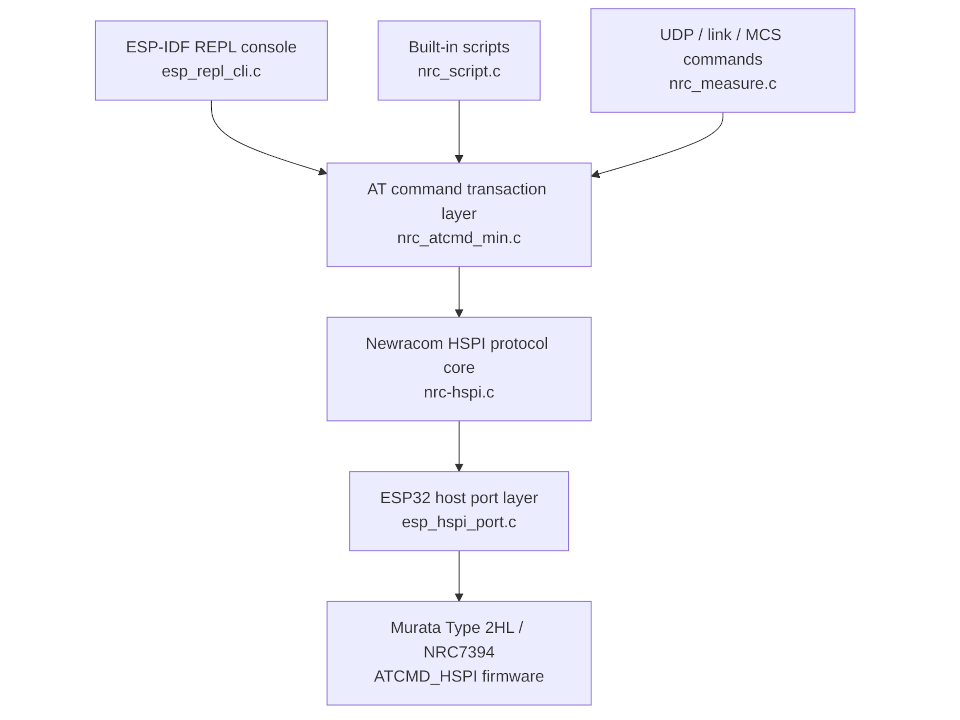
The implemented prototype uses an ESP-IDF application on the ESP32-C3. It communicates with the NRC7394 standalone firmware using SPI, the Newracom HSPI protocol and AT commands.
Validation setup
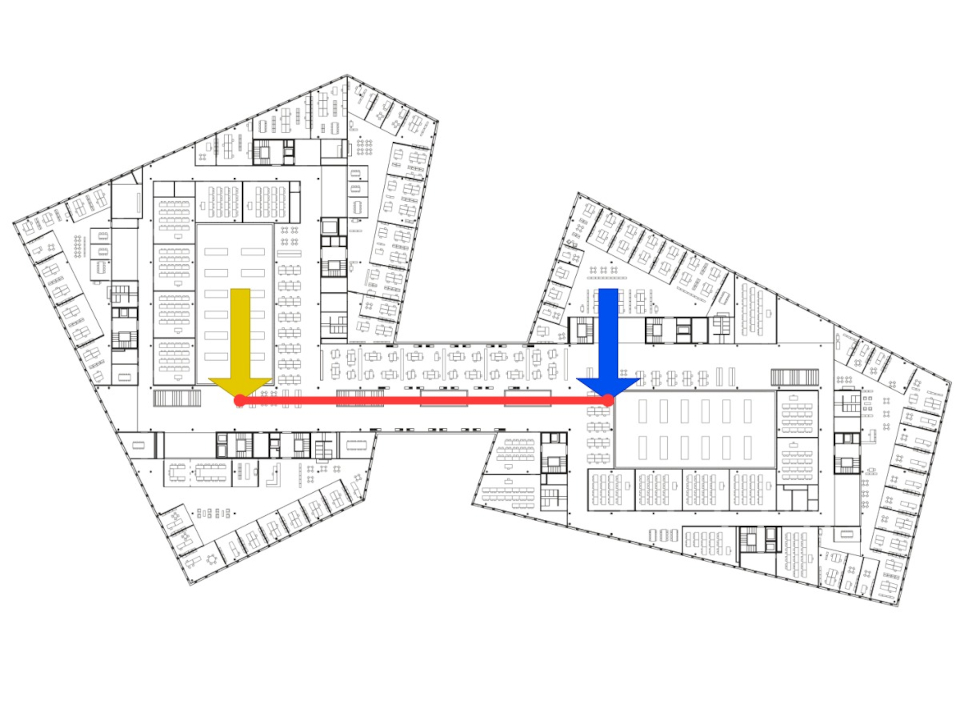
The prototype was validated with UDP payload measurements through a HaLowLink 2 access point. The tests focused on connectivity, stability, throughput and practical range.
Solution developed and its benefits
The final result is an ESP32-C3 proof of concept for controlling the Murata Type 2HL module in standalone AT-command mode. The prototype can scan for a Wi-Fi HaLow access point, connect to a HaLowLink 2, obtain an IP address and transmit UDP payload data.
- Verified the Murata Type 2HL hardware and Wi-Fi HaLow connectivity in reference setups.
- Evaluated the Newracom host-mode and standalone software approaches.
- Built and flashed standalone AT-command firmware for the NRC7394.
- Ported the ATCMD_HSPI host concept to an ESP32-C3 prototype.
- Implemented SPI, HSPI, AT-command handling and UDP measurement commands.
- Measured application-level UDP payload transmission in indoor and outdoor scenarios.
- Documented limitations and a realistic future integration path for Tasmota and gPlug.
The project outcome was not a finished Tasmota integration. Instead, it provides a practical foundation for a future Tasmota driver that could provide Wi-Fi HaLow control.
Results
The prototype successfully demonstrated that an ESP32-C3 can control the Murata Type 2HL module over SPI and use it for Wi-Fi HaLow communication. Stable UDP payload transmission was achieved in short-range and selected indoor scenarios. The measured throughput was approximately 0.131 Mbit/s in the implemented measurement setup. This value should be interpreted as application-level prototype throughput, not as the maximum Wi-Fi HaLow throughput.
Key terms
- Wi-Fi HaLowSub-GHz Wi-Fi technology for long-range and low-power communication.
- IEEE 802.11ahThe specification for Wi-Fi HaLow.
- ESP32-C3The microcontroller used as the host platform.
- TasmotaThe target IoT firmware environment.
- Murata Type 2HLThe Wi-Fi HaLow module used in the project.
- NRC7394The Newracom Wi-Fi HaLow chipset inside the Murata Type 2HL module.
- AT commandsText-based commands used by the ESP32-C3 to control the Wi-Fi HaLow module.
- SPIThe host interface used between the ESP32-C3 and the Murata Type 2HL module.
- IoTInternet of Things: Embedded systems and devices communicating over the internet or local networks..
- gPlugAn IoT adapter product family by Gantrisch Energie AG for Swiss smart-meter customer interfaces.
Customer
Gantrisch Energie AG
Hermann Hüni
Im Than 7
3150 Schwarzenburg
Gantrisch Energie AG
gPlug
Team
Romain Nykyforchyn
Advisor
Thomas Amberg