
Improving safety in the construction environment with the use of Augmented Reality
This bachelor’s thesis introduces a digital safety model and a Microsoft HoloLens 2 proof of concept that helps construction-site visitors recognise hazards, follow safe routes, and respond to dynamic risks and emergencies in the EuroTube setting.
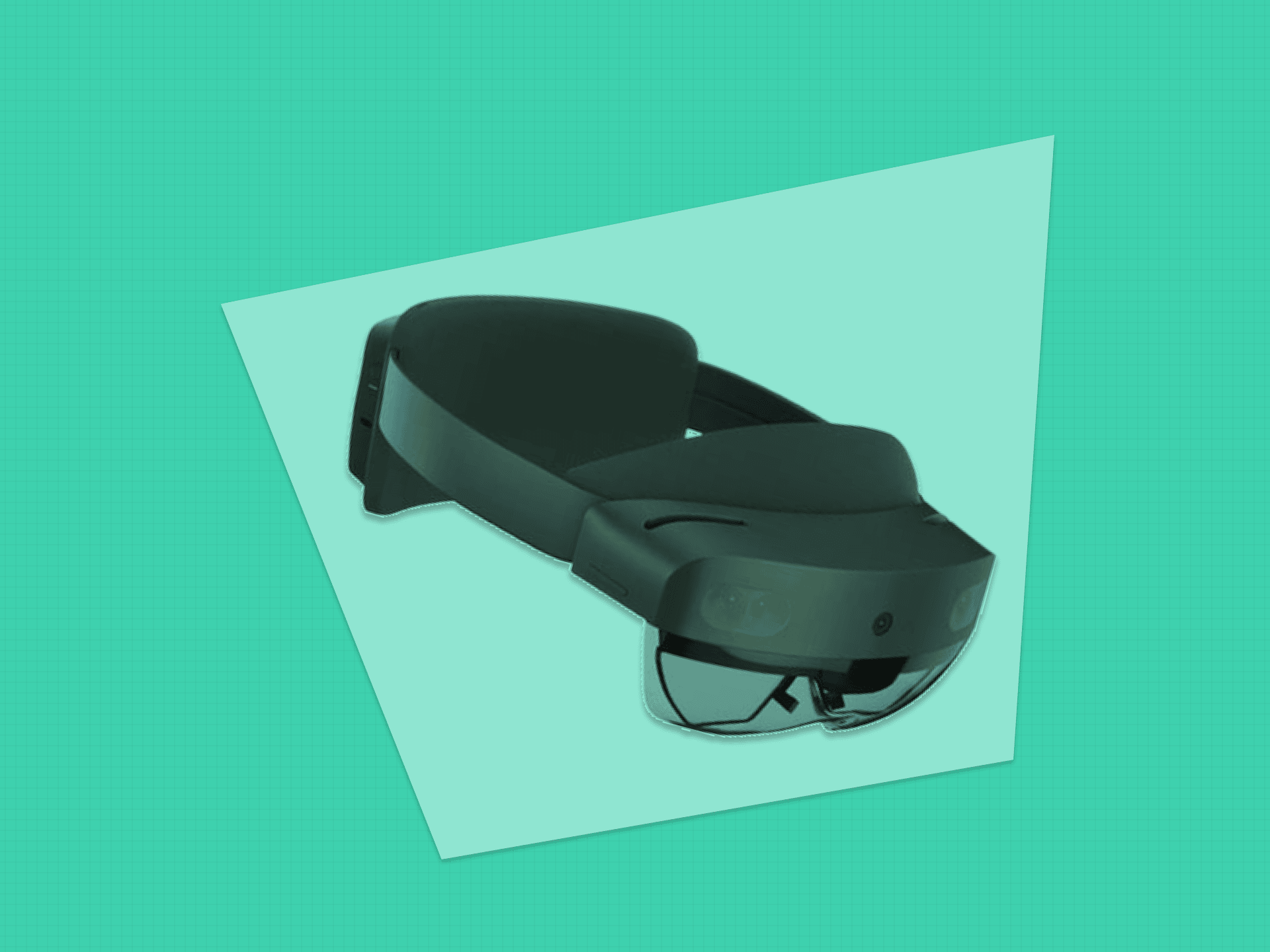
AR-supported safety assistance for construction-site visitors
Initial situation
Construction sites expose visitors and other people with little site experience to hazards that are hard to recognise without specialist knowledge. At the EuroTube construction site in Dübendorf, safety-relevant information had not yet been captured in a consistent digital form that could be presented on site in an accessible way. Visitors therefore depend chiefly on briefings, signage, and escort. That leaves a clear gap whenever orientation and hazard awareness need support directly in the physical environment.
Problem statement / Project goal
The aim of this bachelor’s thesis is to specify a digital safety model for AR-supported safety assistance and to realise it as a Microsoft HoloLens 2 proof of concept. The demonstrator addresses people unfamiliar with construction sites and covers four coordinated use cases. These are no-go zones, safe-route guidance, moving machinery with collision risk, and emergency notifications. Static hazards are loaded from a curated configuration. Dynamic collision risks and emergency events arrive through a simulated MQTT feed. The evaluation examines comprehensibility and usability within a bounded research proof of concept. It does not claim to deliver a certified or production-ready safety system.
No-go zone
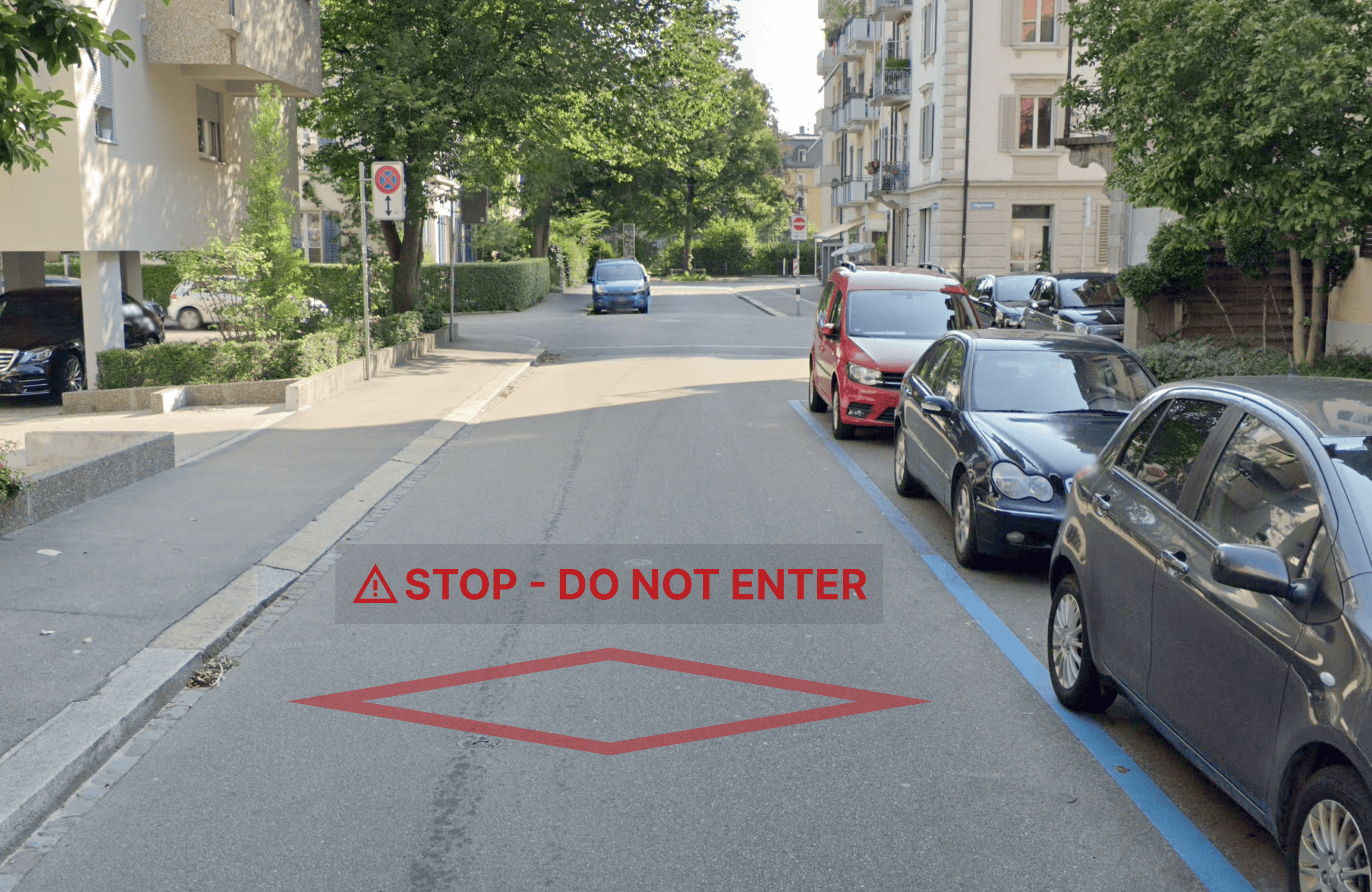
World-locked exclusion zones make restricted areas visible in AR and help visitors judge whether they may enter a given space. Severity was encoded visually, but the user study found that distinction hard to read.
Safe route
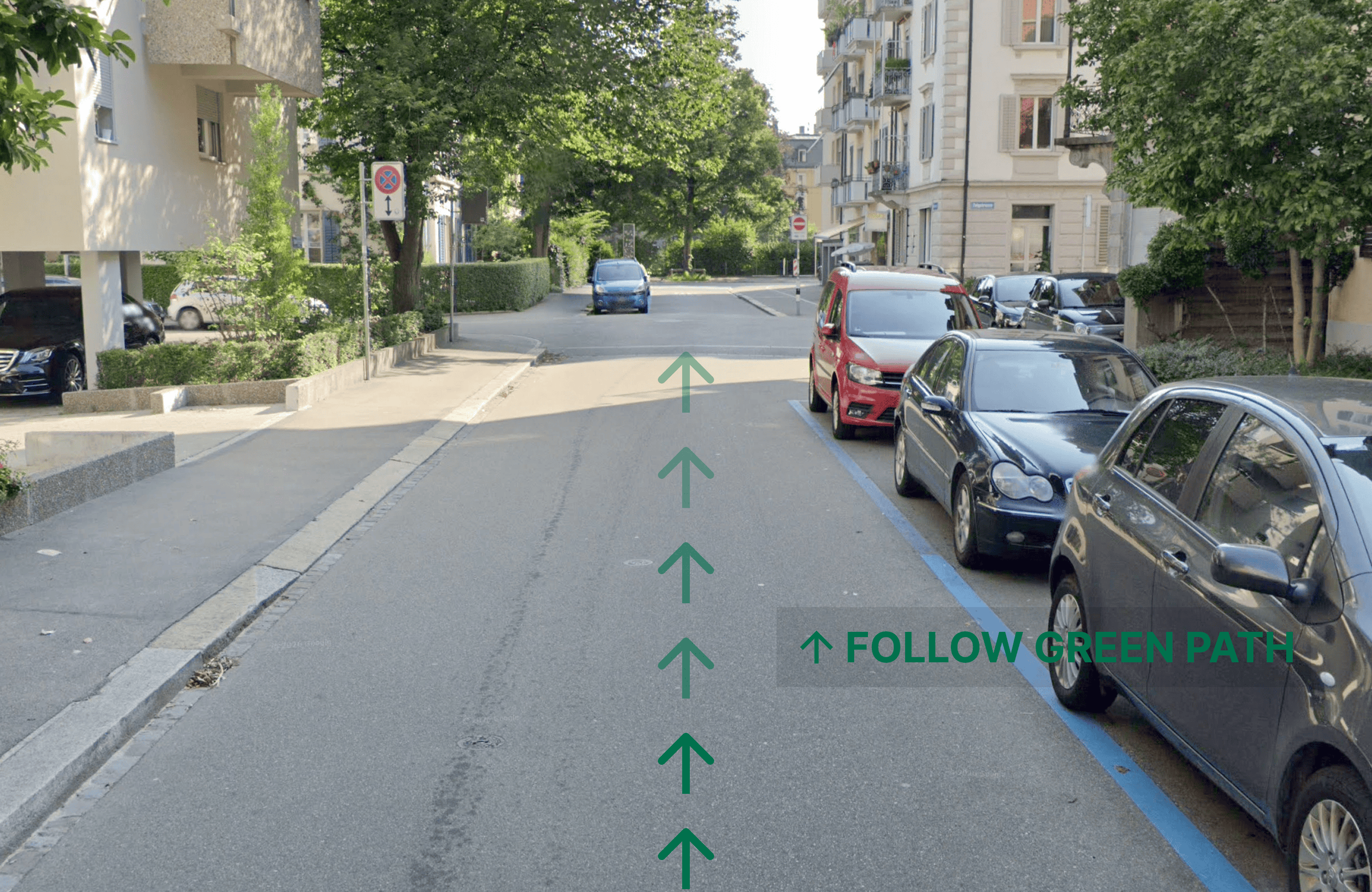
Positive corridor guidance shows an approved walking path and helps visitors stay on that route while avoiding restricted areas.
Collision risk
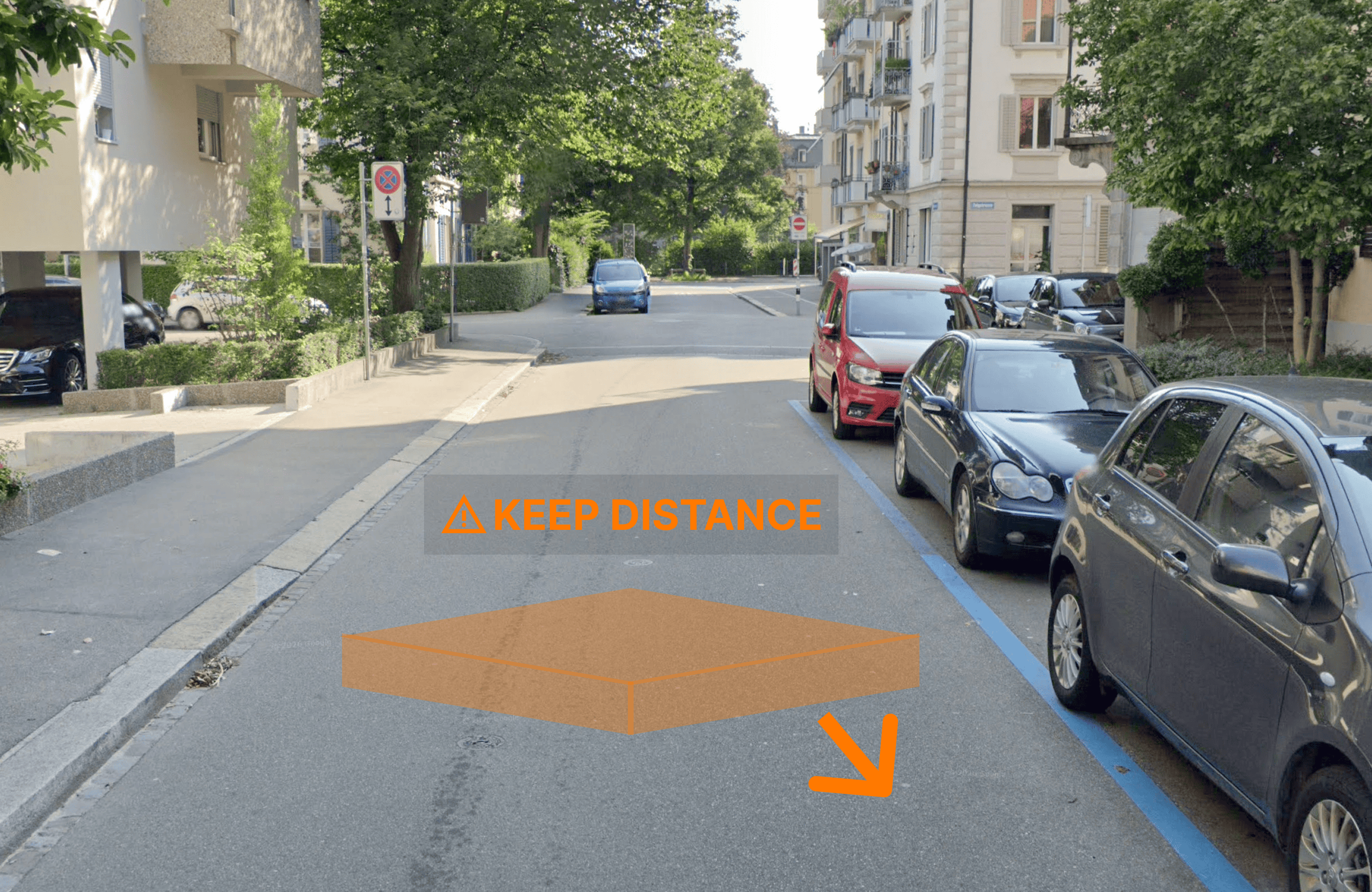
Dynamic warnings for moving machinery draw on an off-device MQTT feed, protective envelopes, and freshness-aware fail-safe behaviour so that approaching risks remain visible and trustworthy.
Emergency
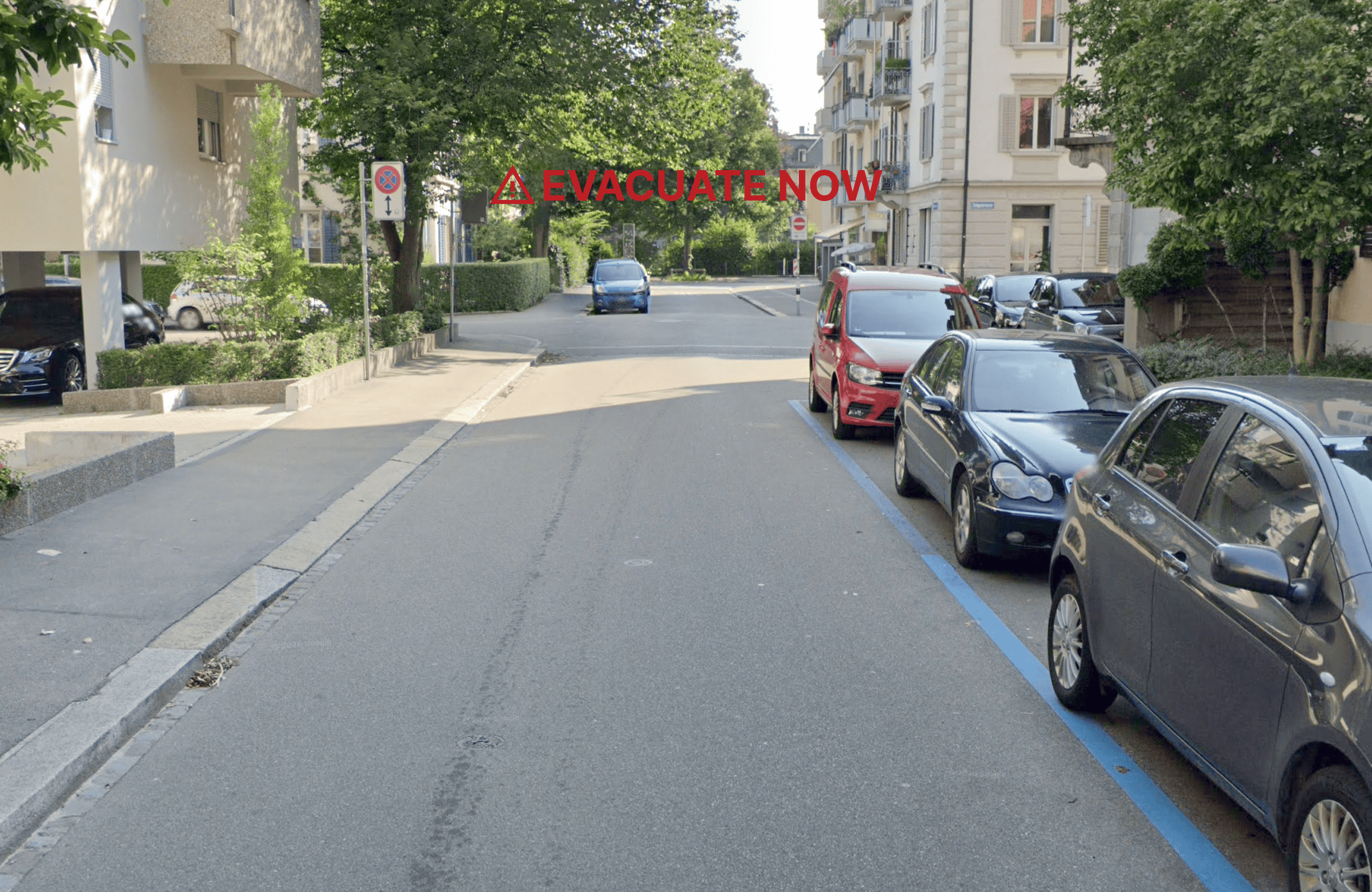
Broadcast emergency notices take precedence over other cues and prompt users to return promptly to an evacuation point.
Solution developed and its benefits
The solution brings together a documented digital safety model and a Unity-based HoloLens 2 demonstrator. The model defines hazard type, urgency, recommended action, data freshness, and multi-hazard prioritisation. On the headset, a deterministic pipeline loads configuration and feed events, derives active hazards, prioritises them, and renders world-locked AR cues. Detection remains off-device. The proof of concept uses curated JSON for static hazards and a simulated MQTT feed for dynamic and emergency events.
- A digital safety model with clear semantics for static, dynamic, and emergency hazards
- Four AR use cases covering no-go zones, safe routes, collision risk, and emergencies
- World-locked cues on Microsoft HoloLens 2 with optical see-through AR
- Fail-safe freshness handling for feed-driven hazards
- An MQTT-based simulated external feed for dynamic and emergency events
- A within-subjects user study with ten participants using SUS, NASA-TLX, Likert items, and interviews
- Above-average usability in the study with a SUS score of 79.3 ± 13.3 and high cue recognition
The main weaknesses were severity discrimination between no-go zones and the recommended response to moving machinery. Within the limits of the proof of concept, including a controlled indoor setting and a simulated feed, the findings support exploratory claims about comprehensibility and usability for construction-inexperienced visitors. They do not support claims of certified safety or productive real-time detection.
Key terms
- Augmented RealityOptical see-through AR assistance for on-site hazard awareness
- HoloLens 2Microsoft mixed-reality headset used for the demonstrator
- Digital safety modelStructured model of hazard type, urgency, action, freshness, and priority
- Construction safetyVisitor-oriented safety assistance in a construction-site context
- MQTTSimulated external feed for dynamic collision risks and emergencies
- Unity / Mixed RealityUnity 2022.3 LTS with Mixed Reality OpenXR for the HoloLens 2 build
- EuroTubeIndustry partner and construction site in Dübendorf
Customer
EuroTube Foundation
Lorenzo Benedetti
eurotube.org
Team
Nicolas Staub
Advisors
Prof. Dr. Anton Fedosov
Luca Fluri