
26FS_IIT02: Designing and deploying an e-Accessibility station at the FHNW
AccessQuest: Islands of Inclusion
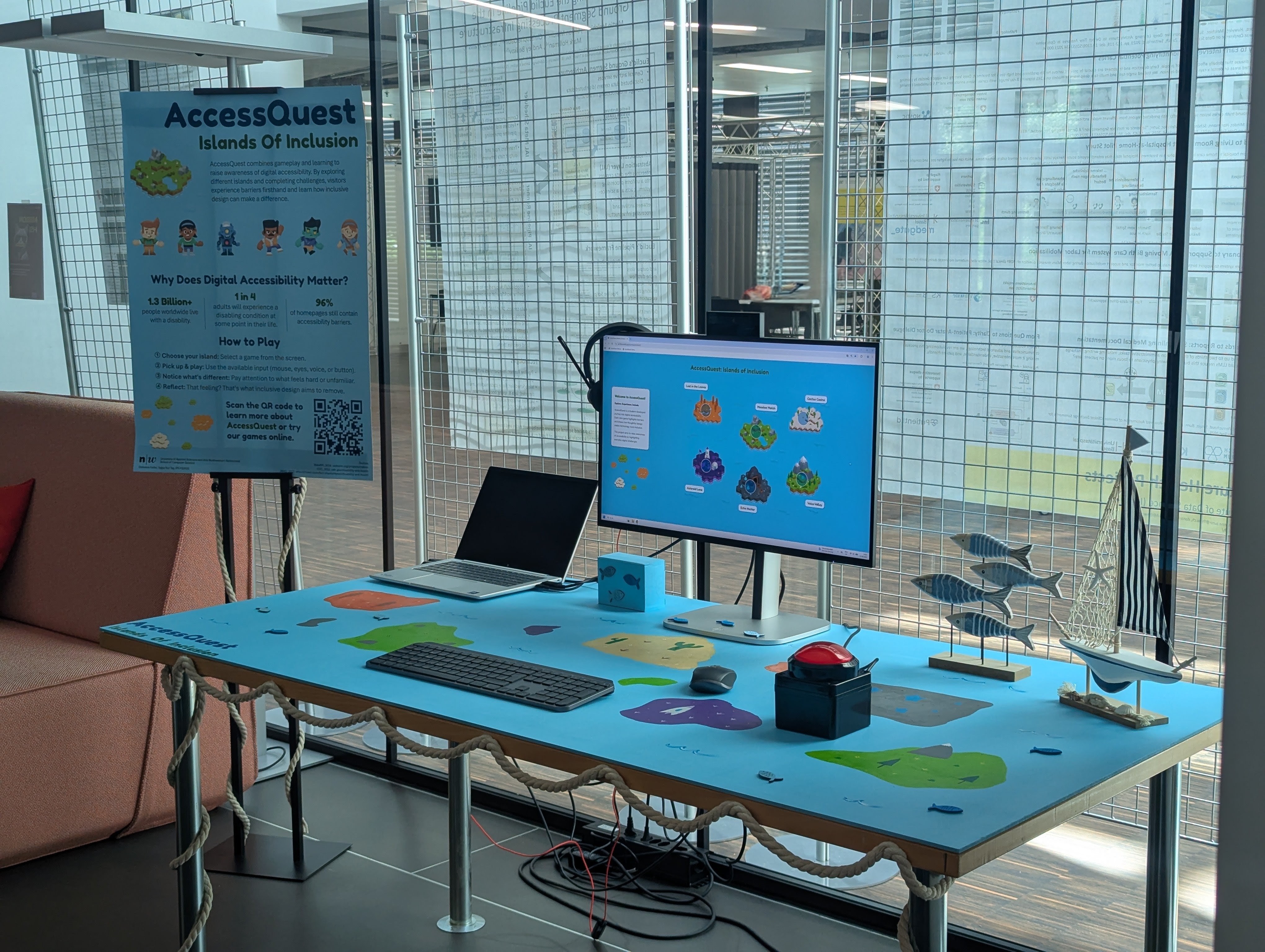
A game-based platform for experiencing and understanding e-accessibility, featuring six interactive mini-games, an informational website, and a physical workstation at the IIT department of the FHNW in Brugg-Windisch.
Initial situation
Digital accessibility plays an increasingly important role in developing inclusive digital environments. At FHNW, the topic has gained visibility through the AG Diversity working group's efforts. However, students and staff without first-hand experience with impairments, remain unaware of the barriers others encounter when interacting with digital systems. Some examples are inaccessible navigation, absent alternative input methods, or poorly structured content. While typical e-accessibility education relies on theoretical knowledge, providing practical understanding of how these barriers actually affect the user experience can better increase awareness. With the IP5 we created a first prototype, where we tested out three games, that were extended with IP6.
Problem statement / Project goal
Building on the IP5 prototype, this project extends the AccessQuest platform in several ways: three new games covering voice control and audio navigation, a redesigned technical architecture supporting both a physical workstation and an online version accessible to anyone, and a structured user study assessing how the platform influences participants' awareness and understanding of e-accessibility. The project addresses the question of how a game-based platform can be designed and deployed to create an understanding experience around e-accessibility at the FHNW.
🍂 Lost in the Leaves
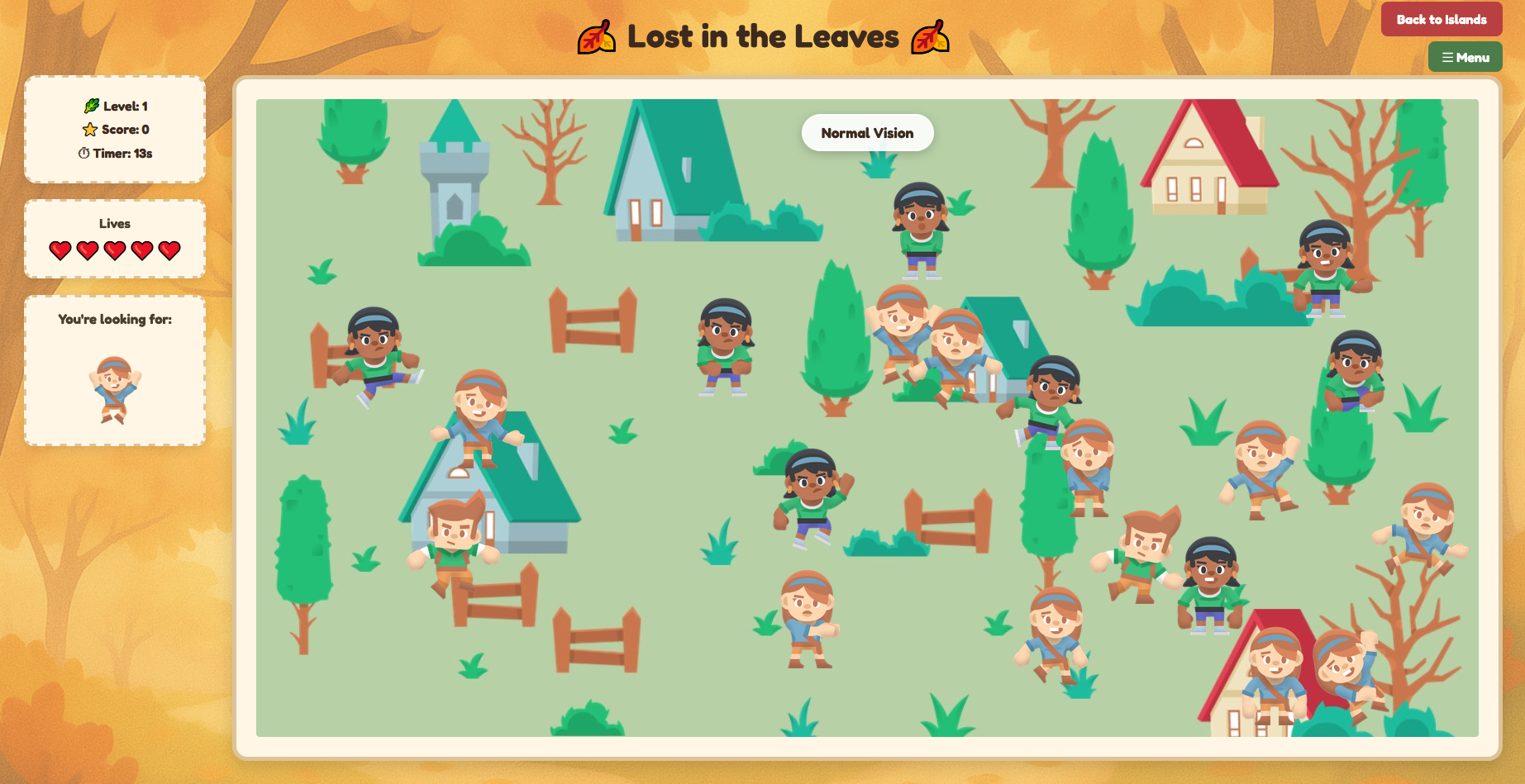
A Waldo-style search game that simulates visual impairments including colour blindness, blurred vision, tunnel vision, and contrast reduction. Players search for a target character in a crowd while experiencing how visual barriers affect everyday digital interaction.
🌼 Meadow Match
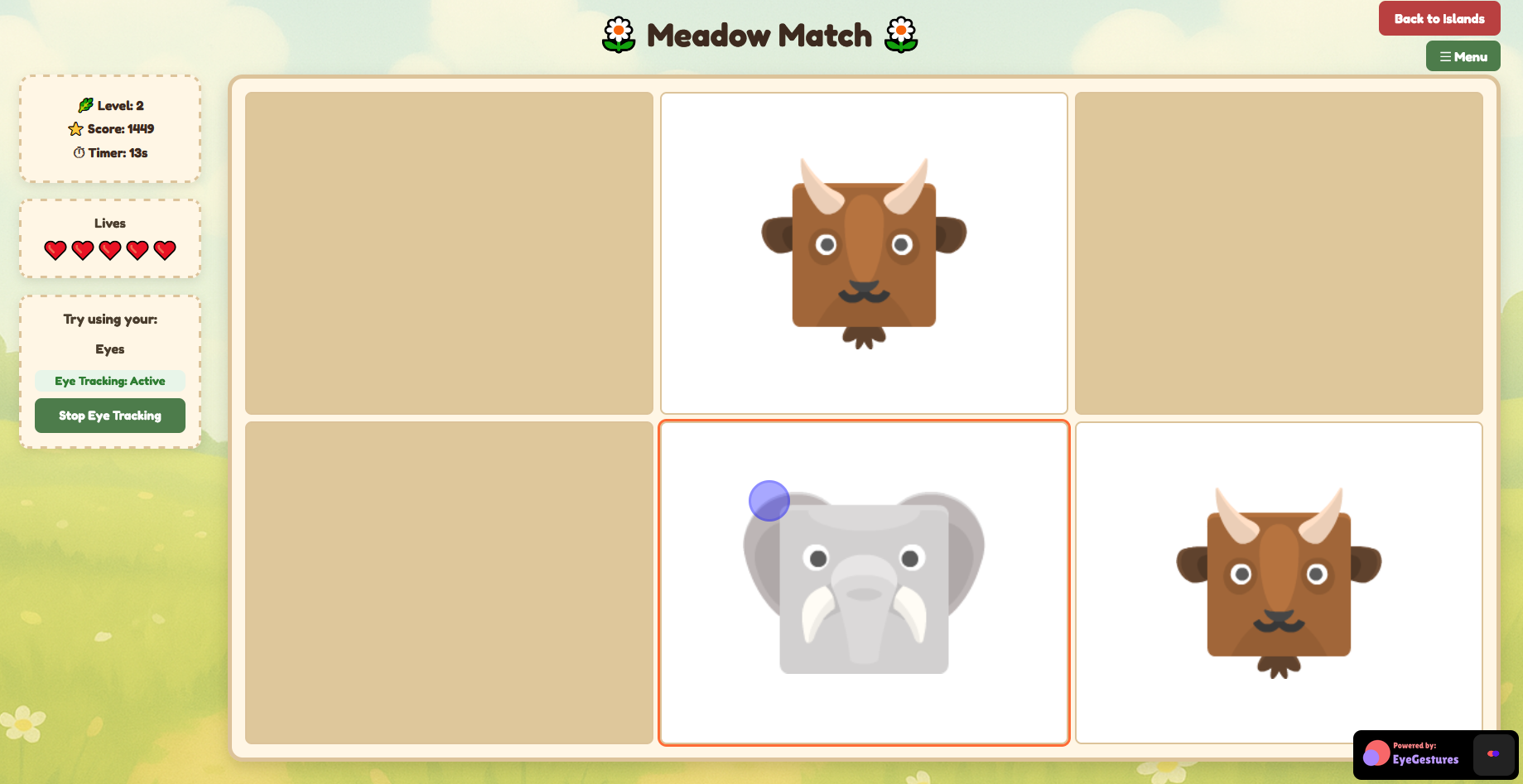
A memory card game controlled entirely through eye tracking. Players flip cards using only their gaze. No mouse, no keyboard. Demonstrates how people with motor impairments can interact with digital systems through gaze-based dwell-time selection.
🌵 Cactus Casino
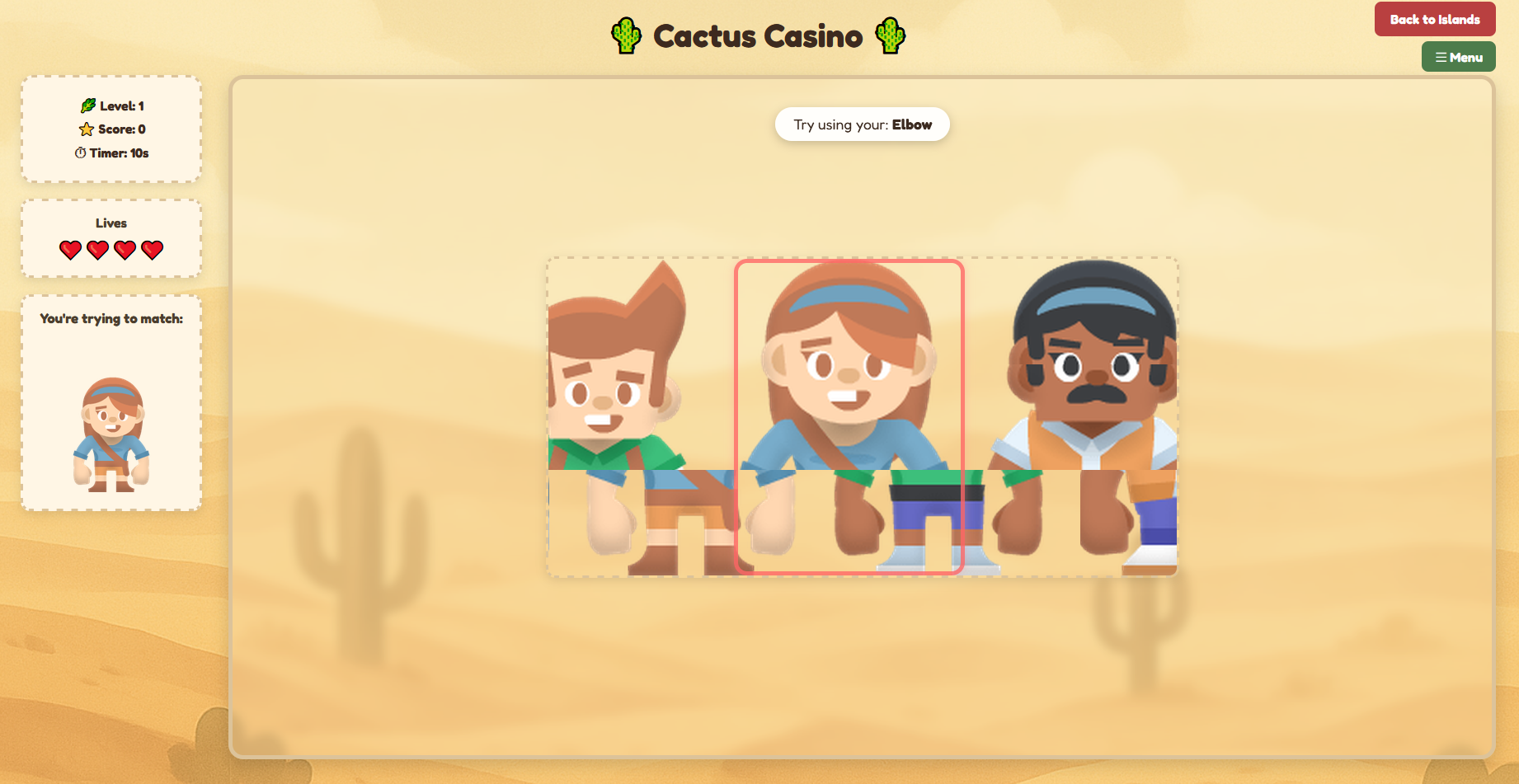
A timing-based slot machine game using a custom input button. The game is played exclusively with one physical button, showing how simplified controls and adaptive hardware can open up digital experiences for people with severe motor limitations.
🐸 Voice Valley
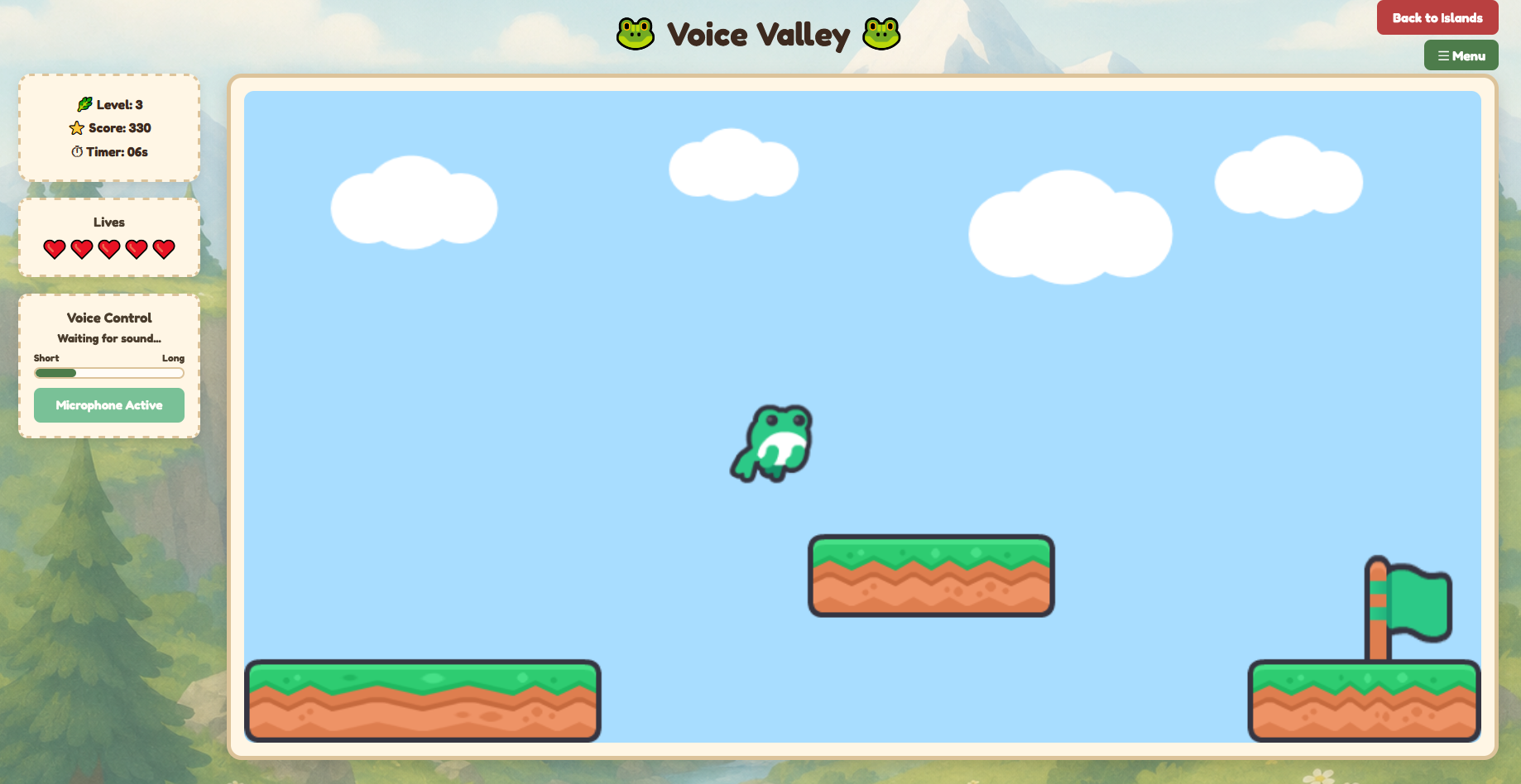
A platforming game where players guide a frog by making sounds into the microphone. Short sounds produce short jumps, long sounds produce long jumps. Explores voice as an alternative input method and demonstrates how speech-based control can increase accessibility for people who cannot use traditional input devices.
🔊 Echo Hunter
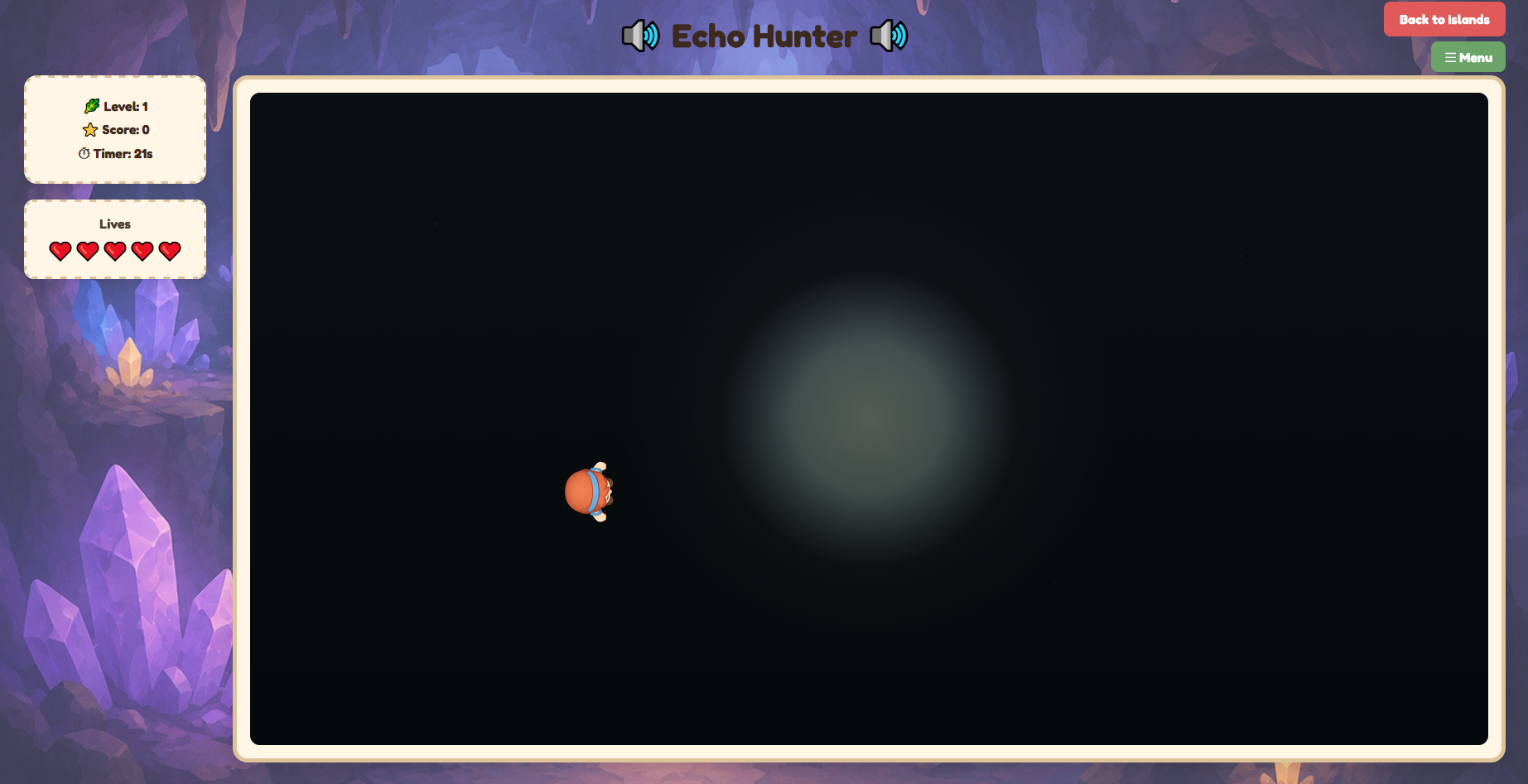
A cave navigation game where players locate a hidden gem by following directional audio cues instead of visual information. As levels progress, distracting sounds are added. Demonstrates how audio feedback and spatial sound can support navigation for people with visual impairments.
☄️ Asteroid Lane
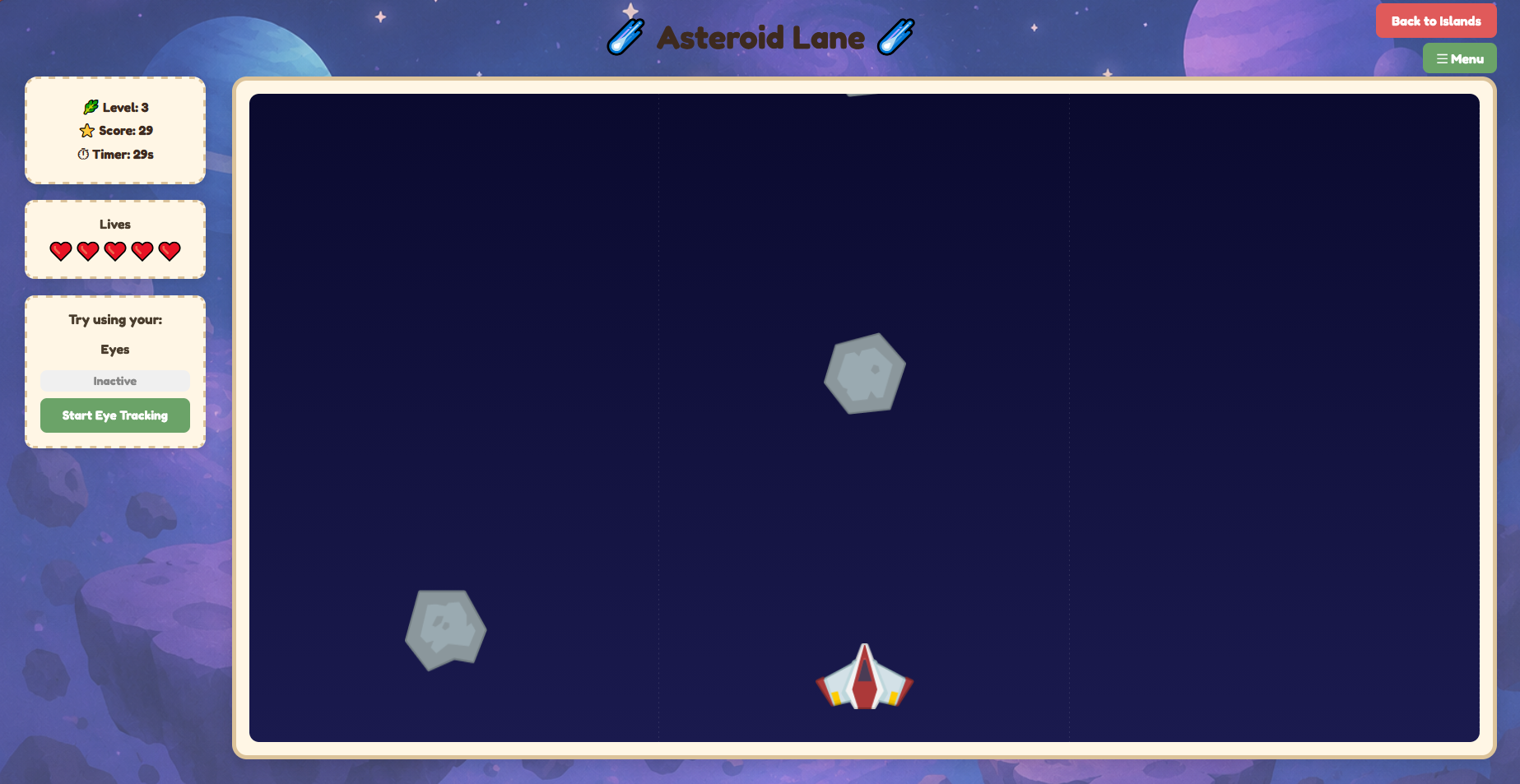
A space navigation game where players steer a spaceship through falling asteroids using only their eyes. Demonstrates eye tracking as a hands-free alternative input method and shows why flexible interaction design matters for users who rely on assistive technologies.
Solution developed and its benefits
The project delivers an extended AccessQuest platform with six accessibility-focused mini-games, a public informational website, and a physical workstation at FHNW Brugg-Windisch. The architecture is designed to support both the physical station, with custom hardware input, and an online version accessible to anyone via browser. The platform was evaluated through a structured user study, assessing its effectiveness as an awareness tool for e-accessibility education.
- Eye-tracking integration for touchless, gaze-based interaction in two games
- Voice input via Web Audio API enabling microphone-controlled gameplay
- Spatial audio navigation demonstrating sound as an accessibility channel
- Custom input button illustrating adaptive hardware principles
- Real-time visual impairment simulation through CSS filters
- Physical and online deployment from a single codebase
- Informational website with game descriptions, accessibility context, and project information
- Accessibility measures throughout the platform based on WCAG 2.1 A/AA criteria
The platform transforms abstract accessibility concepts into direct, first-person experiences. By encountering barriers through gameplay rather than reading about them, users build genuine understanding of why inclusive design matters and what it enables for people who depend on assistive technologies every day.
Try it online: ax-fhnw.netlify.app
Key terms
- Eye TrackingCamera-based gaze detection with dwell-time selection enabling touchless interaction
- Voice ControlMicrophone-based input using Web Audio API amplitude analysis for gameplay control
- Audio NavigationSpatial stereo sound cues as the primary information channel, replacing visual feedback
- Custom Input ButtonCustom input button demonstrating assistive hardware for motor impairments
- Accessibility SimulationReal-time visual filters simulating colour blindness, blur, and tunnel vision
- Alternative Input MethodsIntegration of eye tracking, voice, and custom input button as primary interaction modalities
- GamificationUse of game mechanics to create engaging accessibility education
- WCAG 2.1Web Content Accessibility Guidelines informing the platform's own interface design
Team
Dobrawa Dunja Kiefer
Tuğçe Nur Taş
Advisors
Prof. Dr. Kevin Gonyop Kim
Client
Andrea Flora Bauer
AG Diversity of FHNW