
Robust Protocol for Remote Controlled Hooks
Development of a unified, robust, and extensible radio communication protocol for the entire LudwigSystem GmbH & Co. KG device ecosystem.
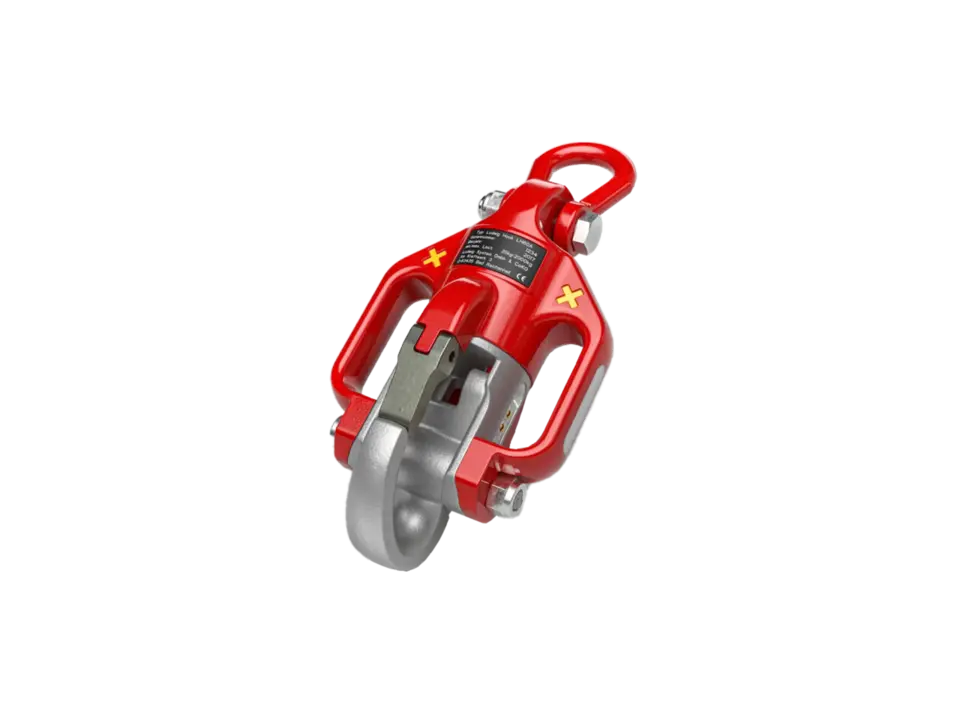
LudwigHook
Initial situation
LudwigSystem GmbH & Co. KG is a German company that designs and produces radio-controlled load hooks, load cells, and some other devices for industrial lifting and logistics operations. These devices operate in the 868 MHz band. Each unit contains a microcontroller that collects, stores, and transmits operational data via wireless communication.
Problem statement / Project goal
LudwigSystem's wireless devices must deliver reliable communication and ensure efficient integration. Inconsistent device communication protocols have led to increased maintenance efforts, frequent integration difficulties, and reliability issues with increasing deployments. These challenges reduce operational efficiency and inhibit straightforward management of their growing IoT networks. Therefore, the primary goal of this thesis was to develop a unified, robust, and extensible protocol to standardize communication.
Protocol Layering
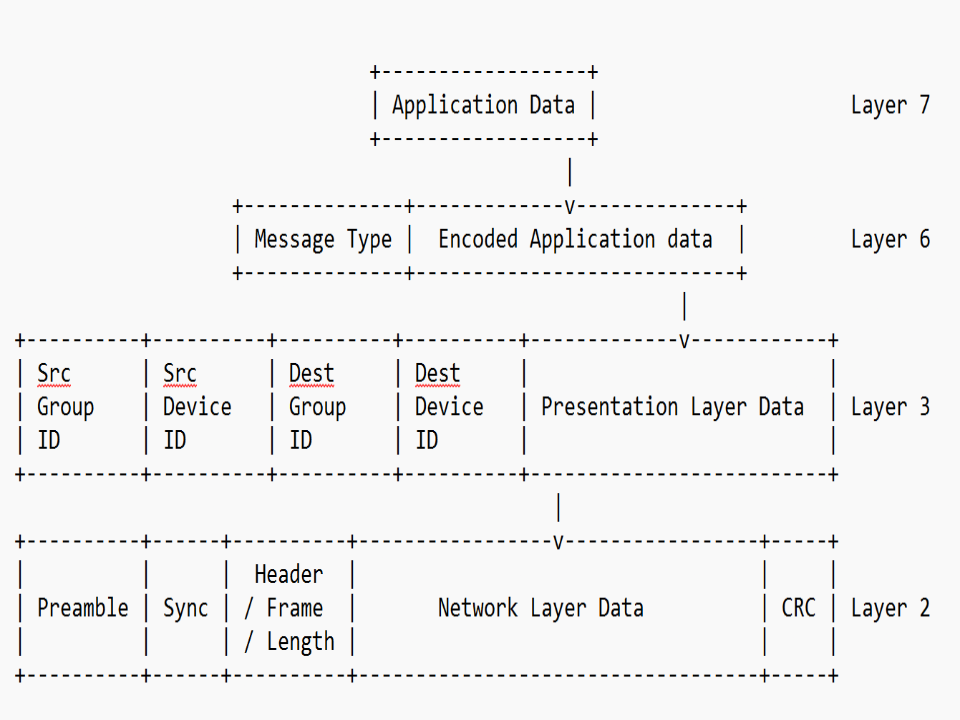
The layering of the protocol is depicted in this figure. It illustrates the encapsulation of data as it passes down through the protocol's layers.
Proof-of-Concept Setup
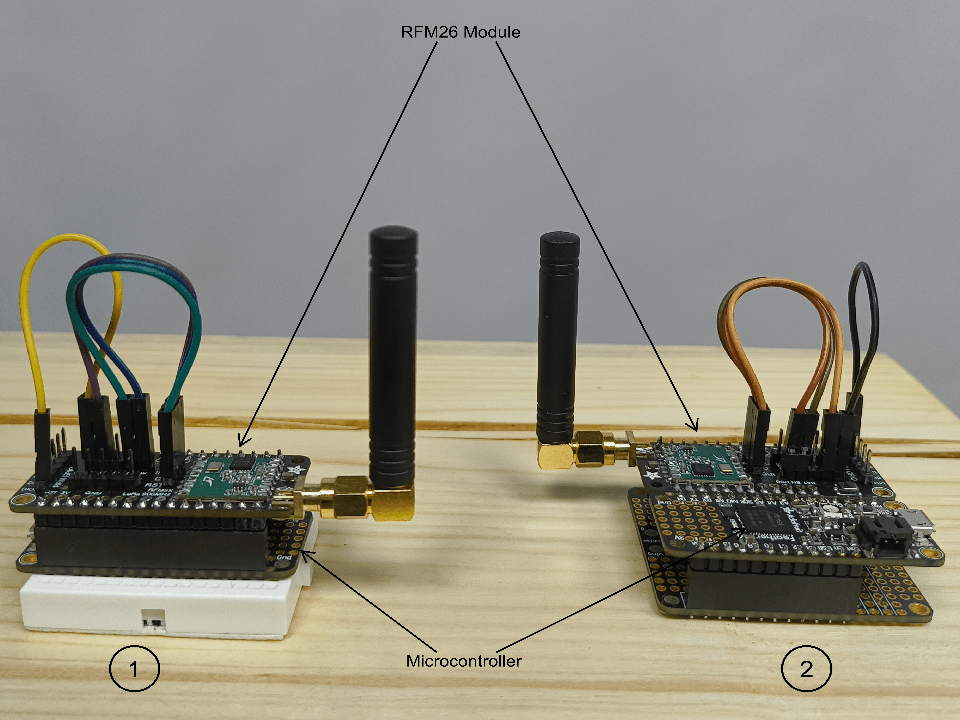
This figure illustrates the Hardware setup of the proof-of-concept (PoC). It depicts the two microcontrollers, which simulate a gateway(1) and a device(2) node. It also shows their respective RFM26 Module, over which the communication happens.
Proof-of-Concept Video
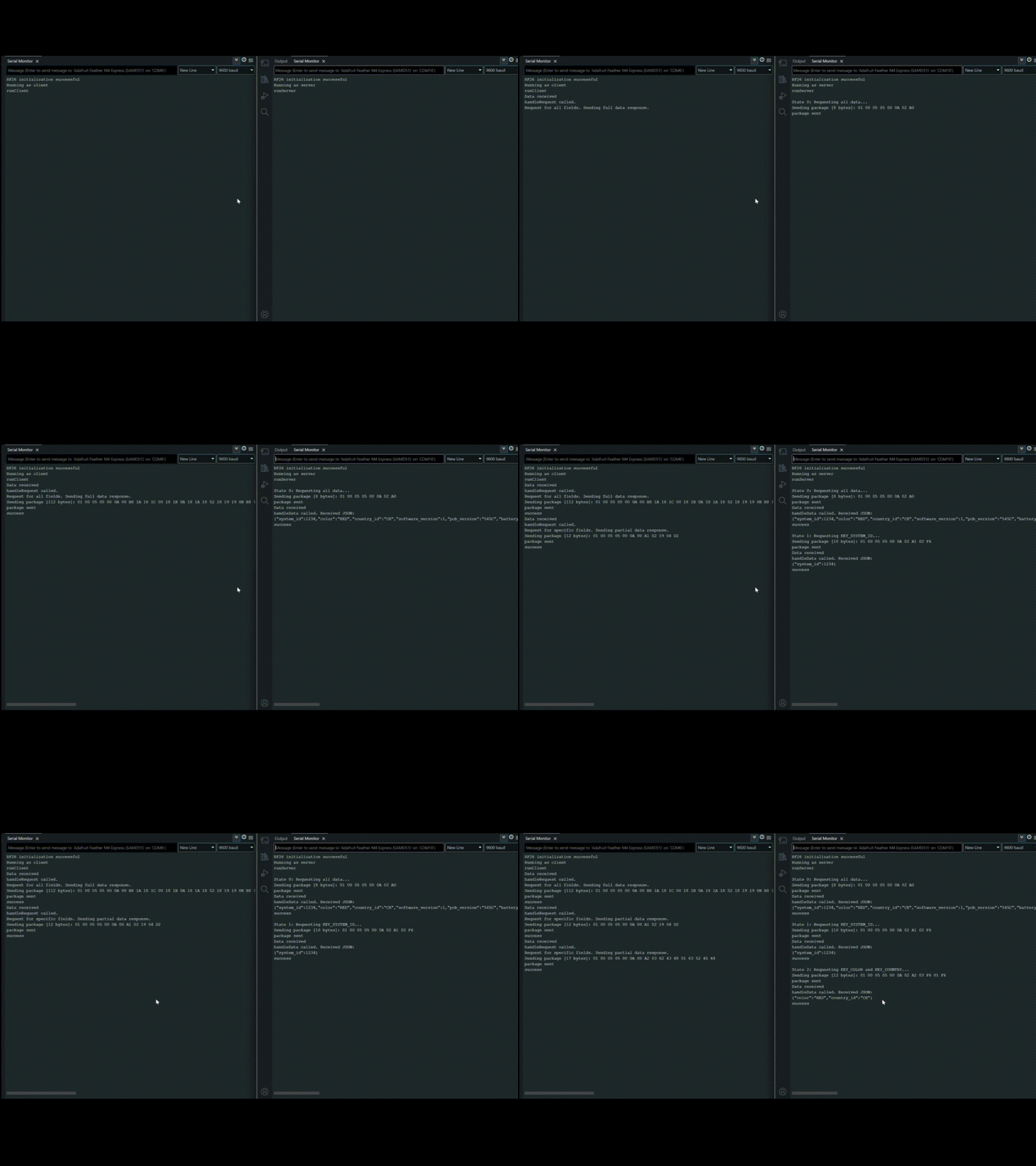
This short clip shows the terminal output of the running PoC. It shows the client(left) responding to the requests from the gateway(right).
Solution developed and its benefits
To address the existing challenges, a new, unified, and robust communication protocol was engineered from the ground up to serve as the communication backbone for LudwigSystem's entire IoT device ecosystem. The solution is built on two strategic pillars that deliver significant benefits. For the first, a static, globally unique addressing scheme was implemented, resolving the critical challenge of device identification and enabling reliable unicast (one-to-one), multicast (one-to-group), and broadcast (one-to-all) communication without the complexity of a central network coordinator. As for the second, the protocol uses Concise Binary Object Representation (CBOR) for data encoding, which provides an optimal balance between the high transmission efficiency and the flexibility required to support future devices and features without breaking compatibility.
This project successfully delivered three key outcomes: a formal protocol specification, a complete software library in C for straightforward integration, and a hardware-based proof-of-concept that demonstrated flawless end-to-end communication between a device and a gateway node.
Once fully deployed, this solution shall establish a unified and future-proof communication standard across the entire LudwigSystem device ecosystem.
Key terms
- IoT ProtocolA specialized set of rules for communication between Internet of Things devices.
- Communication ProtocolThe foundational rules governing data exchange between electronic devices.
- Wireless CommunicationData transmission without physical connections, typically using radio waves.
- Radio CommunicationA specific type of wireless communication utilizing radio frequency waves.
- 868 MHzA radio frequency band designated for short-range device communication in Europe.
- RFM26WA specific low-power, long-range radio transceiver module for embedded applications.
- CBORConcise Binary Object Representation; an efficient and compact data serialization format.
- Protocol EncodingThe process of converting data into a specific format required by a communication protocol.
- Static AddressingA network configuration where device addresses are fixed and manually assigned.
- Embedded SystemsComputer systems with dedicated functions within larger mechanical or electrical systems.
- C LibraryA collection of pre-written C functions designed for reuse in software development.
- MicrocontrollerA compact integrated circuit that governs a specific operation in an embedded system.
- BNF (Backus-Naur Form)A formal notation for describing the syntax and structure of a communication protocol or language.
Customer

LudwigSystem GmbH & Co. KG
Peter Ruf
Reichenhaller Strasse 109
D-83435 Bad Reichenhall
LudwigSystem GmbH & Co. KG
Team
Benaja Kuhn
Andreas Löffel
Advisor
Prof. Thomas Amberg