
UI Strategies for Reducing Conversational AI Energy Consumption
How simple user interface cues can empower people to chat more sustainably with large language model chatbots.
Initial situation
Large language model (LLM) chatbots such as ChatGPT deliver impressive answers but consume considerable cloud-compute energy per request. Because this energy and its associated carbon footprint remains invisible to end users, the environmental impact of seemingly harmless follow up prompts is vastly underestimated. Universities and industry alike therefore seek practical ways to raise awareness and nudge users toward more sustainable interaction patterns.
Problem statement / Project goal
This bachelor thesis investigates whether user interface (UI) interventions alone (without modifying the underlying model) can reduce energy consumption and improve user awareness during chatbot sessions. The goal was to design, implement and empirically evaluate UI patterns that:
- visualise real time energy usage,
- encourage selecting lower footprint model variants and
- actionable personal feedback over time.
Solution developed and its benefits
A fully functional web application, architected with Angular (frontend) and C# Azure Functions (backend), acts as a ChatGPT look-alike and proxies requests to OpenAI’s API. Five lightweight UI features were iteratively designed with reference to cognitive behavioural nudging theory:
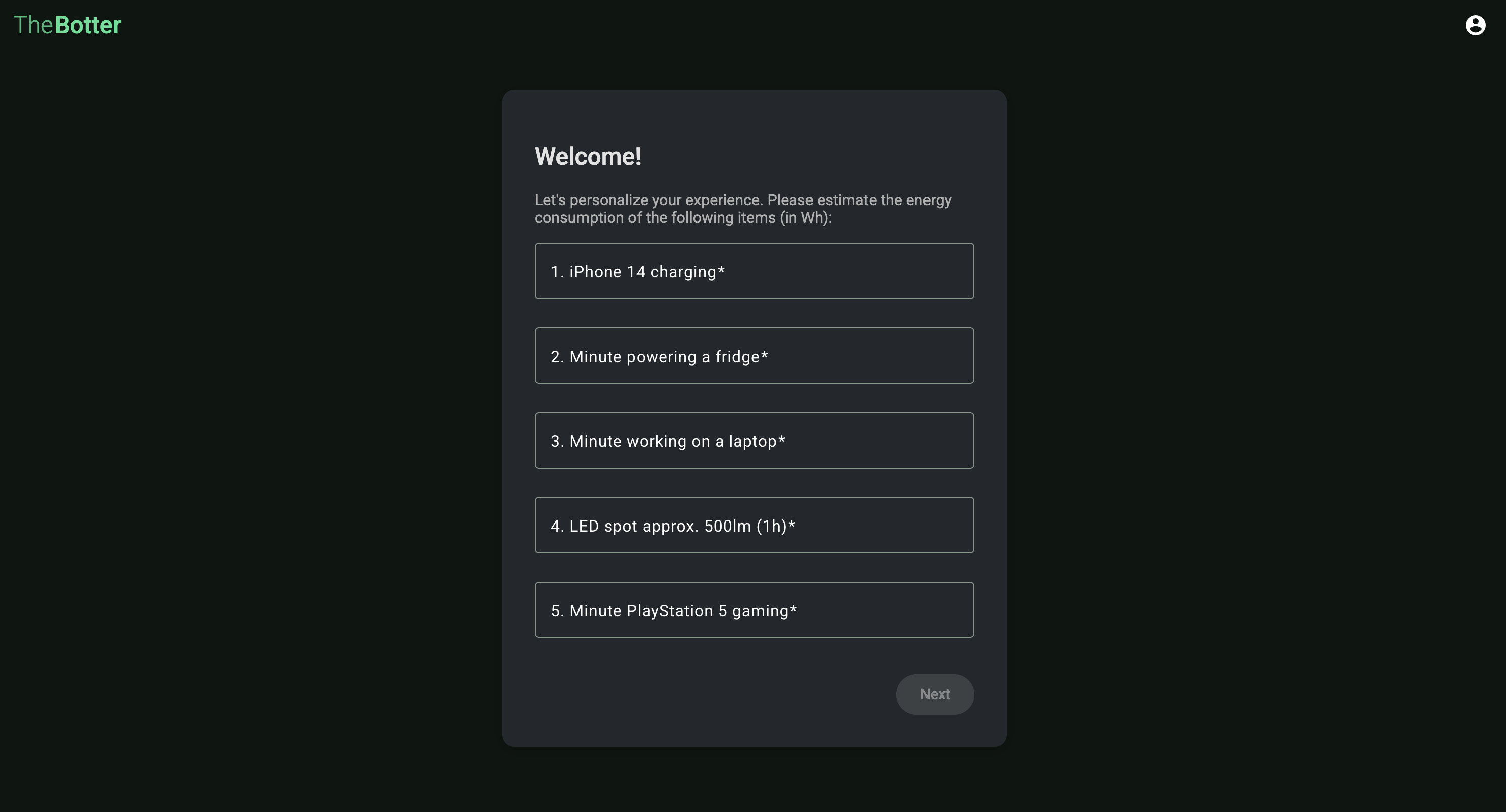
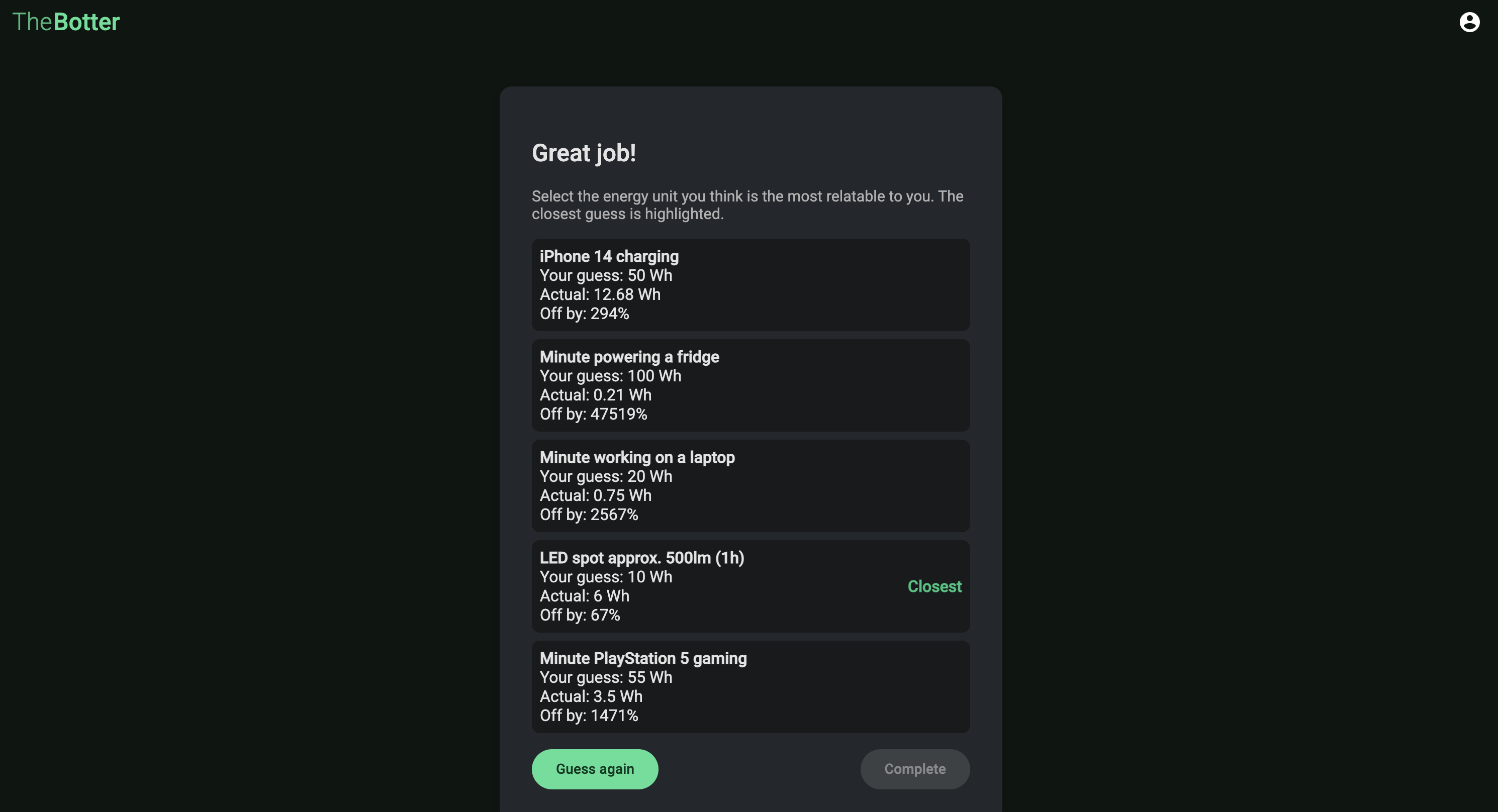
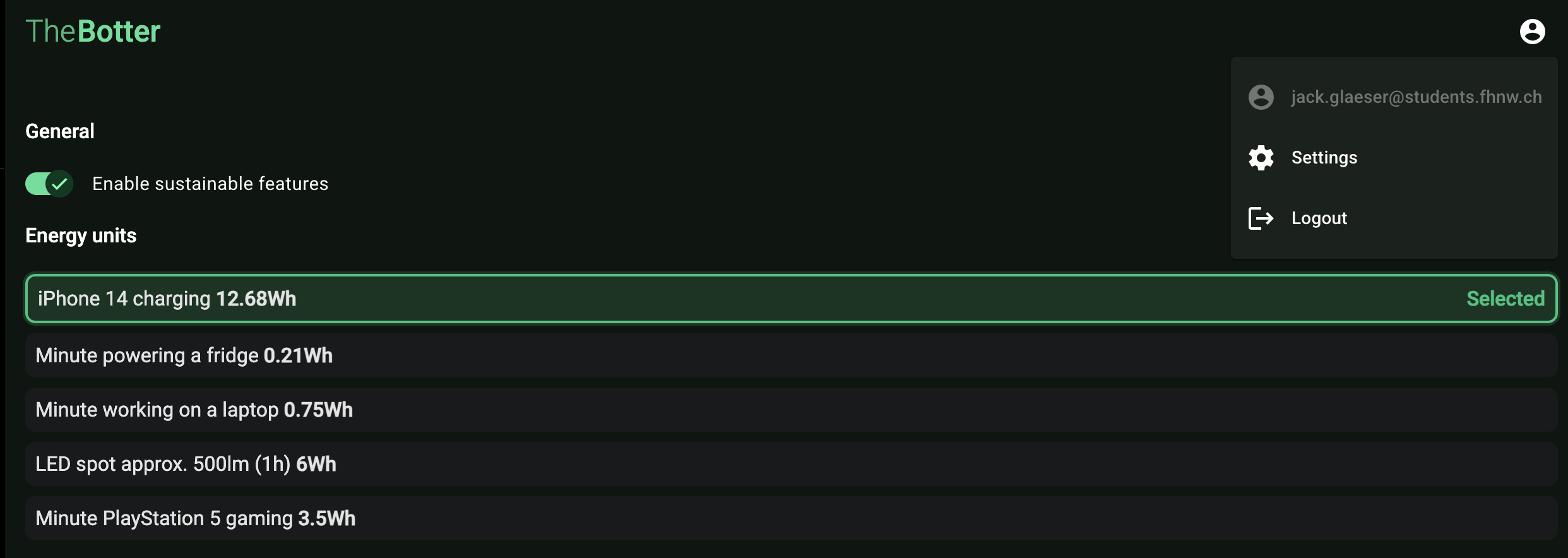
- Energy Analogies & Onboarding: During first-time use, users select an energy analogy unit through a guided tutorial. This selection persists across the app, ensuring consistent, relatable framing of energy values and anchoring user understanding.
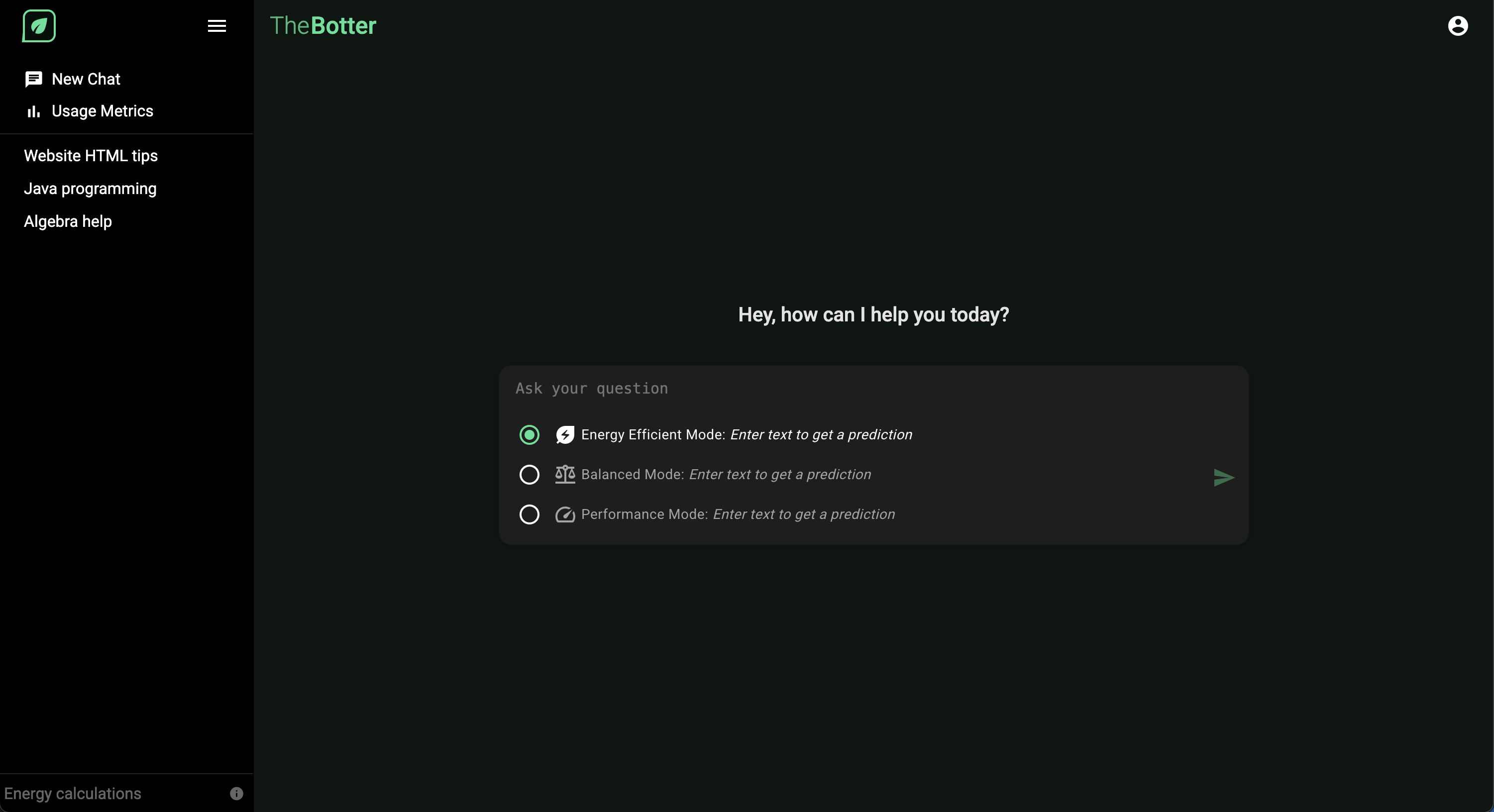
- Prompt Prediction: Displays a real-time estimate of the energy cost (in Wh) for each prompt before it is sent. This anticipatory feedback helps users reflect and potentially rephrase their input to reduce computational demands.
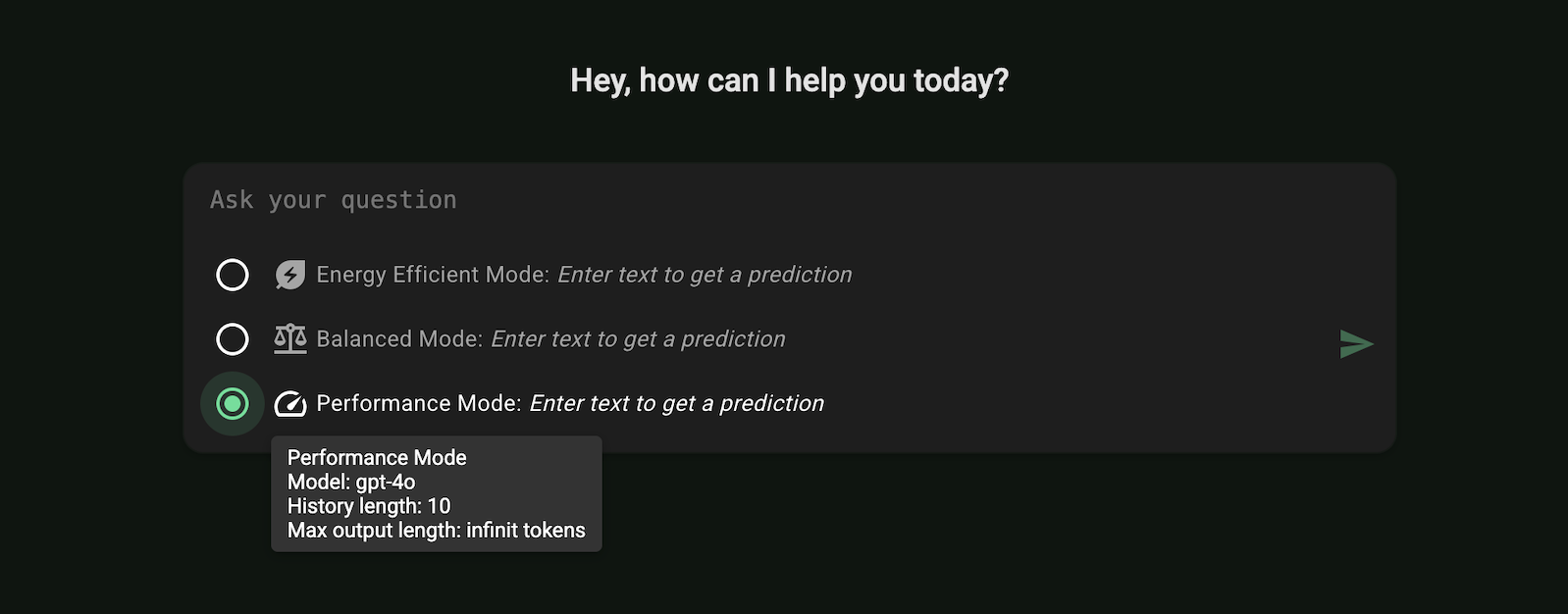
- Mode Toggle: lets users choose bewtween Energy efficient (GPT-4.1-nano), Balanced (GPT-4o-mini), or Performance (GPT-4o); default set to energy efficient.
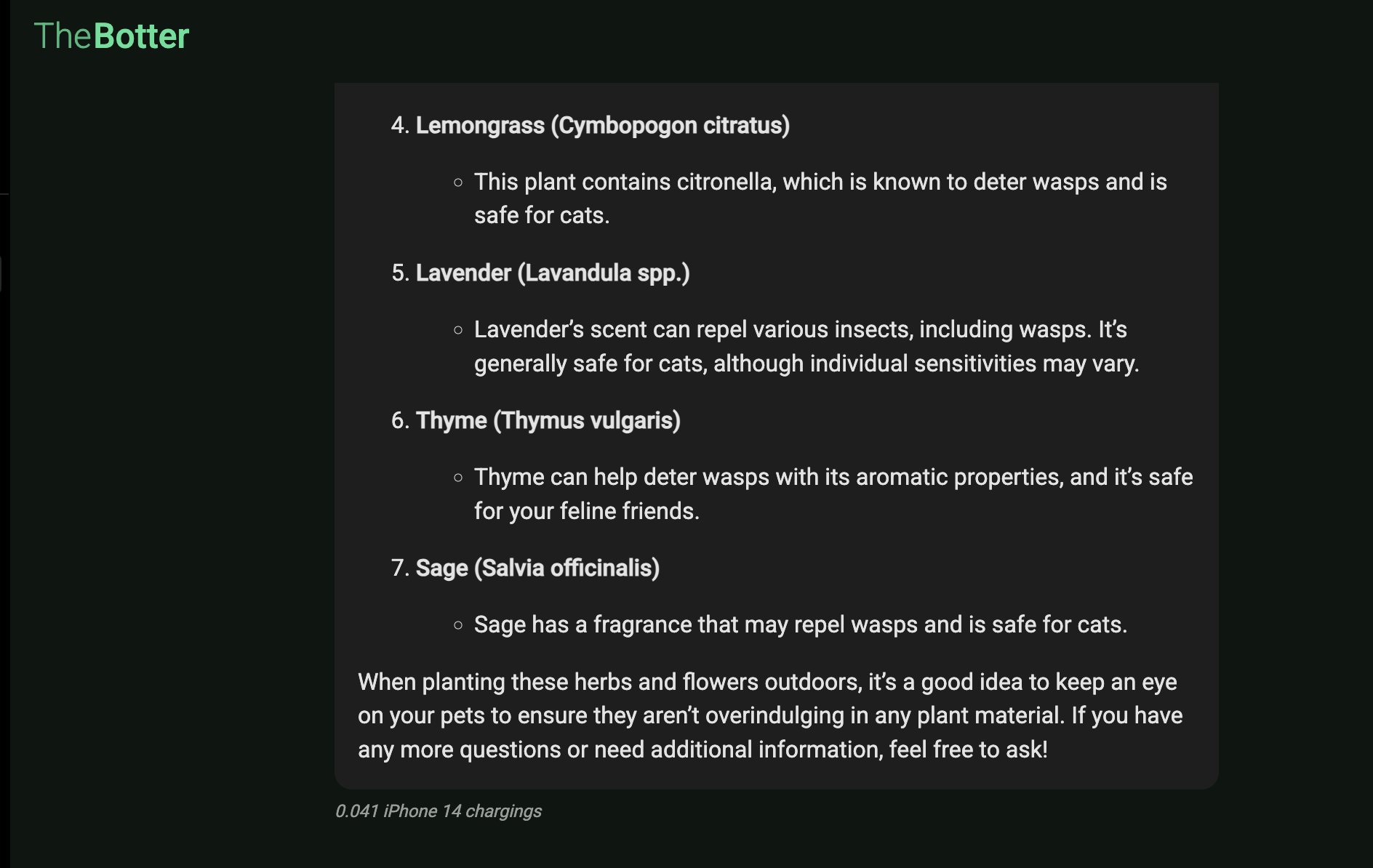
- Energy Note: displays estimated energy usage per answer directly beneath each response in a user chosen metric (e.g. iPhone 14 chargings).
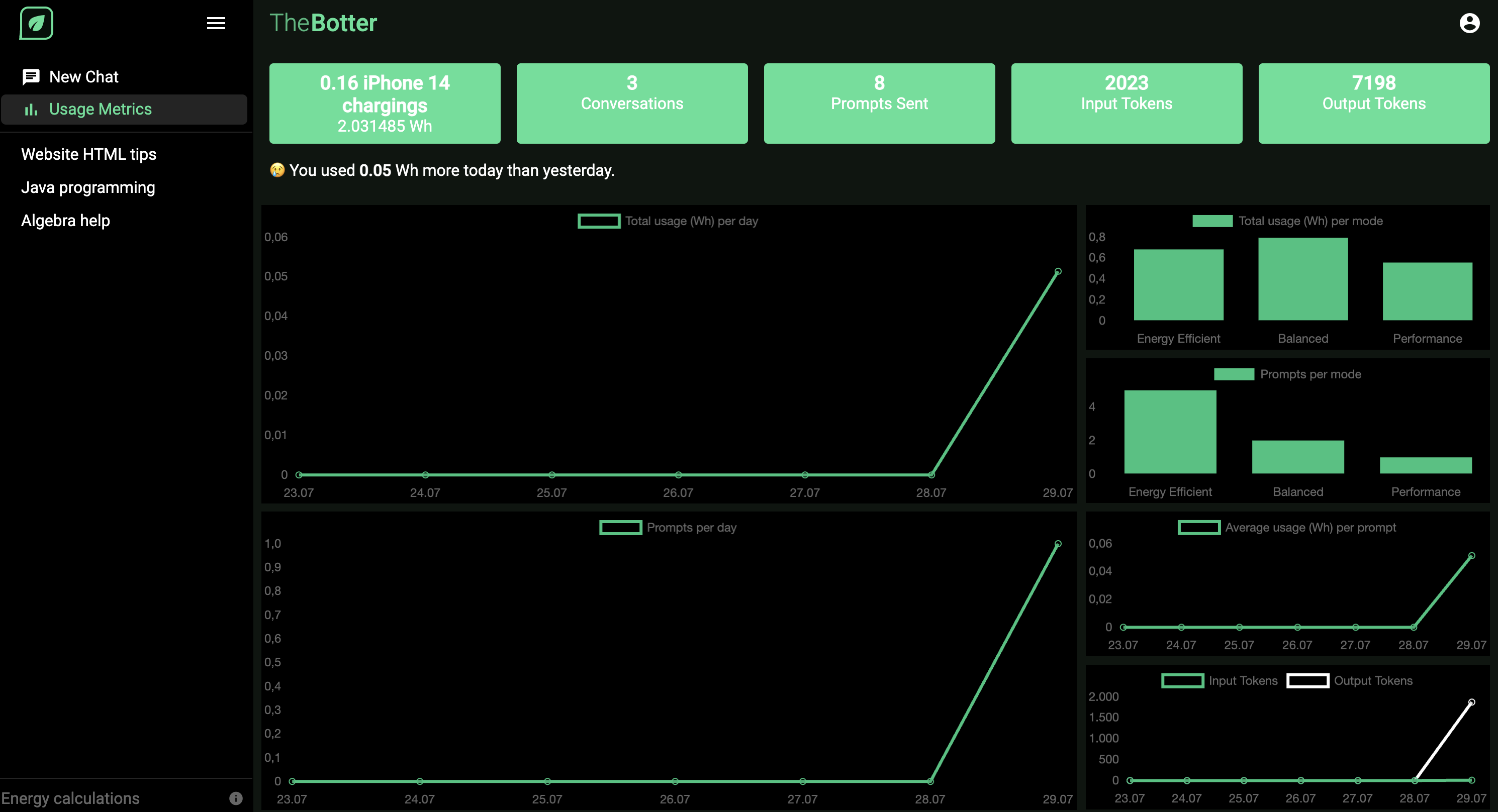
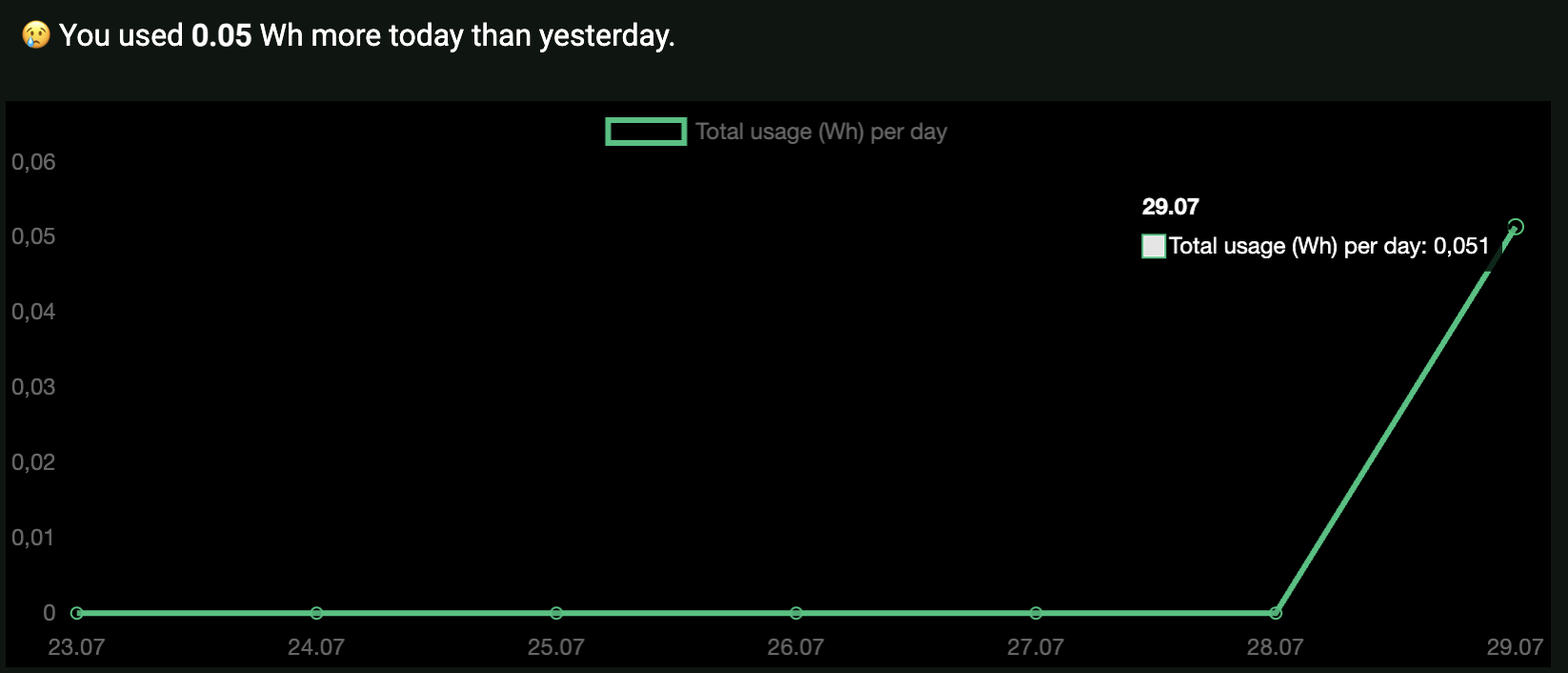
- Personal Metrics Dashboard: aggregates session statistics (energy usage, tokens sent/received, conversations opened, prompts sent and visualises historical trends.
Deployed on Azure Static Web Apps using Azure Functions and Cosmos DB, the system scales elastically while measuring backend energy via Azure Monitor.
To evaluate the effectiveness of these features in fostering awareness and influencing user behavior, we conducted a user study with 11 participants under real usage conditions. The following points presents key findings from this experiment, highlighting usage patterns, feature perception, and their impact on energy consumption (on 5-pt Likert scale):
- 82% of participants chose Energy efficient mode when full accuracy wasn’t critical (median = 4.18).
- Total energy consumption: Energy efficient mode handled 56% of prompts but only 4% of energy; Performance handled 25% of prompts yet 89% of energy.
- Engagement pattern: Dashboard visits were front-loaded (peaked on Day 1) and tapered off -> suggesting push reminders for sustained reflection would be necessary.
- Usability was high: Dll features rated > 4 out of 5; inline mode-toggle topped the list with 4.64; distraction was felt minimal (1.45).
Participant feedback
«Seeing the live energy note changed how I phrased questions, I realised concise prompts save real power.»
Study participant #3
Key terms
- Conversational AILarge language model chatbots
- SustainabilityEnergy & CO₂ footprint awareness
- UI/UX Behavioural design patterns
- Azure CloudStatic Web Apps, Functions, Cosmos DB
- Angular & C#Frontend and serverless backend stack
Team
Jack Gläser (BSc Computer Science)
Simon Lüscher (BSc Computer Science)
Advisors
Prof. Martin Kropp, Dr. Nitish Patkar