
Interface and Data management of accidents in nuclear power plant simulations
As part of this bachelor’s thesis, we designed and implemented an interactive visualization platform for data generated by nuclear power plant accident simulations. These simulations produce vast and complex datasets, which our application ingests, processes, and presents in a clear and intuitive manner. This enables researchers to efficiently explore, analyze, and gain insights from the simulation results, to support safety assessments and informed decision-making.
Nucleus Logo
Initial situation
Our customer, a research group at the Paul Scherrer Institute, uses tools such as MELCOR and ASTEC to simulate severe nuclear power plant accidents. These simulations calculate complex physical and chemical processes to assess core degradation scenarios and improve plant safety. However, the large binary output files, often containing over 20,000 lines of extracted data, making it challenging to efficiently process, visualize, and store the results. Existing visualization methods are not interactive or user-friendly, and preparing results for analysis and presentation can take weeks. In the scope of a previous project (IP5), we implemented an initial web application that stores simulation data in a NoSQL database, serves it via an HTTP API, and provides interactive line charts to help researchers quickly assess simulation stability before an accident occurs.
Problem statement / Project goal
The goal of this project is to improve the efficiency and usability of accident simulation data analysis for our customer. We aim to provide an intuitive, user-friendly application that streamlines the workflow, reduces analysis time, and ensures all required information is accessible. Key objectives include delivering interactive visualizations that can be easily integrated into reports and research papers, enabling quick assessment of simulation stability, and maintaining close collaboration with the customer to align the solution with their needs. By simplifying data access and enhancing visualization quality, the application will support faster, more accurate decision-making in nuclear accident research.
Calculation Management
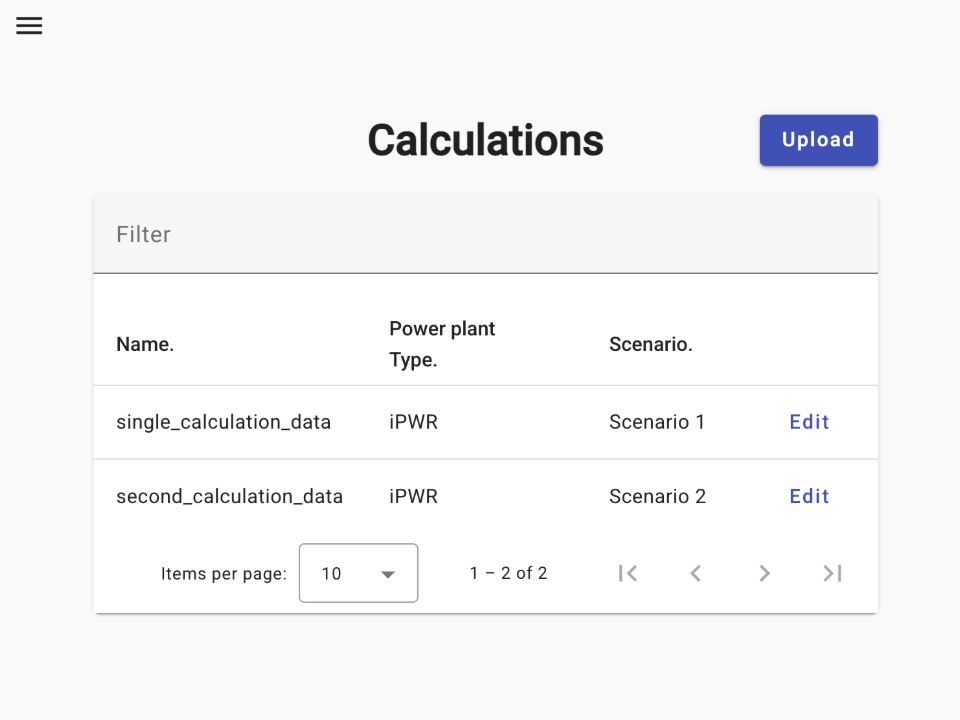
Manage and organize simulation runs (“calculations”) efficiently, enabling researchers to keep track of their nuclear accident simulation projects in a structured way.
Steady-State
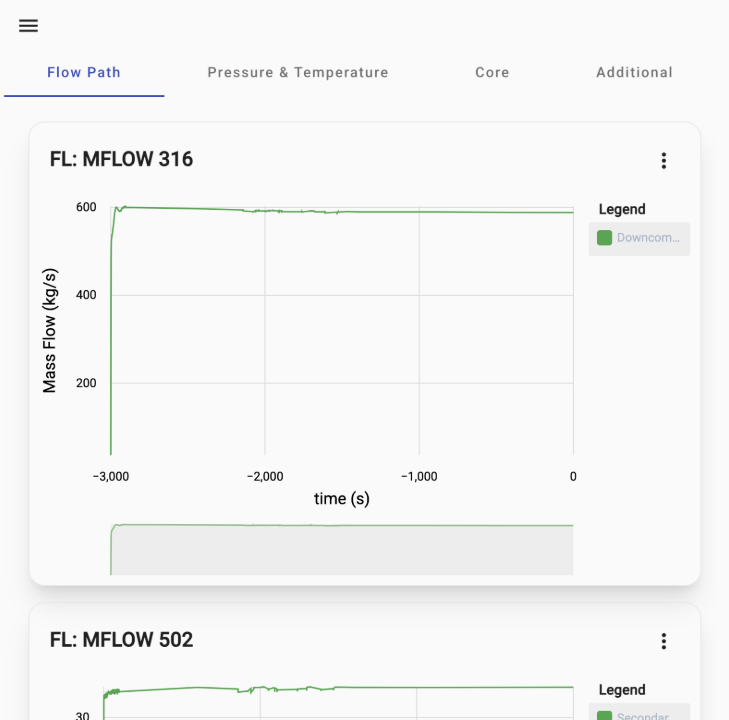
Provides researchers with a quick initial overview to determine whether a simulation remained stable before the accident occurs, enabling faster and more targeted analysis.
Analysis
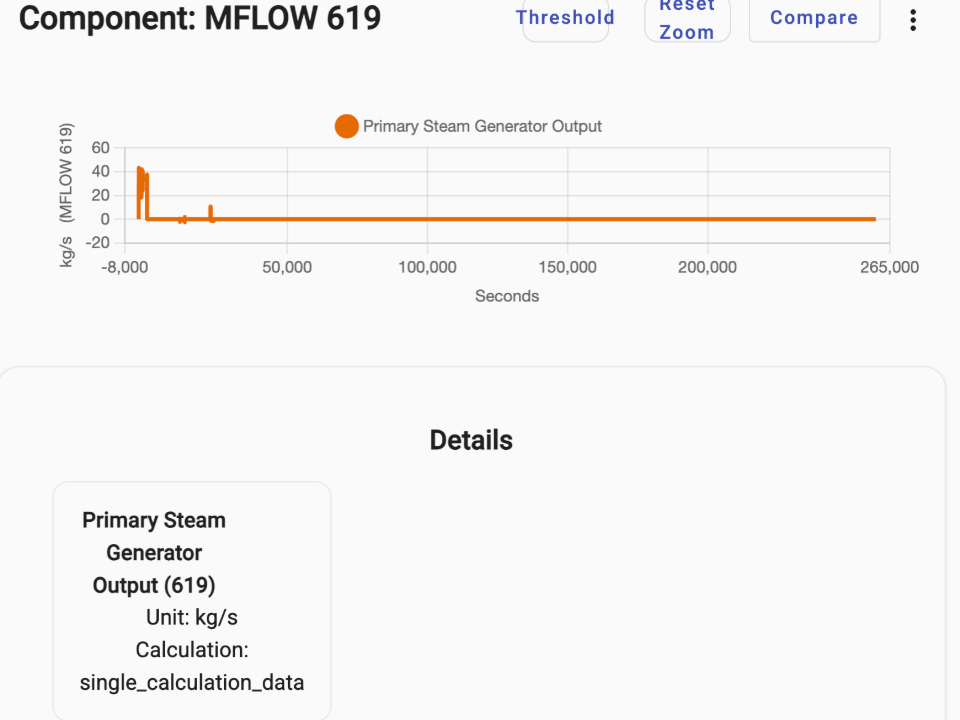
Enables an in-depth examination of simulation data, allowing researchers to explore specific components, identify anomalies, and gain deeper insights into accident progression.
Solution developed and its benefits
We developed a web-based application that allows researchers to upload and manage their nuclear accident simulations (“calculations”) in a centralized and structured manner. All simulation data is automatically parsed into the application and initially visualized to provide a quick stability assessment. Researchers can then perform a more detailed analysis with interactive tools and targeted features that support their investigative process.
Compared to the tools currently in use, our solution offers significantly greater flexibility and substantially improved performance. This enables faster data processing, more responsive visualizations, and a smoother workflow, ultimately allowing researchers to focus more on interpreting results and less on technical overhead.
Testimonial
«During the user testing, I was impressed by how quickly the application processed large simulation datasets. The interface felt intuitive from the start, making it easy to navigate and focus on the analysis rather than the tooling itself. This made the entire workflow noticeably faster and more enjoyable. »
Participant 06
Key terms
- VisualizationInteractive presentation of complex simulation data to quickly identify patterns and anomalies.
- Temporal DataTime-based measurement and event data enabling precise reconstruction of accident progressions.
- Performance OptimizationTechniques to reduce loading times and improve the efficiency of the web application.
- Nuclear Power Plant SimulationVirtual replication of operational and incident scenarios in a nuclear power plant.
- WebappPlatform-independent application running in a browser without the need for installation.
Customer

Paul Scherrer Institut PSI
Forschungsstrasse 111
5232 Villigen PSI
Schweiz
psi.ch