
Design and Implementation of a UI for the Customer-Facing Platform for a Process Monitoring System for Grinding Machines
Improving the Issue Reporting Process for Grinding Machines
Initial Situation
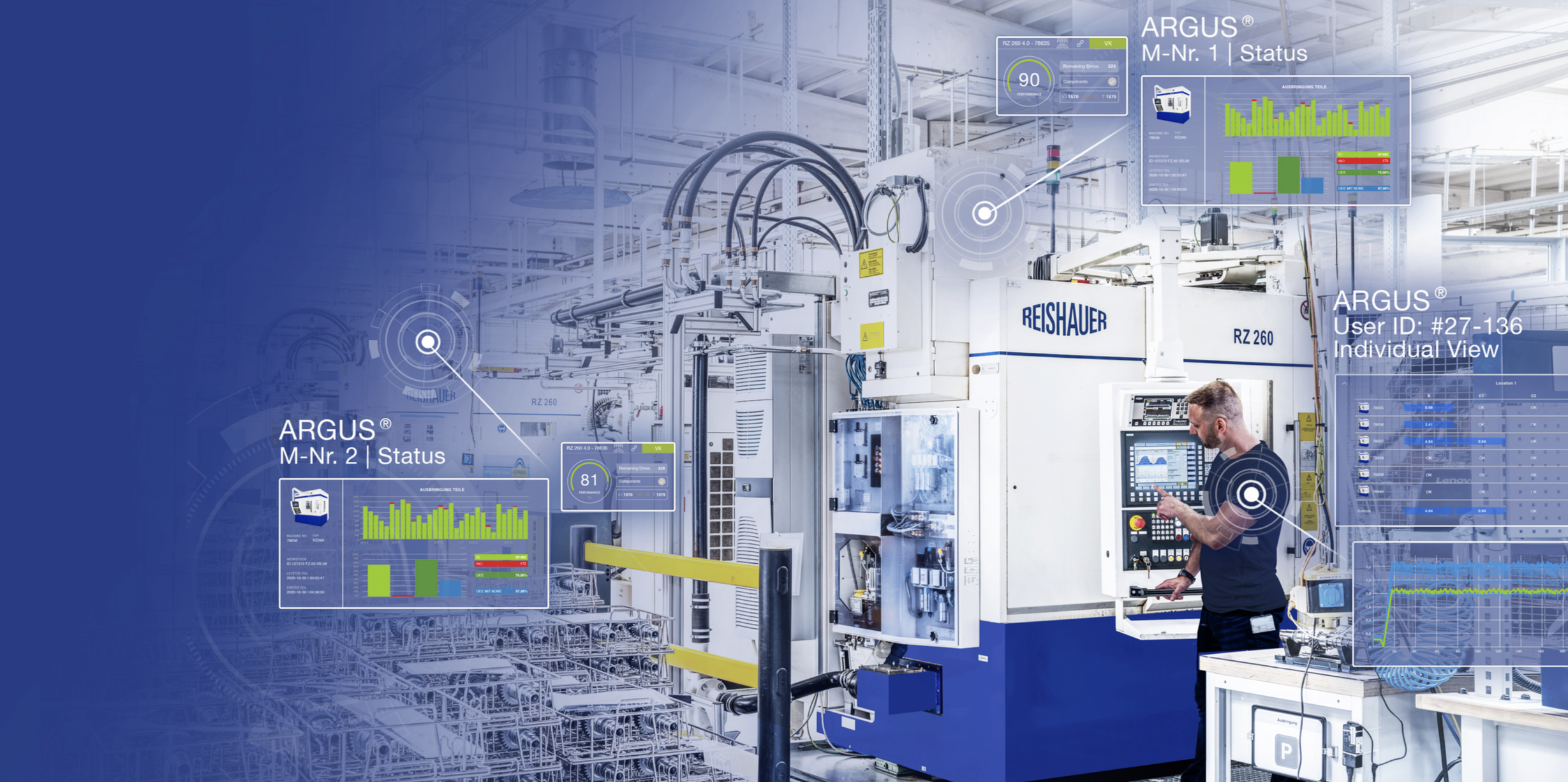
Reishauer AG specializes in the manufacturing of gear grinding machines. Through its advanced ARGUS platform, customers can monitor key process parameters like vibration, spindle current, and energy consumption in real time. This enables proactive maintenance and supports consistent quality control. However, despite the technical strengths of ARGUS, the customer support and issue reporting process remains fragmented. It relies heavily on emails, screenshots, Microsoft Teams, and SharePoint. This disjointed setup leads to communication gaps, limited traceability, and inefficient problem-solving. A centralized, structured platform presents a clear opportunity to simplify collaboration, accelerate support workflows, and unlock deeper data insights. Ultimately, it enhances the overall customer experience.
Project Goal
This project set out to design and partially implement a collaborative, customer-facing user interface that is fully embedded within the existing ARGUS platform. The new UI brings together communication, documentation, and task management in one cohesive space. A standout feature is the ability to annotate sensor data visualizations directly in ARGUS, allowing support staff to flag anomalies and create structured, machine-readable reports. Over time, this structured reporting can fuel AI-powered diagnostics and fault prediction. At the same time, human-centered design elements like avatars, reactions, guided workflows, and threaded discussions help build Social Presence, making remote support feel more connected and trustworthy.
Methodology
To make sure the solution was both practical and user-friendly, the project followed a structured, iterative design process that combined principles from User-Centered Design (UCD) and Service Design. It started with a deep dive into the existing support workflow, including document analysis, site visits, and interviews with Reishauer employees from various departments. Insights from these activities were used to map out user flows and journey maps, highlighting key actions, pain points, and opportunities. Based on this foundation, clear design requirements were defined, balancing user needs, business goals, and technical constraints. Several interface concepts were developed and iterated on, using familiar tools like Microsoft Teams and Jira as inspiration for layout and interaction. These ideas were continuously refined through expert reviews and client feedback sessions. In parallel, a Minimum Viable Product (MVP) was developed to bring the annotation feature to life. This MVP was embedded directly into the live ARGUS codebase, following Angular best practices and housed on a dedicated feature branch. To validate the new solution, a structured user test was conducted. Participants were guided through three typical use cases and asked to compare the current process to the new prototype in terms of efficiency, ease of use, and perceived task time. The interface’s ability to create a sense of human presence and guided support was also evaluated using validated questionnaires.
Result
UI Concept – Report Detail View
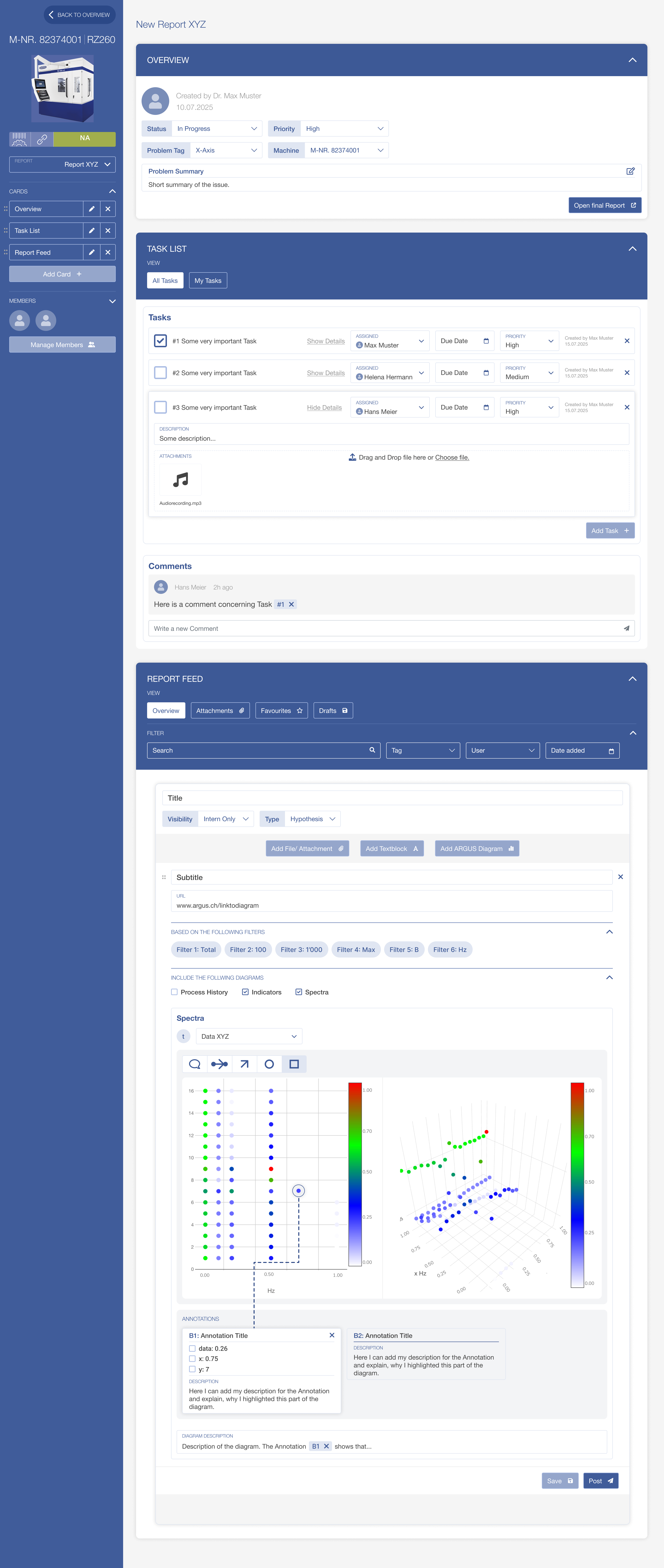
The UI concept introduces a fully integrated reporting experience within the ARGUS platform. Reports are shown in a Kanban-style board and offer detailed views that include metadata, to-do lists, and threaded discussions. The design encourages collaboration and clarity, with human-centered features like avatars, reactions, and comment threads to strengthen social presence and improve customer engagement.
MVP – Interactive Data Annotation

As the first major implementation step, a fully functional Minimum Viable Product (MVP) was built and integrated into the ARGUS system. This MVP allows users to annotate sensor data charts interactively, selecting specific time ranges or points and adding structured comments. These annotations support more collaborative diagnostics and lay the foundation for AI-driven analytics by structuring insights in a consistent, machine-readable way.
User Testing
To test the usability and effectiveness of the new interface, a structured user study was carried out with seven Reishauer employees. Participants came from the Digital Operation Center (DOC) and engineering teams, offering a range of experience levels and customer interaction backgrounds. The study focused on three real-world use cases: processing a new case, collecting and annotating data, and documenting progress while communicating with the customer. Each participant experienced both the current and proposed workflows and rated them using standardized questionnaires. Social presence was also evaluated through UI features like avatars, comment threads, and visual feedback tools. These helped measure how collaborative and human the platform felt.
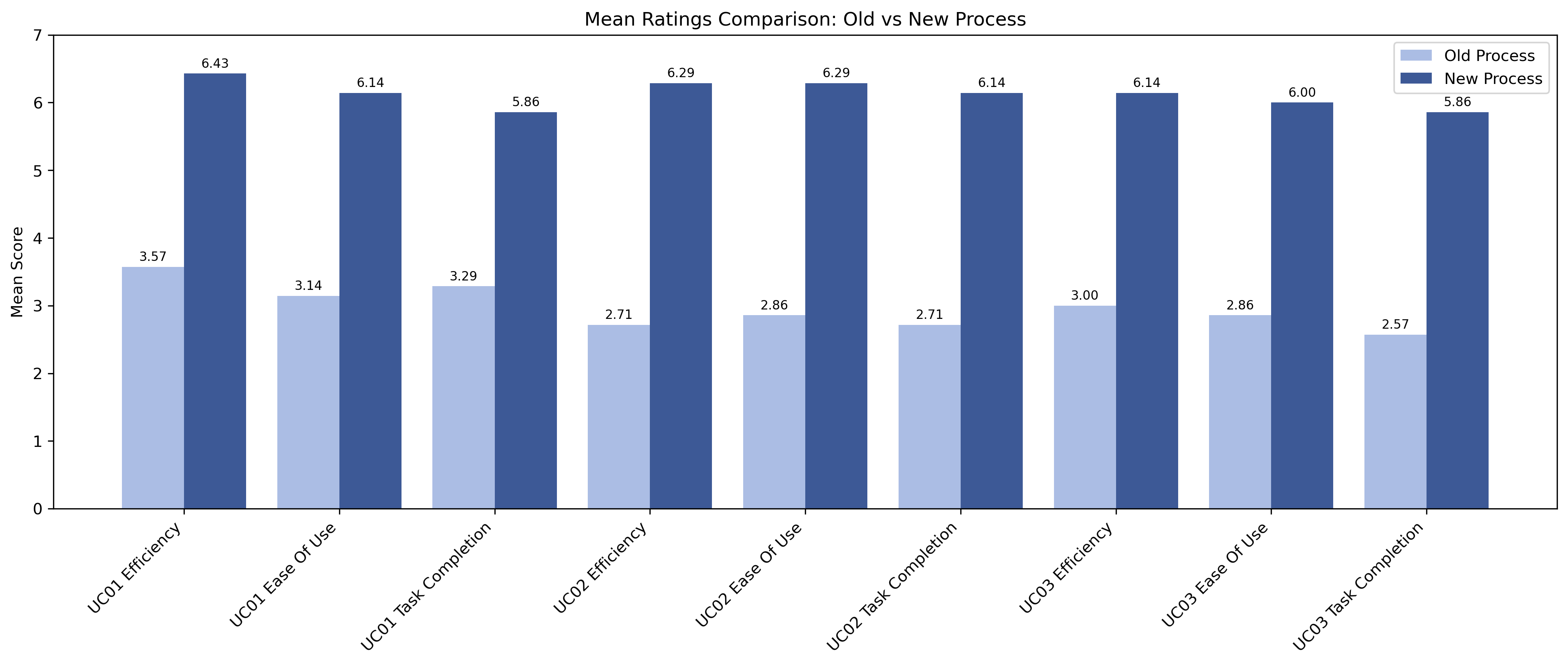
The new solution outperformed the current process across all key areas. On average, participants perceived the new approach as:
- +3.2 points more efficient
- +3.2 points easier to use
- +3.1 points quicker in task completion
Participants also appreciated the added sense of presence and connection. They described the new interface as more personal, transparent, and engaging. These results highlight the value of combining structured data workflows with thoughtful, human-centered design.
Testimonial
«Michelle's und Basil's Ausarbeitungen stellen für unsere Digitalen Produkte einen erheblichen Mehrwert dar. Sie haben das Ziel und den Kundennutzen schnell erfasst, kreative Ideen eingebracht, einen Prototyp programmiert und anhand dessen Nutzerfeedback eingeholt. Damit können wir das Konzept intern verkaufen und es auch beschleunigt zu unseren Kunden ausrollen.»
Stefan Süssmaier, Reishauer AG
Key terms
- ARGUS PlatformMonitoring and visualization system for grinding machine sensor data
- DOCDigital Operation Center; Reishauer’s team responsible for customer support
- Annotation ToolUI component allowing users to add graphical or textual notes to sensor data
- Social PresenceThe sense of human support in digital interfaces, enhanced by avatars, replies, and reactions
- User-Centered Design (UCD)Design methodology focusing on user needs and feedback loops
- Service DesignApproach for mapping user journeys and touchpoints across a service ecosystem
- Minimum Viable Product (MVP)The first implemented prototype focusing on the annotation feature
- Machine Issue ReportingProcess of documenting, diagnosing, and resolving equipment problems via the platform
Customer

Reishauer AG
Stefan Süssmaier
Industriestrasse 36
8304 Wallisellen
www.reishauer.com
Team
Michelle Rüegg
Basil Trueb
Advisor
Anton Fedosov
Alain Zanchetta