
3D Reconstruction of Pollen Grains from Orthogonal Image Pairs
First comprehensive benchmark of state-of-the-art few-view 3D reconstruction methods on a diverse dataset of high-resolution pollen meshes, investigating whether modern techniques can recover complete pollen geometry from just two orthogonal images.
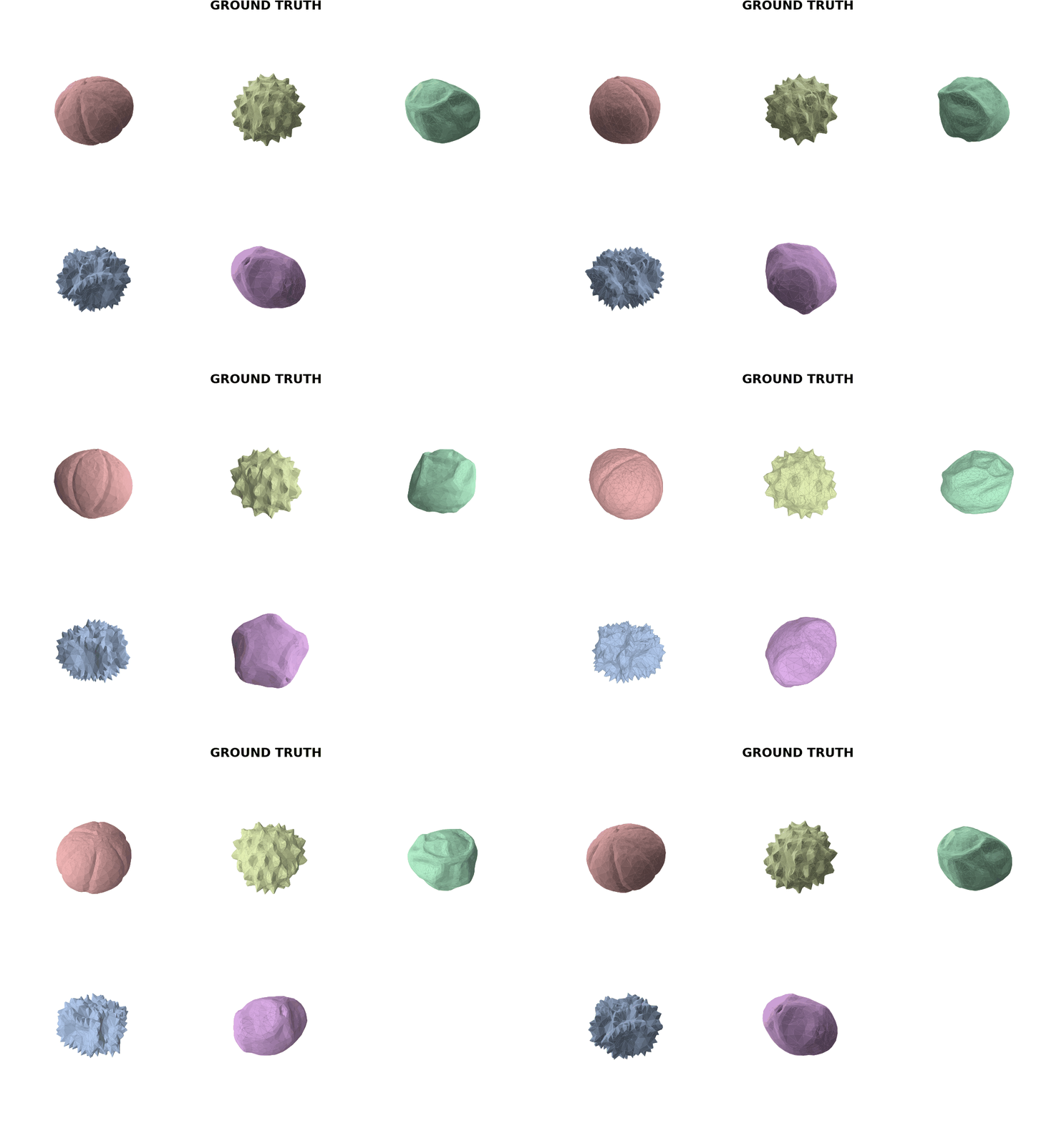
- 17781 Common thyme Thymus vulgaris
- 17803 Ox-eye daisy Leucanthemum vulgare
- 21555 Hard rush Juncus inflexus (shrunken)
- 21188 Meadow goat's beard Tragopogon pratensis
- 17878 Alder Alnus sp. (pentaporate)
Initial situation
Pollen grains are microscopic structures that play a crucial role in plant reproduction and serve as important environmental indicators. For the estimated one-third of humanity suffering from pollen allergies, accurate species-specific monitoring is essential for public health. Traditional pollen analysis relies on manual identification under microscopes, which is slow, labor-intensive, and prone to human error. Modern automated monitoring systems using digital holography capture two-dimensional snapshots of pollen grains, but transforming these into accurate 3D representations for reliable classification remains a significant challenge.
Problem statement / Project goal
This thesis addresses the fundamental challenge of reconstructing 3D pollen grain shapes from extremely sparse visual data - specifically just two orthogonal images. The goal is to establish the first comprehensive benchmark of state-of-the-art few-view 3D reconstruction methods and determine whether modern computational techniques can recover the complete geometry of individual pollen grains with such limited input data, enabling improved automated pollen monitoring and classification.
Voxel-based
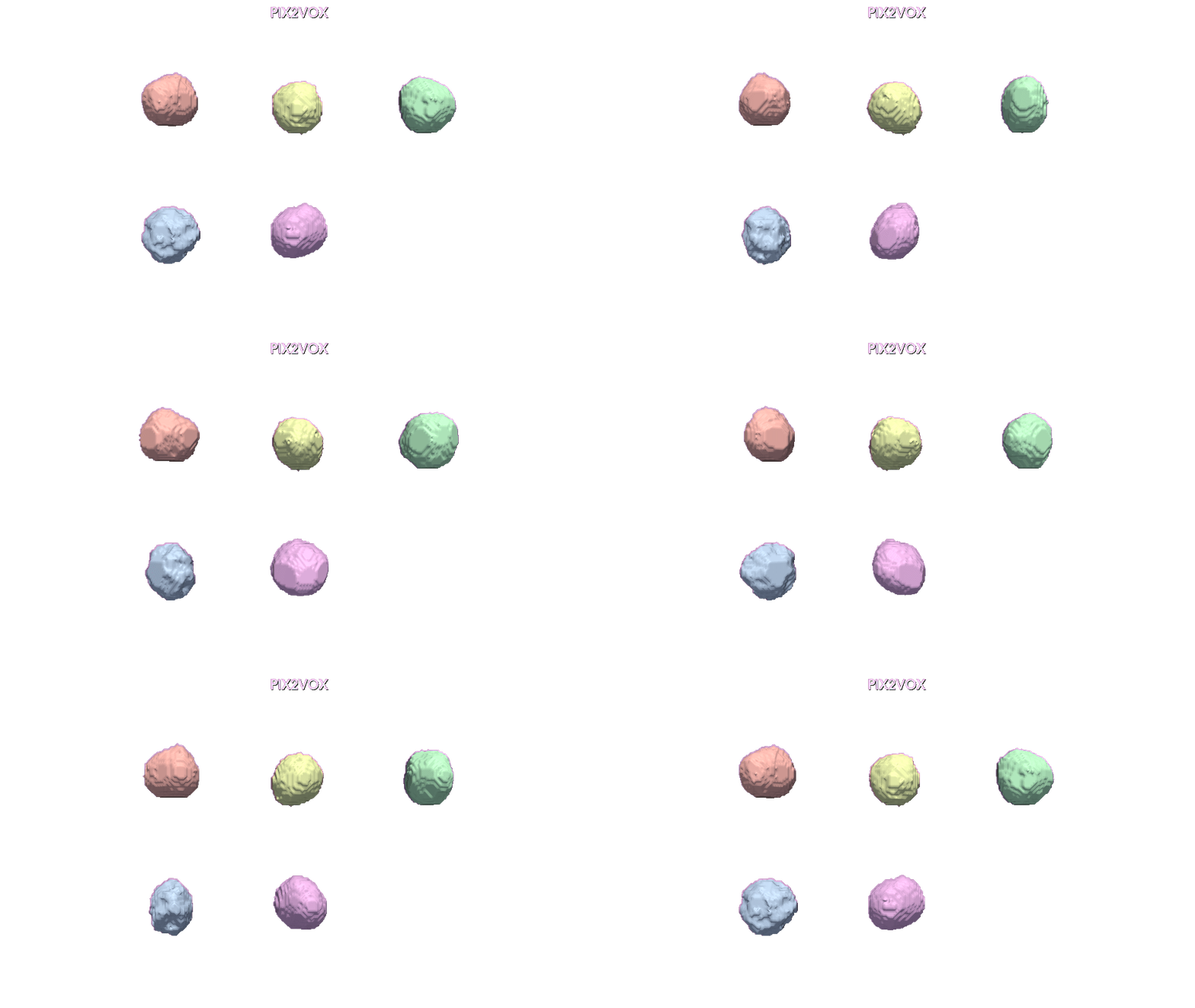
Pix2Vox method converts 2D images into 3D voxel grids, providing robust and order-invariant reconstructions. While reliable for basic shape recovery, this approach struggles with fine surface details essential for pollen identification.
Deformation-based
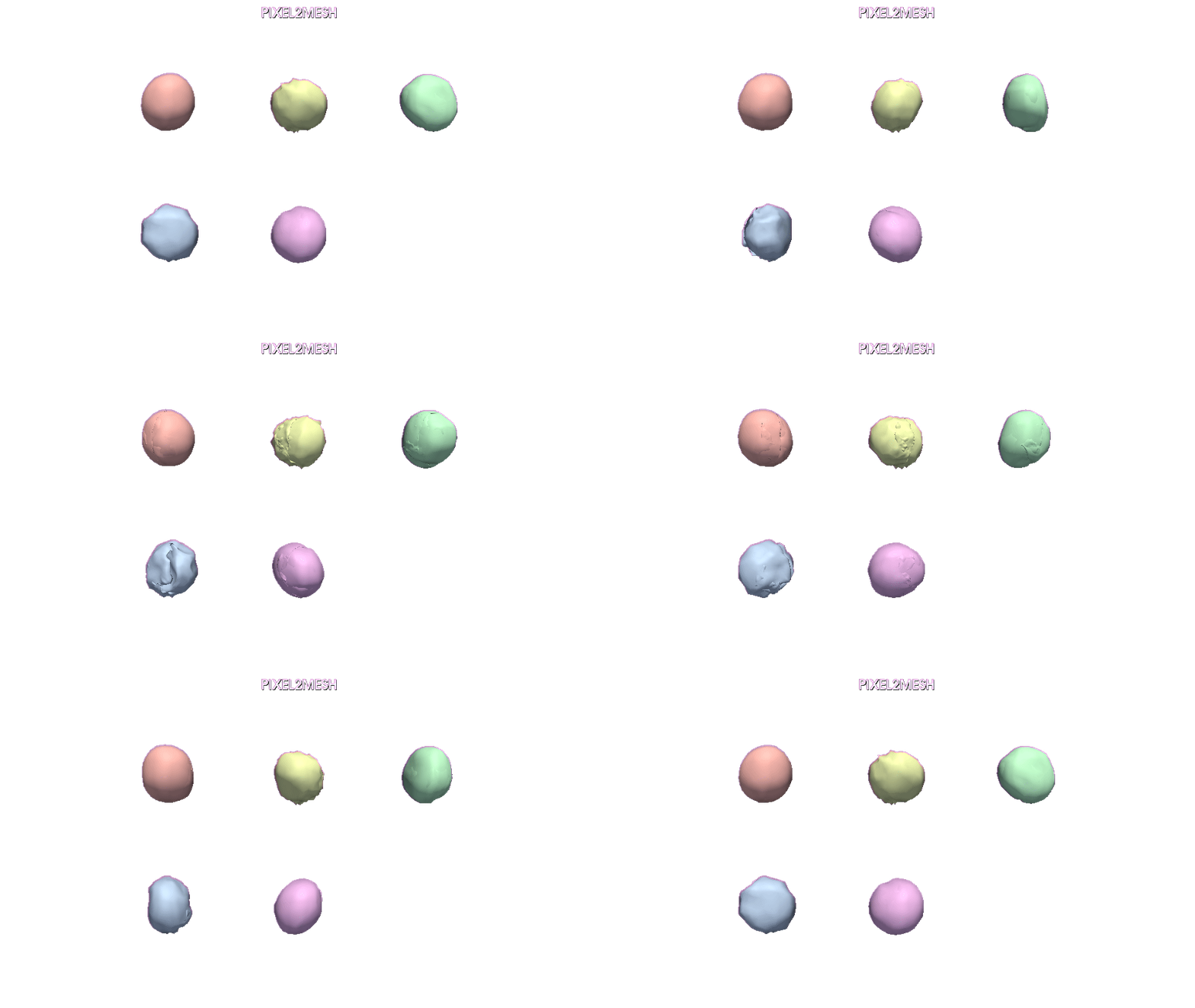
Pixel2Mesh++ deforms template meshes to match input images, offering explicit surface connectivity and the ability to capture intricate pollen ornamentation like spines and pores critical for species classification.
Neural Rendering
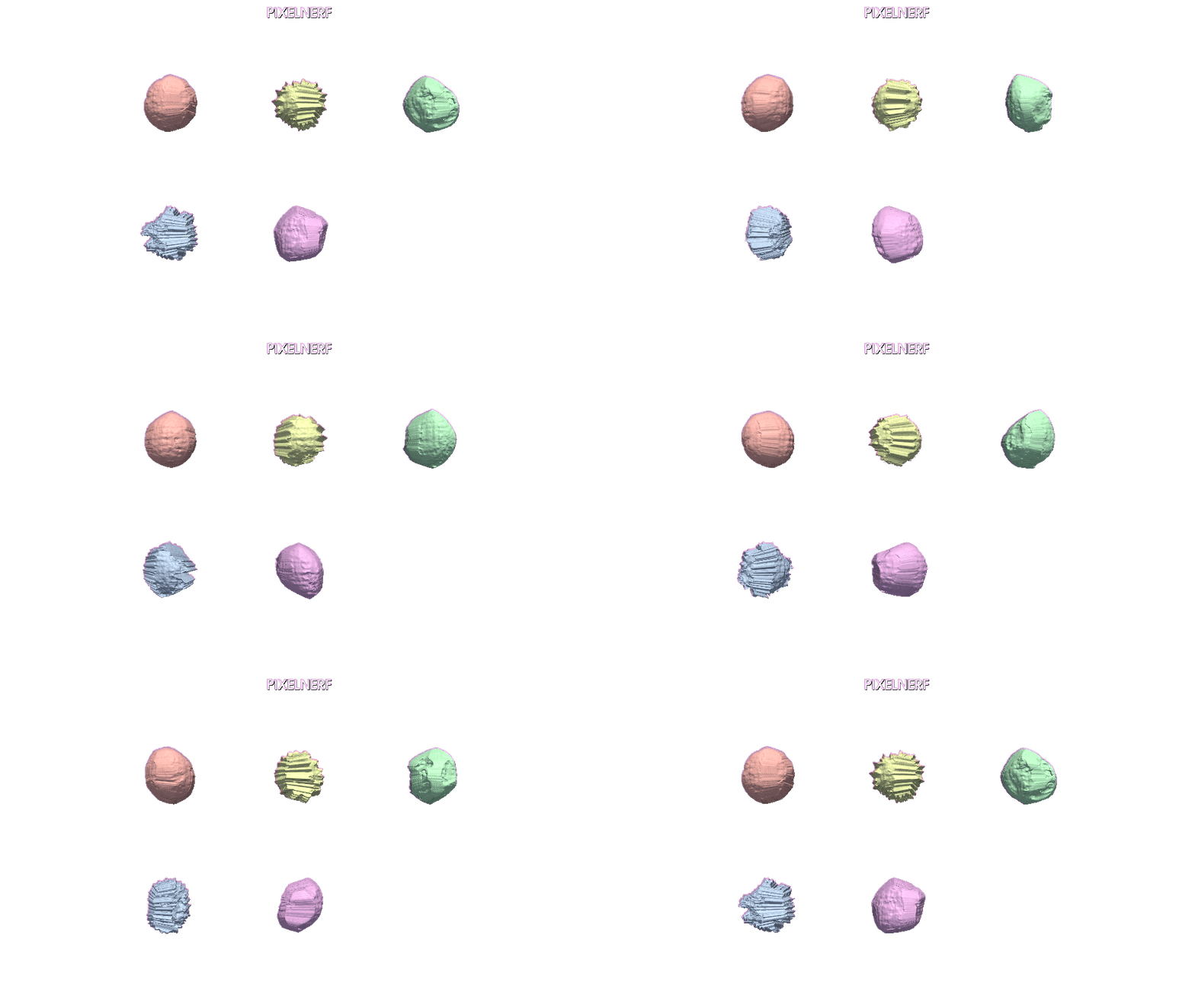
PixelNeRF uses implicit neural representations to achieve superior volumetric fidelity and cross-view consistency, though computational demands are higher and surface sharpness may be limited.
Multi-view Diffusion
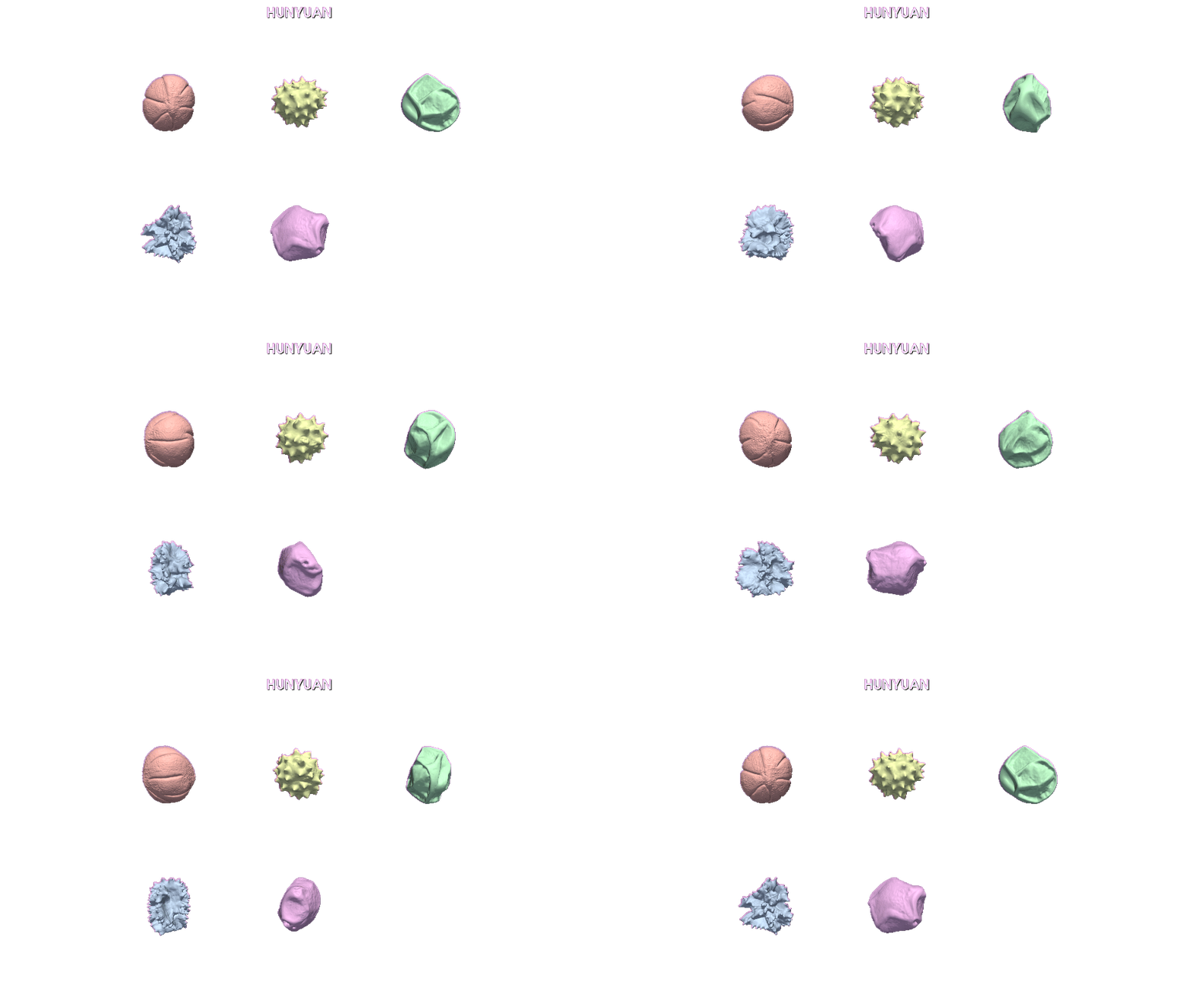
Hunyuan3D applies a large multi-view diffusion model to hallucinate consistent extra viewpoints from the two inputs, boosting shape completeness and texture plausibility while generalizing across taxa, at the cost of heavy compute and occasional smoothing of the finest spikes.
Solution developed and its benefits
This thesis developed and benchmarked multiple 3D reconstruction approaches adapted specifically for pollen grains, including voxel-based (Pix2Vox), mesh-based (Pixel2Mesh++), and implicit neural representations (PixelNeRF), alongside large-scale diffusion models (Hunyuan3D). The research demonstrated that meaningful 3D shape recovery from just two orthogonal images is indeed possible, with each method offering distinct advantages for different aspects of pollen reconstruction.
- First comprehensive benchmark for 3D pollen reconstruction from minimal input data
- Tailored preprocessing pipelines for each reconstruction approach
- Evaluation using the newly curated 3D Pollen Library dataset
- Comparison of classical visual-hull techniques with modern deep learning architectures
- Assessment of large-scale diffusion models for domain adaptation
- Analysis of explicit shape priors and targeted data augmentation effects
- Quantitative evaluation using geometry-focused metrics (Chamfer distance, IoU, F-scores)
- Complete open-source release of code, datasets, and trained models
- Clear roadmap for future advances in automated pollen analysis
The experiments revealed that no single method dominates across all metrics: mesh-based and implicit models achieve superior shape fidelity but depend heavily on priors and data quality, while diffusion models generalize more robustly across taxa at higher computational costs. The transition from one to two input views provides the greatest improvement in reconstruction quality, with diminishing returns for additional viewpoints.
These findings provide critical insights into the trade-offs between model complexity, data efficiency, and reconstruction quality, establishing a foundation for future automated pollen monitoring systems that could significantly improve allergy forecasting and environmental health applications.
Research Impact
«This work represents a pioneering effort in computational palynology, successfully demonstrating for the first time that few-view reconstruction models can be adapted to recover the complete geometry of pollen grains. The comprehensive benchmark and open-source release provide a valuable foundation for future research in both 3D computer vision and automated environmental monitoring, with direct applications for improving public health through better allergy forecasting.»
Research Assessment
Key terms
- 3D ReconstructionComputational process of creating three-dimensional models from two-dimensional images
- Pollen GrainsMicroscopic reproductive cells crucial for plant reproduction and allergy monitoring
- Computer VisionField of artificial intelligence focused on enabling computers to interpret visual information
- Deep LearningMachine learning techniques using neural networks for complex pattern recognition
- Neural RenderingUse of neural networks to generate realistic visual representations
- Volumetric Modeling3D representation using volume elements (voxels) rather than surface meshes
- Few-shot LearningMachine learning with minimal training examples or input data
- NeRFNeural Radiance Fields for implicit 3D scene representation
- Digital HolographyTechnique for capturing 3D information using interference patterns
- PalynologyScientific study of pollen grains and spores
Institute for Data Science (i4DS)
FHNW School of Engineering
Bahnhofstrasse 6
5210 Windisch
Institute for Data Science
Team
Students
Nils Fahrni
Etienne Roulet
Supervisors
Prof. Dr. Martin Melchior
Roman Studer