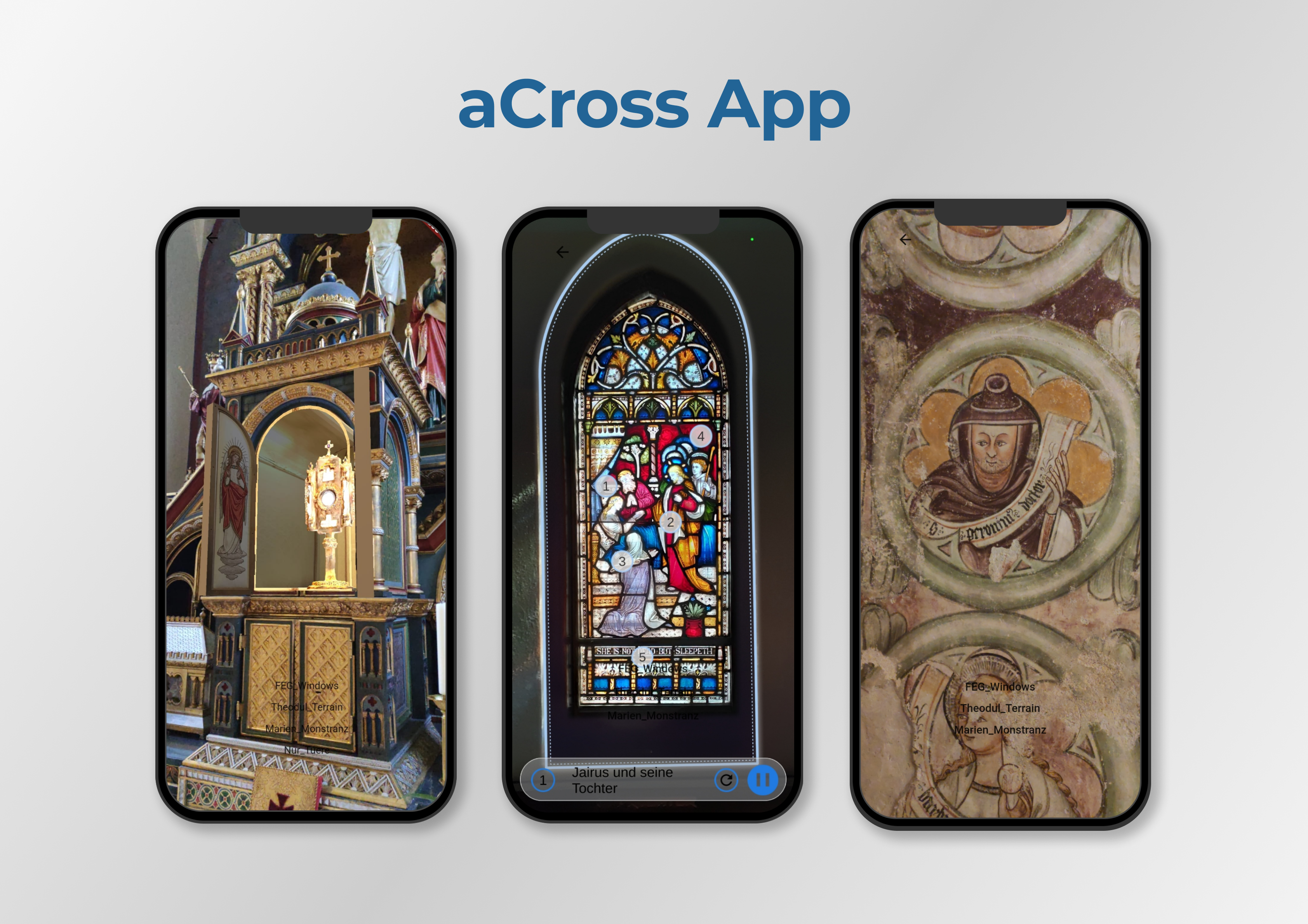
An AR app is available, which can be used for the exploration of the churches in Davos. The app guides the visitor through the church in an interactive way and provides interesting facts by blending in information and objects with the help of AR. The app creates links between topics that are currently relevant to society and the historical context of the church.
Augmented Reality, Unity, Flutter, Dart, C#, Cross-Platform Solution, Android, iOS
The app, which is being developed for both locals and tourists, is intended to draw attention to the church thanks to the use of AR and the inclusion of currently relevant topics. The use of the new interactive technology, and the joy from using it should help. With it, sacred artefacts without description can be given a virtual method of introduction, transferring information to the visitor about it.
Based on a concept of the FHGR regarding the increase of attractiveness of the sacral buildings in Davos,
an Augmented Reality (AR) app was to be designed and developed that would bring the cultural heritage of
the churches closer to the visitor through interactive information.
For quick access to the AR experience, a demo app has been created. With this app, the user can directly launch themselves into the immersive AR experience of each church.
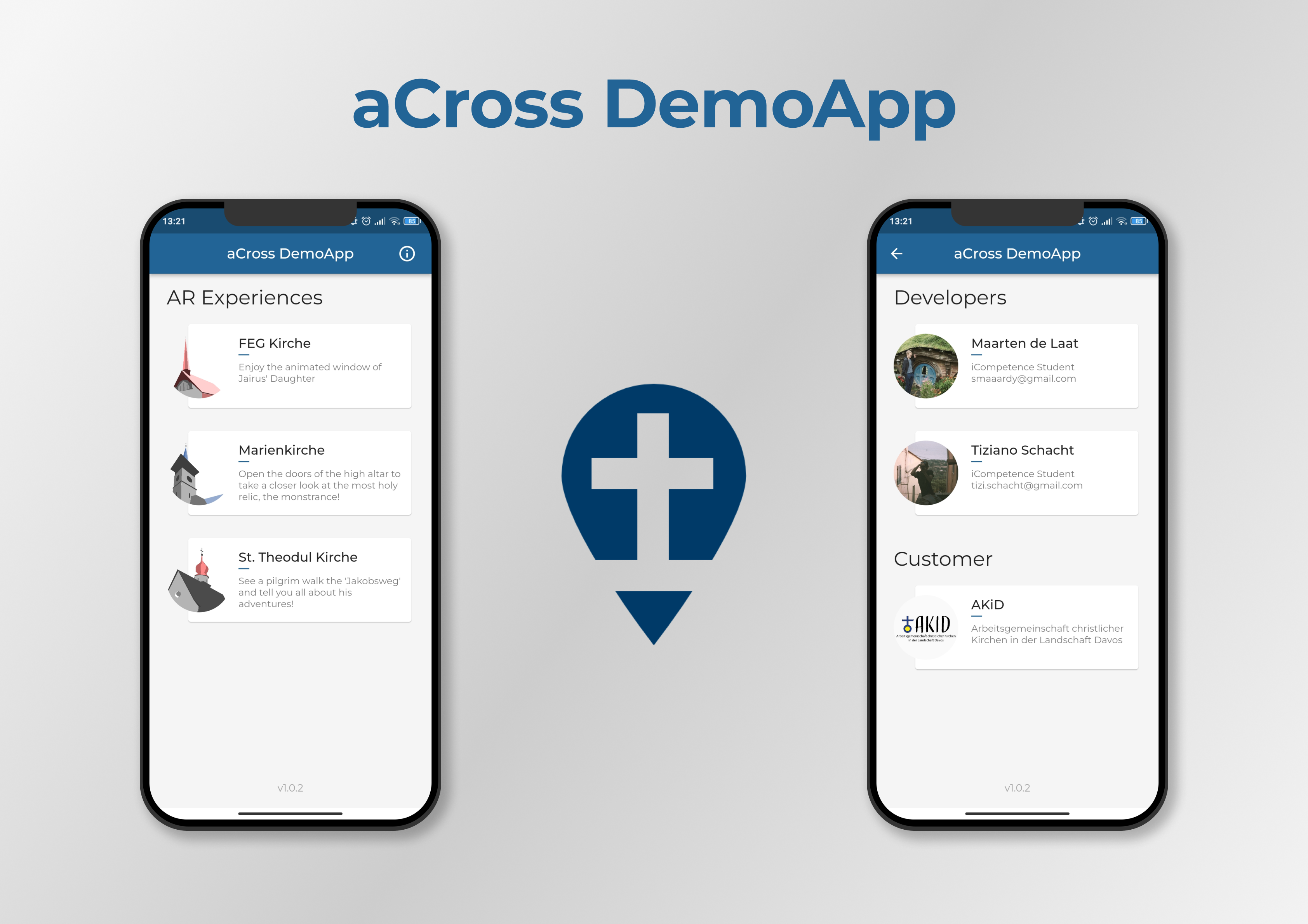
The results are augmented reality experiences for three churches in Davos. Each church has their own peculiarities which were focused on with augmented reality technology.
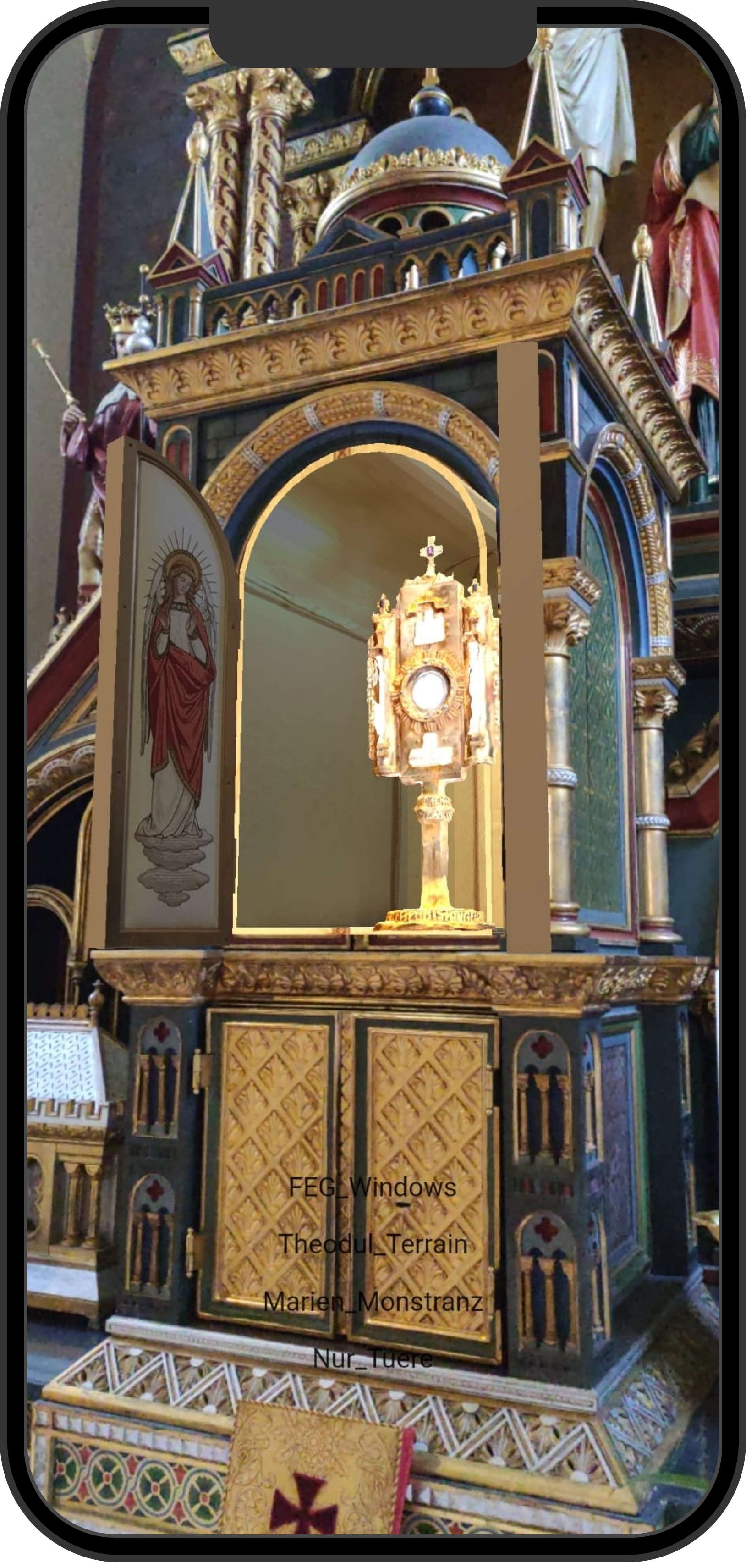 |
MarienkircheThe visitors have the possibility to observe and move the most sacred relic in a katholic church (virtually). They can open the doors of the high altar, which are otherwise always closed. Afterwards, the sacred relic, the Monstrance, can be taken out and placed on a table for observation. |
|---|---|
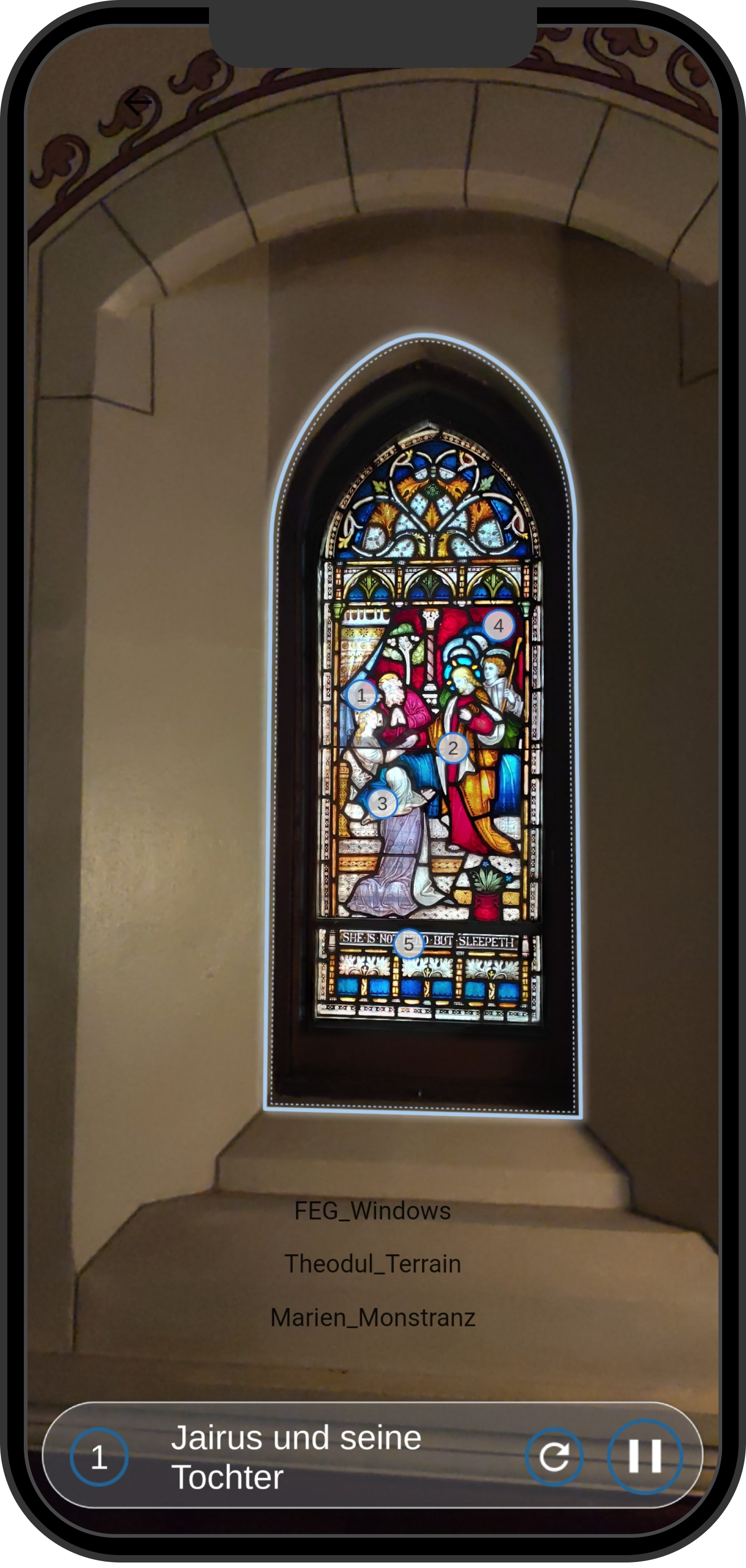 |
FEG KircheThe english churchs brims with magnificent stained glass windows. The visitors can see on each window who the person depicted is. One specific window, Jairus’ and his daughter, is animated with interactable info-buttons. These play informational audio to the listener. |
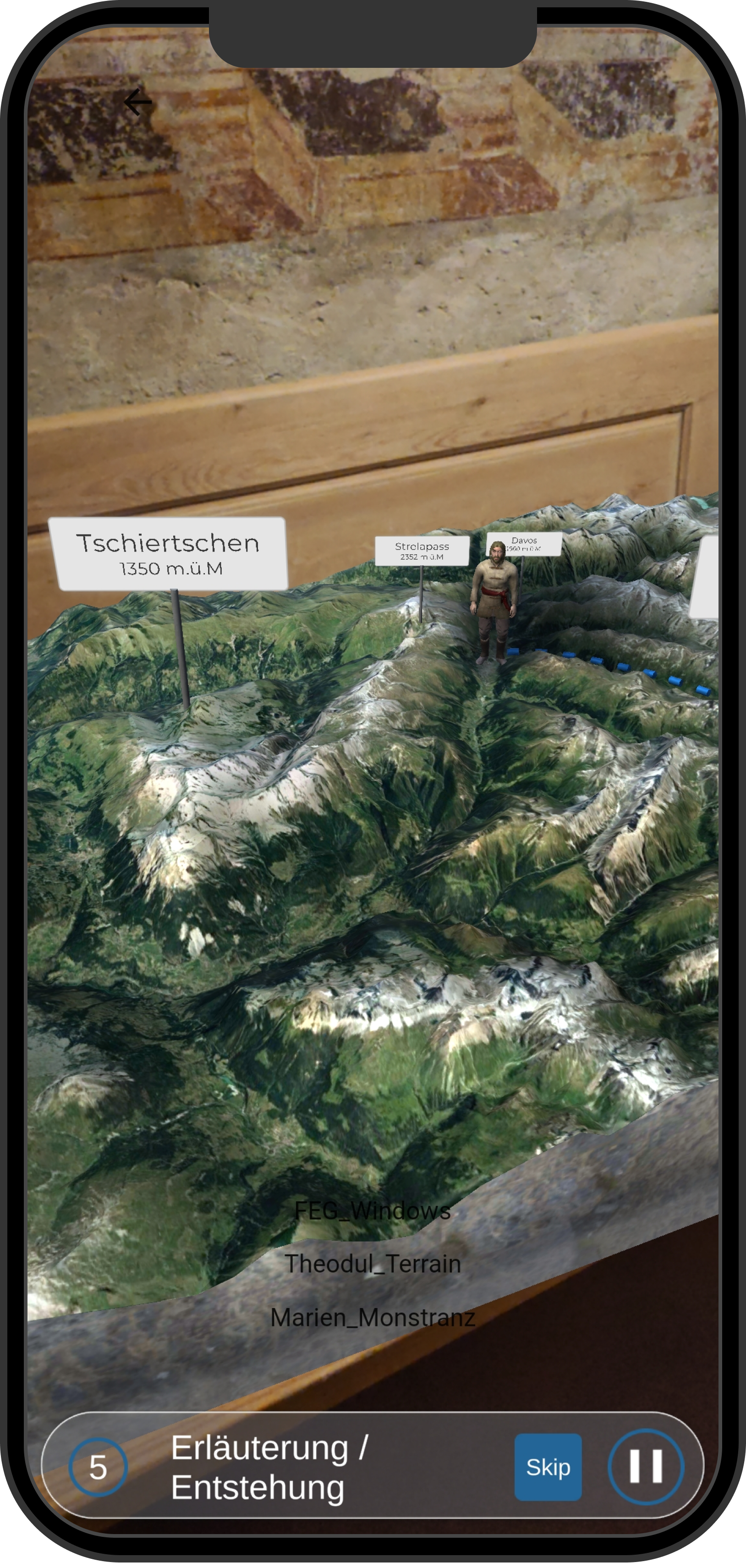 |
St. TheodulAfter recognising and listening to Hieronymus’ introduction, the visitor is prompted to place a cutout of the canton “Graubünden” onto the table to observe a pilgrim walk a part of one of the “Jakobsweg”! During the walk, the pilgrim feeds the visitor historical information about the church and currently socially relevant topics. |
Vertreten durch:
Prof. Dr. Hilko Cords - hilko.cords@fhnw.ch