
Bubblee – Lily Pad of Interests
An interactive pond metaphor interface designed to help users reconnect with acquaintances through shared interests, addressing social loneliness with wellbeing-supportive design principles.
Initial situation
Modern social platforms create a paradox: while people have more digital connections than ever, feelings of loneliness continue to rise, especially among young adults. Existing platforms excel at maintaining close friendships or meeting strangers, but systematically neglect the "middle layer" of social relationships, acquaintances like former colleagues or classmates. Research shows these "weak ties" are crucial for social integration and wellbeing, yet no digital tools specifically support reconnecting with them.
Project goal
The project aimed to design and evaluate a novel social platform that specifically addresses the weak-tie gap.
Starting from the client's initial bubble metaphor concept, the goal was to create a psychologically-grounded interface that makes reconnection feel natural and low-pressure.
The project objectives were:
- Translate abstract metaphor into interaction design: Develop the bubble concept into a concrete, interactive pond ecosystem metaphor.
- Implement core social features: Build a functional prototype for interest discovery, matching, and event creation.
- Evaluate connectedness perceptions: Test how users perceive the design's ability to foster weak-tie connections.
- Apply wellbeing design principles: Ground the design in Self-Determination Theory and the METUX framework.
- Test with diverse demographics: Evaluate usability and engagement with both seniors and young adults.
Pond Ecosystem Interface
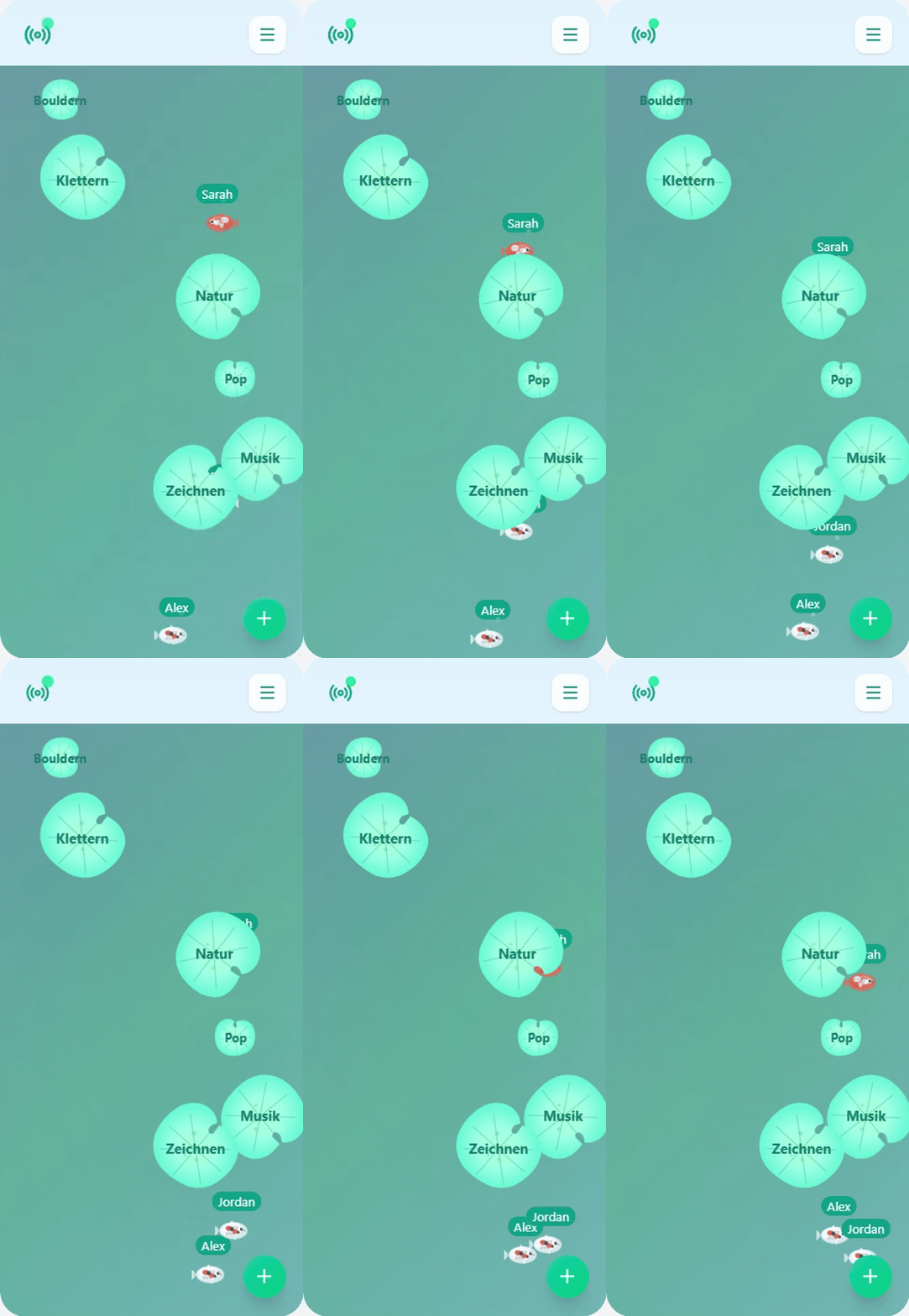
Each user's personal space is visualized as a calm pond. Interests appear as lily pads, connections as fish, and events as flowers, creating a cohesive, nature-inspired metaphor that reduces social pressure.
Interest-Based Event Creation
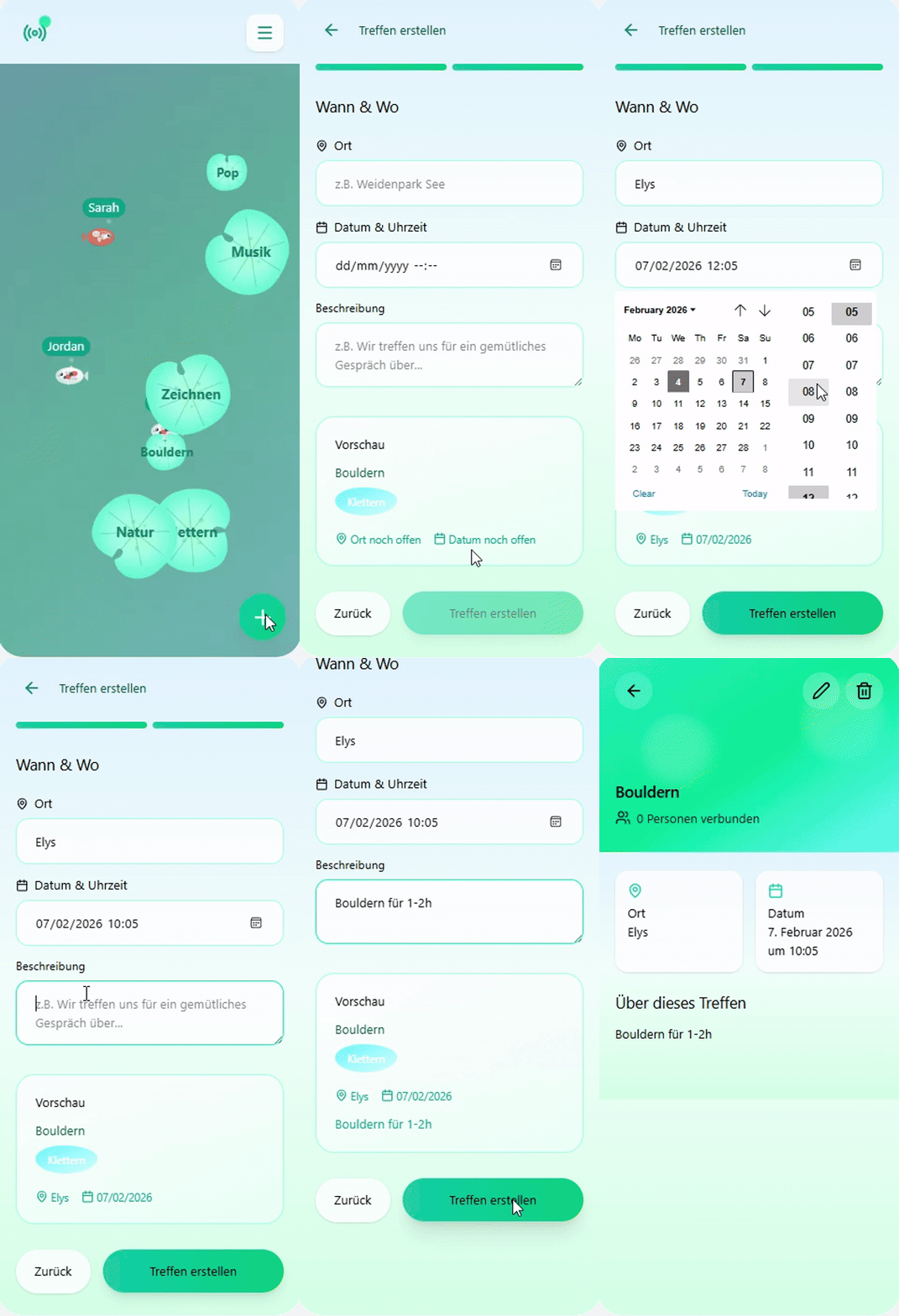
Users create events linked to specific interests. When published, a lily flower appears near the corresponding interest lily pad, visually connecting social activities to personal passions without performance pressure.
Social Discovery & Participation
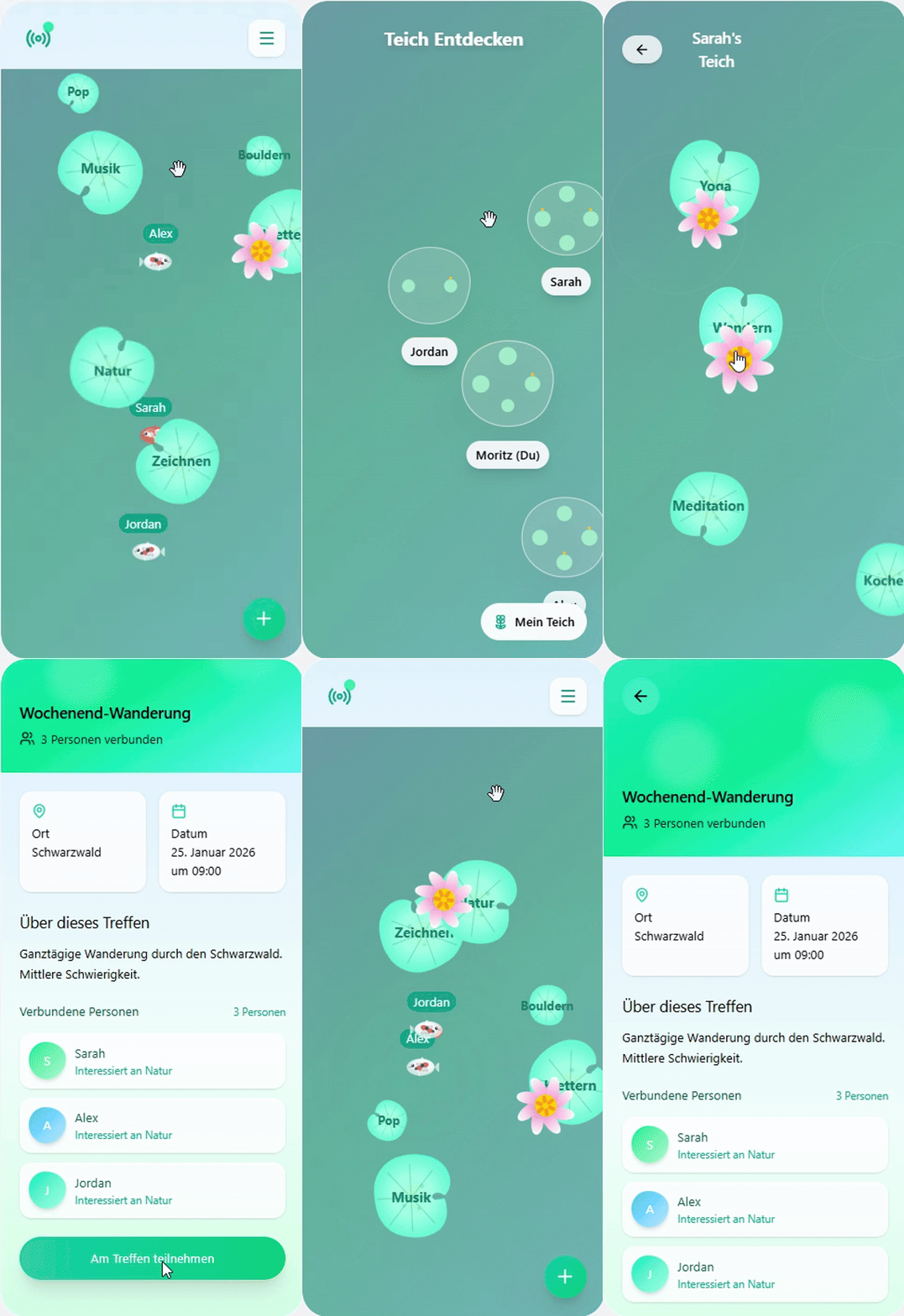
The user can explore the ponds of their acquaintances via a 'world view' that displays all the ponds. They can also express interest in them by adding them to their own pond or joining an event. When an event is joined, a lily pad and a lily flower are added to the user's pond.
Solution developed and its benefits
The project delivered a fully interactive prototype built around a pond ecosystem metaphor, informed by psychological wellbeing frameworks. User testing with 12 participants revealed both strong engagement and critical insights for improvement.
Core features
- Pond metaphor interface: Consistent visualization of interests (lily pads), people (fish), and events (flowers)
- Interest customization: Users can add, resize, and categorize interests with adjustable privacy settings
- Social discovery: Global view for exploring connections' interests and events
- Event system: Creation and participation without mandatory invitations or social pressure
- Guided onboarding: Playful introduction with frog animations making the interface approachable
Key benefits and insights
- Validated weak-tie concept: Users confirmed shared interests provide legitimate "social permission" to reconnect with acquaintances
- Emotional engagement: The pond metaphor was perceived as calming and distinct from performance-oriented social media
- Wellbeing-focused design: Application of SDT/METUX frameworks created a psychologically supportive environment
- Usability challenges identified: Testing revealed critical barriers for senior users, highlighting need for "senior-first" design
- Context gap discovered: Interests alone were insufficient, users needed richer personal context for meaningful connection
Testimonial
«We are delighted by the fresh perspective Melinda and Moritz bring to bubblee through their careful theoretical approach. Their warm, calming designs help users feel at home with their digital interest profiles.»
Susanne and Marco, co-founder bubblee
Key terms
- Social connectednessFeeling of belonging and social closeness with others
- Weak tiesLoose social relationships with limited emotional closeness
- LonelinessFeeling of lacking meaningful social connection
- WellbeingState of overall mental, emotional, and social health
- Wellbeing-Supportive DesignDesign approach grounded in Self-Determination Theory, focusing on supporting autonomy, competence, and relatedness.
- Self-Determination Theory (SDT)A psychological framework identifying three universal human needs essential for wellbeing and motivation: autonomy (choice/control), competence (effectiveness), and relatedness (connection/belonging)
- METUX FrameworkModel for evaluating technology's impact on psychological needs across adoption, interface, task, behavior, life, and society spheres
- User-Centered DesignIterative design methodology involving target users throughout research, conceptualization, prototyping, and evaluation phases
- Interaction designDesign of interactions between users and digital systems
Customer

bubblee
www.bubblee.net/
Team
Melinda Tran
Moritz Schneider
Advisor
Anton Fedosov