
Through the Patient's Eyes: Using VR to Understand Delirium
A gentle yet powerful virtual reality experience that helps healthcare providers and families truly understand what their patients and loved ones go through during delirium, creating deeper compassion and more meaningful connections during these difficult moments.

VR training environment showing familiar home setting where delirium episodes commonly occur
Initial situation
When someone we care about experiences delirium, they become trapped in a frightening world where nothing feels real or safe anymore. They might see loved ones who have passed away, feel terrified by familiar faces, or believe they're somewhere completely different. For families watching this happen, it's heartbreaking - the person they know seems lost, scared, and unreachable. Healthcare providers, despite their best intentions, often struggle to understand why patients seem so distressed or difficult to comfort. This gap in understanding leaves everyone feeling helpless - patients remain isolated in their fear, families feel powerless to help, and caregivers may respond in ways that unintentionally increase distress rather than providing the comfort that's so desperately needed.
Problem statement / Project goal
The heart of the challenge is simple: it's nearly impossible to truly understand what someone is going through without walking in their shoes. Reading about delirium in textbooks or hearing descriptions doesn't capture the real fear, confusion, and helplessness that patients experience. We wanted to create something that could gently guide healthcare providers and families through this experience in a safe way, helping them feel what it's like to be unsure of what's real, to be scared and confused, and to struggle with being understood. Our hope was to build a bridge of empathy that would help people respond with more patience, kindness, and understanding when someone they're caring for is going through delirium.
Gentle, Adaptive Guidance
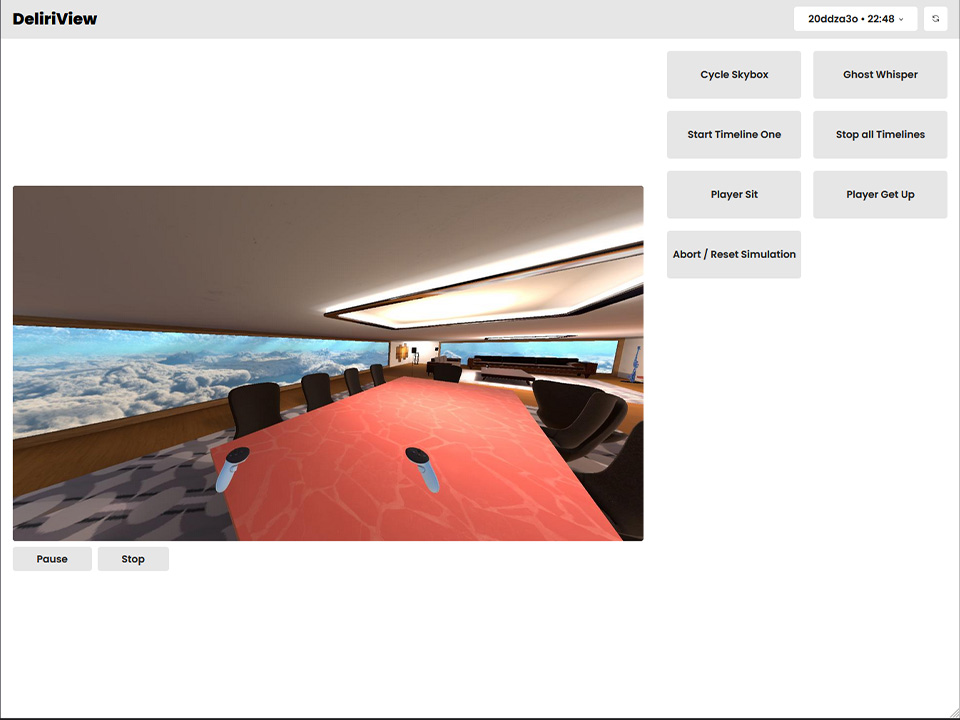
Instructors can carefully adjust the experience in real-time, ensuring each person receives just the right level of exposure for meaningful learning without overwhelming them. This makes the training accessible to everyone, from experienced nurses to family members who may feel anxious about the experience.
Supportive Presence
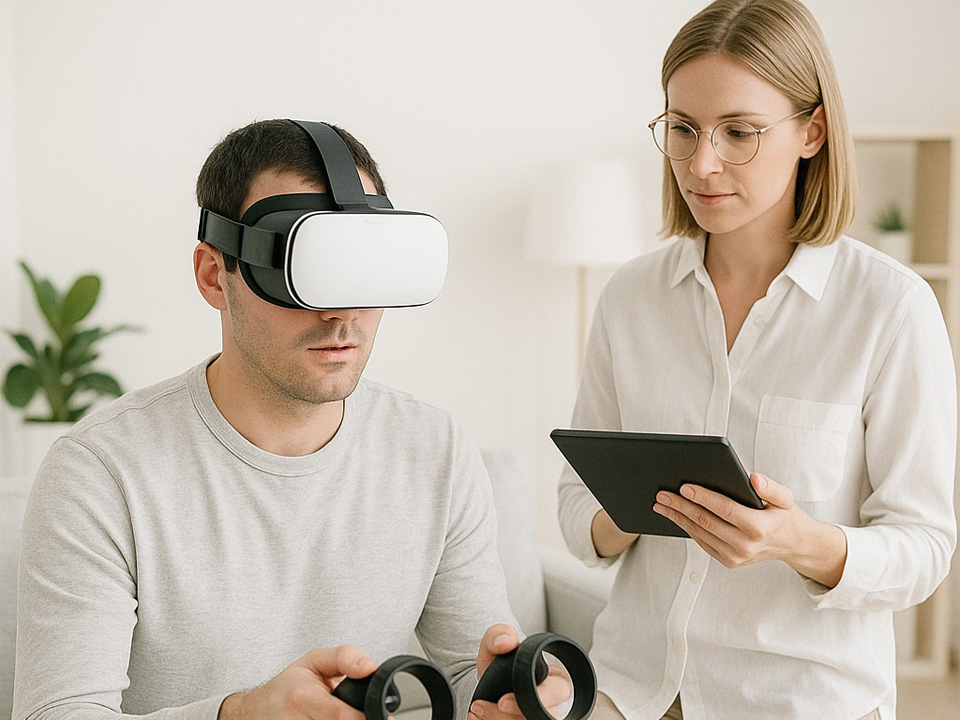
Through live monitoring, instructors can see exactly what participants are experiencing and provide immediate support, comfort, or guidance when needed. This ensures no one feels alone during difficult moments and creates a safe space for processing these intense experiences.
A Place That Feels Like Home
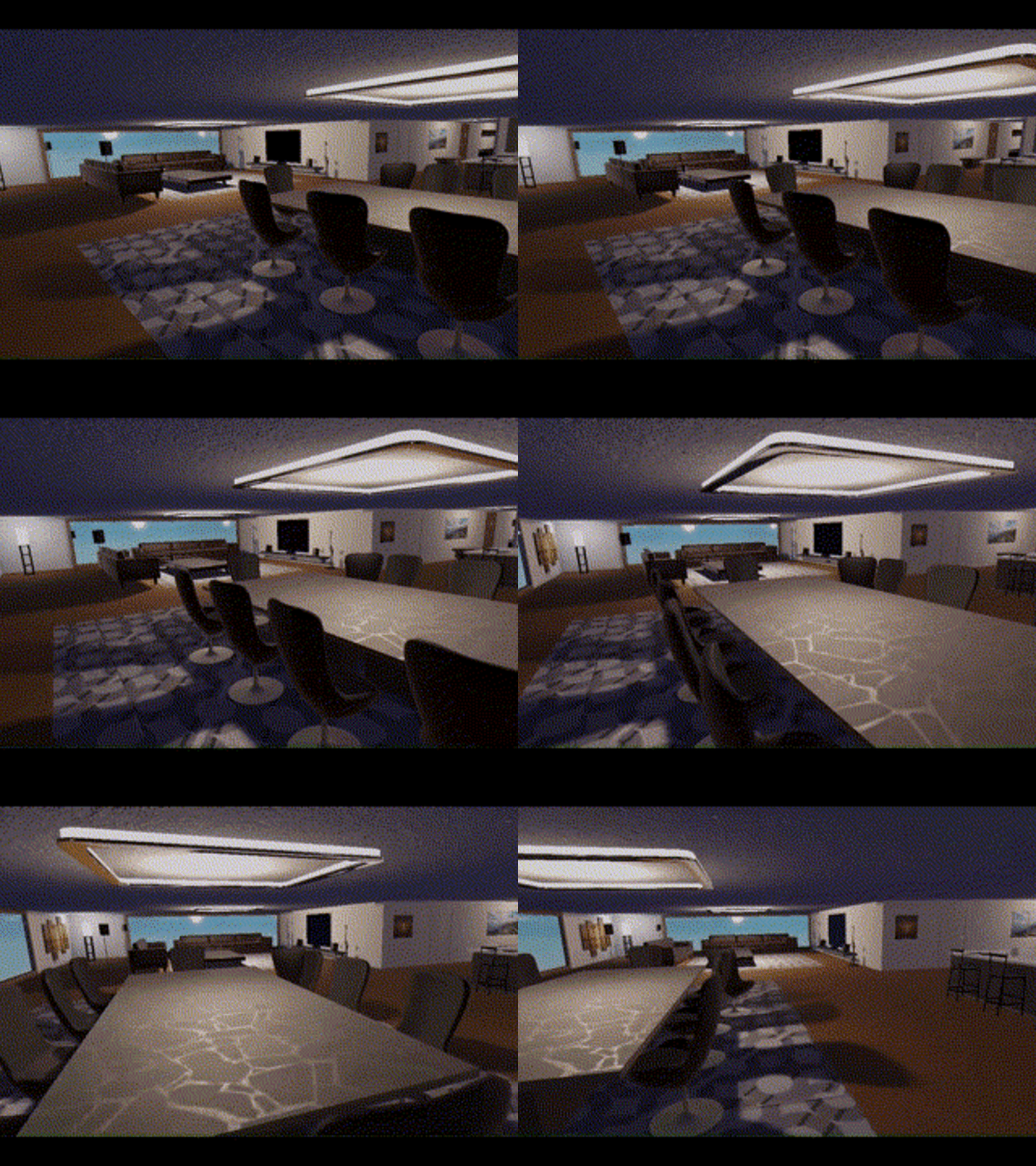
The experience takes place in a comfortable apartment setting that feels familiar and relatable, rather than a sterile clinical environment. This helps participants connect more personally with what patients experience, especially for families dealing with delirium at home.
What we built and how it helps
We created a thoughtful virtual reality experience that gently guides people through what it feels like to have delirium, in a safe and supported way. Participants experience the confusion of seeing things that aren't there, hearing voices, and feeling disoriented about time and place - but they're never alone in this journey. The experience helps people understand, on a deep emotional level, what patients go through during these frightening episodes.
- Instructors can adjust the intensity in real-time, ensuring each person gets the right level of experience for them
- Continuous supportive presence through live monitoring and guidance
- A warm, familiar home setting that helps people connect personally with the experience
- Carefully crafted scenarios based on real patient stories and clinical research
- Builds genuine empathy that translates to more compassionate patient care
- Simple to use - instructors don't need special technical knowledge
- Works smoothly on standard VR equipment without technical barriers
- Can support multiple people learning at the same time
- Creates lasting changes in how caregivers connect with and support patients
When we tested this with participants, we saw something beautiful happen. People didn't just learn about delirium - they felt it. They understood, maybe for the first time, why a patient might be scared or confused. The home setting was particularly powerful because it helped people imagine their own loved ones going through this experience, creating a personal connection that textbooks simply cannot provide.
This isn't just about medical education - it's about creating more compassionate communities around people who are vulnerable and scared. When a nurse truly understands what a delirious patient is experiencing, they respond with patience instead of frustration. When family members recognize that their loved one isn't being difficult but is genuinely terrified, they offer comfort instead of argument. These small but profound shifts in understanding can transform the experience for everyone involved.
A Participant's Reflection
«Experiencing the delirium simulation in VR was an eye-opening and exhilarating experience. The combination of visual and auditory events truly immersed me in the feeling of confusion and disorientation. The added auditory artifacts like the distorted sounds and echoing voices made it even more intense, making me feel uneasy and making it hard to focus. I really enjoyed exploring the open space within the simulation, since there was so much to see and explore. All in all, the simulation gave me a great first look of what a person might be experiencing during a delirious episode. I would say that it is a powerful and informative experience for anyone that wants to learn more about delirium»
Patrizia, Participant
Key terms
- Empathy Through ExperienceHelping people understand delirium by gently walking in the patient's shoes
- Supportive LearningInstructor guidance that adapts to each person's comfort level and needs
- Caring PresenceReal-time support and monitoring to ensure participants feel safe and supported
- Familiar SpacesHome-like environments that help people connect personally with the experience
- Compassionate CareBuilding deeper understanding that leads to more patient, kind responses to patients
Project Partners

Healthcare Collaboration Partners
Dr. Mathias Schlögl
Thomas Kunz
Barmelweid
5017 Barmelweid
Switzerland
More about the Barmelweid clinic
Team
Joshua Brehm
Shane Zulauf
Advisors
Arzu Cöltekin
Cloe Hüsser
Rahel Ganarin