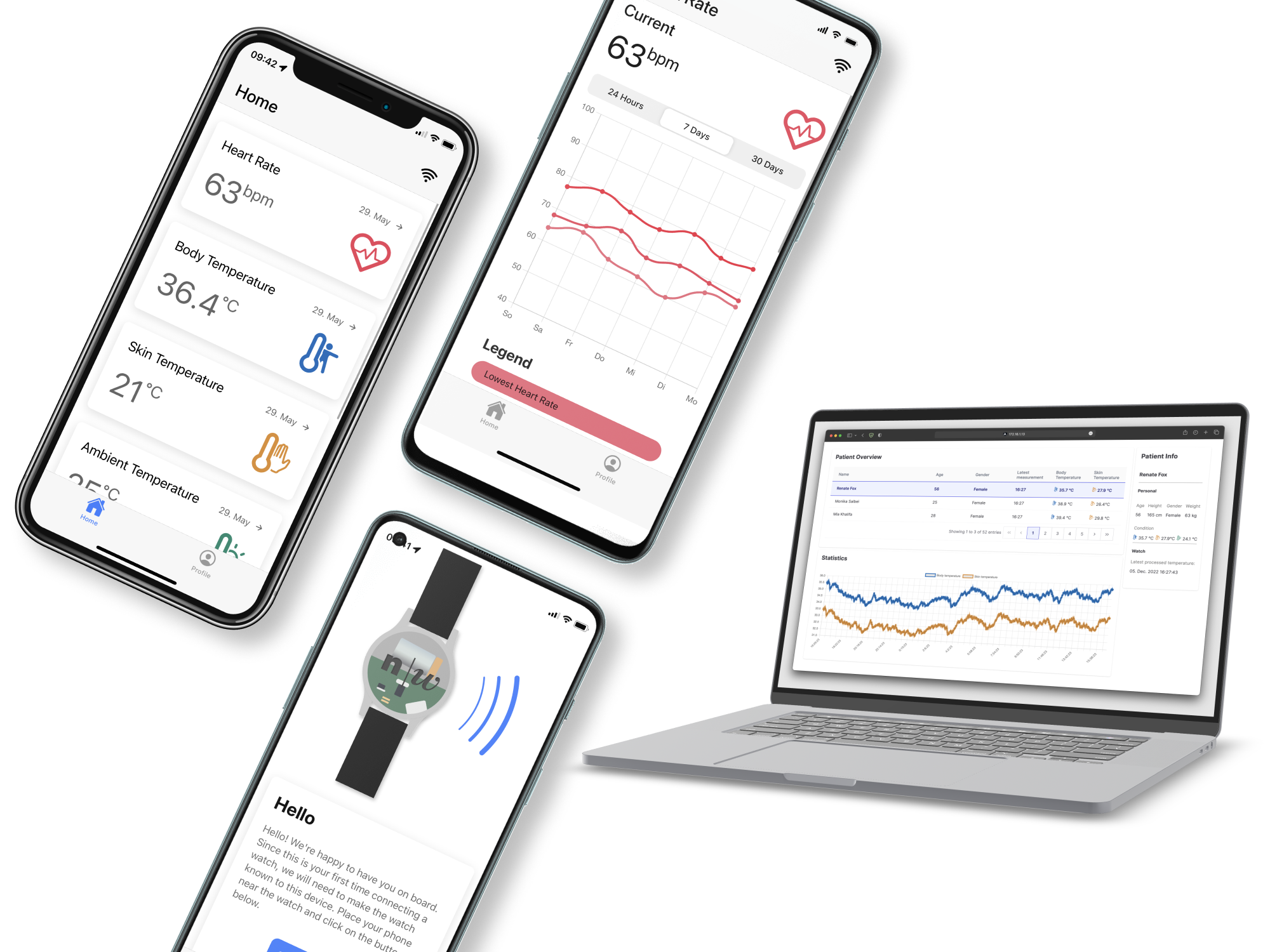
Enabling the new FHNW smartwatch with cloud processing and a cross-platform smartphone application.








Allowing the synchronization of the smartwatch data to the cloud for processing.
The FHNW physics group is in the process of developing a smartwatch featuring the ground-breaking capability of processing the user's body temperature using only their skin and ambient temperature. The technology facilitates artificial intelligence for the provision of this data, which is possible regardless of external conditions, opening up countless new possibilities such as predicting diseases and, therefore, potentially preventing outbreaks. The new FHNW smartwatch mobile app is the missing piece to make this unprecedented product possible. Prototypes of the smartwatch with skin and ambient-temperature sensors already exist, and the machine learning algorithm required to get an accurate body temperature value is also in development. However, neither is the smartwatch able to run the algorithm itself, nor can it connect to a server that is dedicated to doing so. Furthermore, the current smartwatch cannot provide any temperature information to the wearer, it does not have a display.
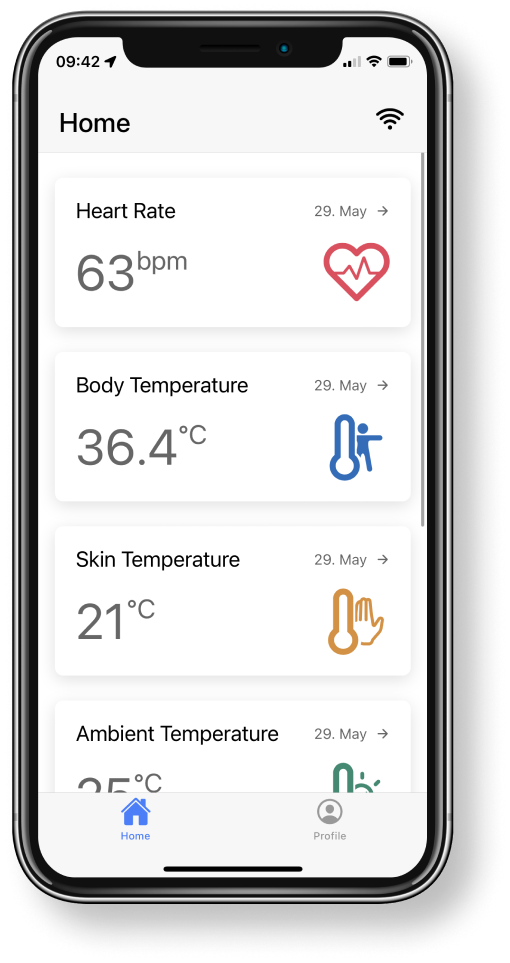
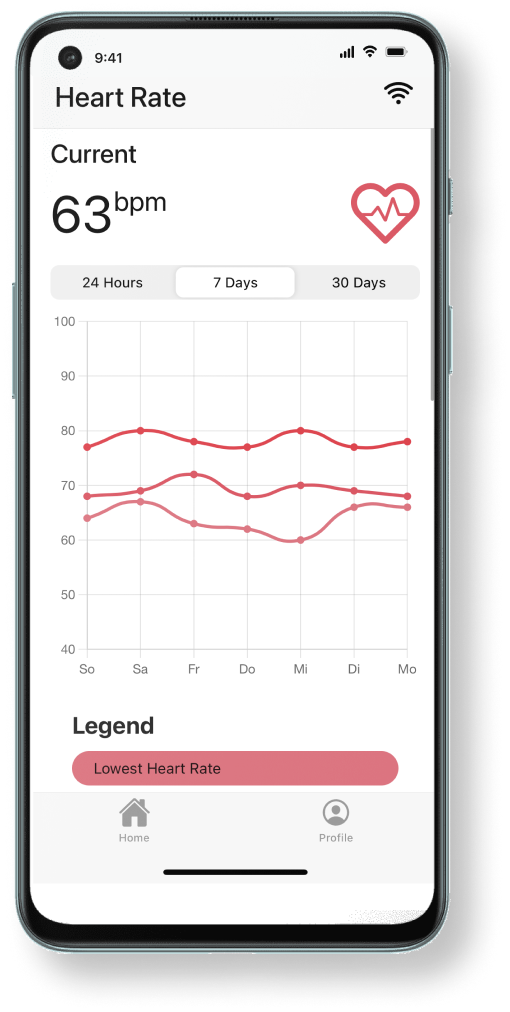
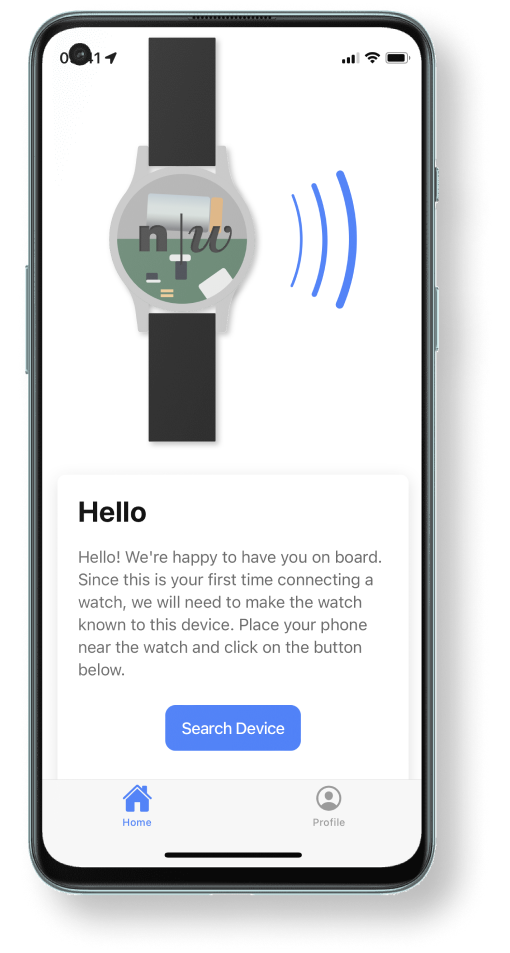
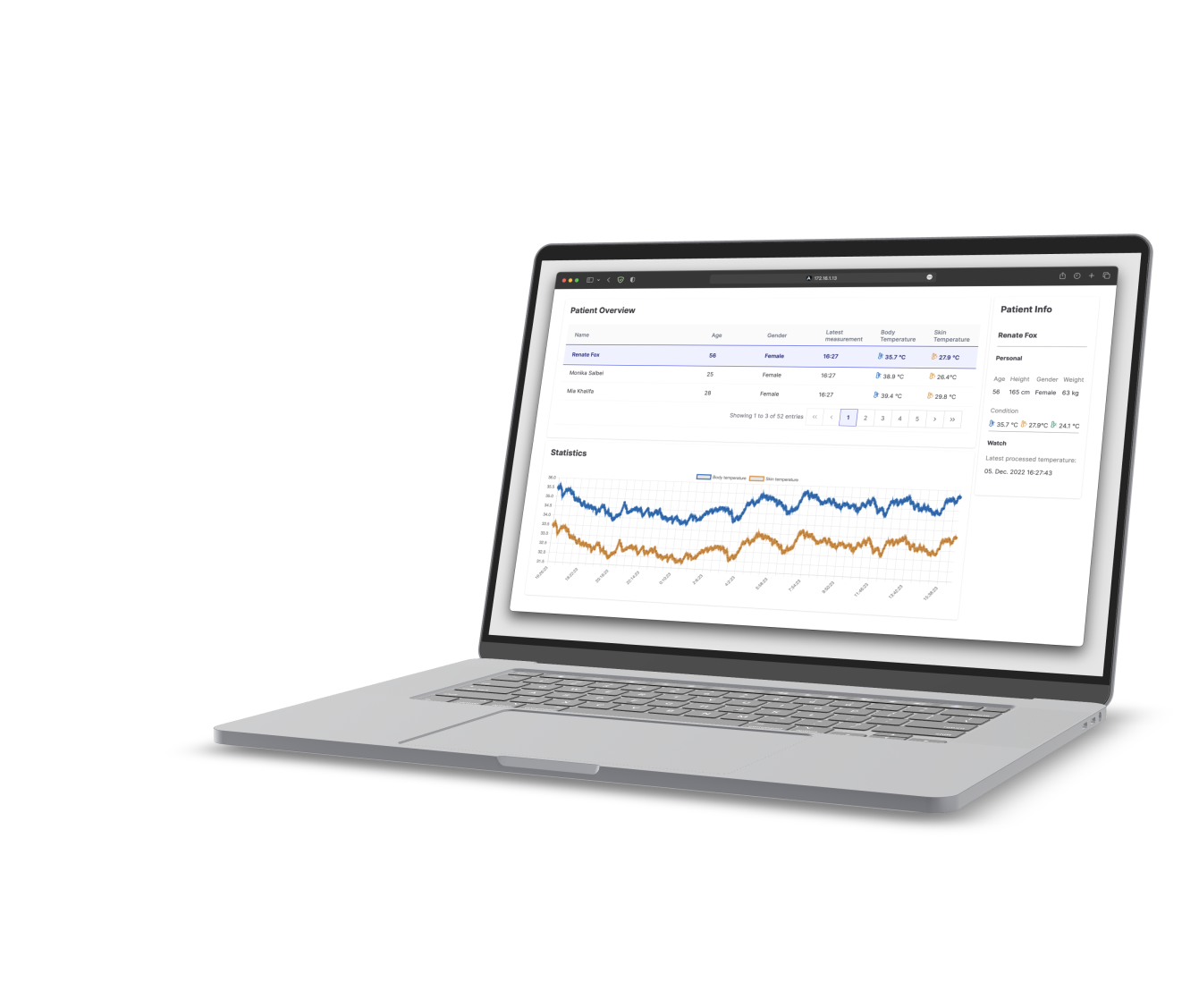
The FHNW smartwatch mobile app is acting as the interface between the watch, the data processing service, and the end-user. The beautifully designed app allows for a Bluetooth Low Energy connection between the watch and the cloud server, simplifying the usage of the watch and helps the end-user understand the measured data. Not only does the developed cross-platform application, accompanied by the microservice architecture, ensure an intuitive and enjoyable experience for the customer, it also provides means to effortlessly replace and test the machine learning algorithms on the fly. The app's user interface takes the customer by the hand, making pairing the app to the watch a breeze. In addition to custom-made icons and graphics, carefully picked colors were used to ensure people with impaired or even no color perception at all are still able to use the app smoothly. The microservices are designed to be scalable and independent from any specific cloud provider while aggregating and distributing data to and from the user's smartphone.
2 semesters, 5 people, project work in third and fourth semester
Renato Minamisawa, renato.minamisawa@fhnw.ch
Norbert Seyff
